



A dealership’s service department should function like a well-oiled machine, but order often falls into chaos as repair orders pile up, technicians self-manage their workload, and service advisors struggle to answer customer questions. It can lead to unhappy customers, bad reviews, and most importantly, a drop in productivity and profitability. The problem isn’t always with the people but in the process.
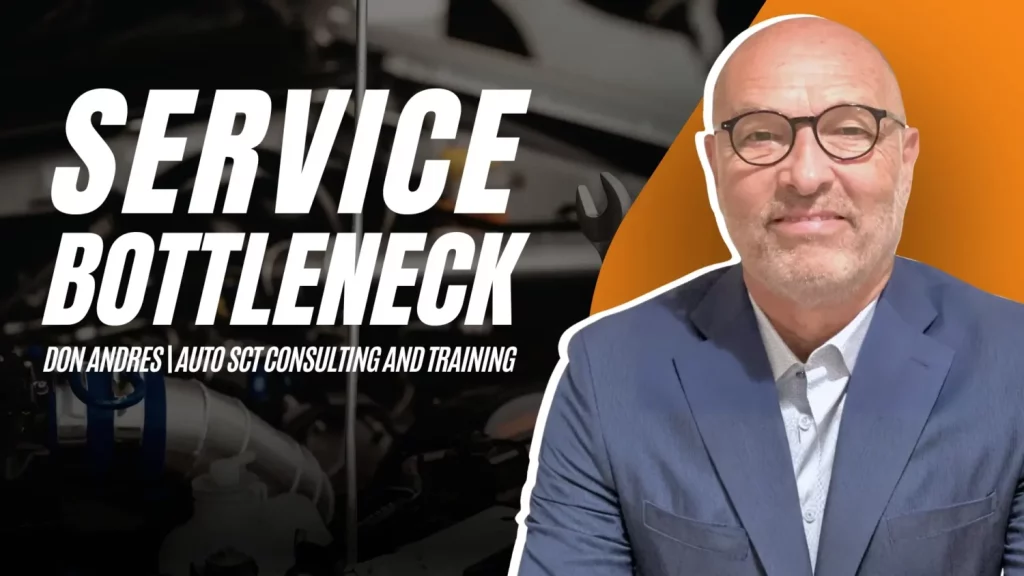
On this episode of Service Drive, we’re joined by Don Andres, Owner/President of Auto SCT Consulting and Training, and author of the book Why Auto Service Departments Fail to Grow. He says the key to running a smooth service department starts with dispatch.
Sign up for CBT News’ daily newsletter and get the latest industry stories delivered straight to your inbox.
ROs on the road to chaos
The moment a repair order leaves the service drive and enters the shop, dealers often lose sight of it, says Andres. Without a structured system tracking the RO, customers and service advisors are left in the dark. The main reason for the miscommunication is that too many dealerships treat dispatch as an afterthought rather than a critical function, Andres says.
“Once the RO is generated, once that engagement is done with the customer itself, and now it’s going to move into the shop, that’s where we lose control of the repair order.”
Without a structured dispatch system to guide the workflow, Andres says technicians often manage their own workflow. Often, he says, they will take a look at the day’s repair orders and decide which jobs to tackle first. Often, they’ll prioritize quicker, easier jobs, leaving difficult tasks on the table.
Sign up for CBT News’ daily newsletter and get the latest industry stories delivered straight to your inbox.
“We end up in many cases leaving it for the technician to decide how fast that repair order is going to move to the shop,” said Andres.
Technicians are often not aware of which job has a customer waiting in the shop, which car needs to be out by a certain time, or how to prioritize new repair orders that come in throughout the day. It’s a workflow, Andres says, that can bring a service department to a crawl, not because the technicians are working hard, but because the system isn’t working for them.
Answering the #1 customer question
Service advisors are on the front lines of the customer experience. Without a functioning dispatch system, Andres says, they don’t have a reliable way to answer the most basic and common question customers ask: when will my car be ready?
“It’s not uncommon to see 60, 70% of the phone calls coming into the service drive are checking on their car,” said Andres.
When faced with that question, advisors are forced to leave their desk, walk into the shop, and interrupt a tech mid-job to ask about vehicle status. The answer they get is often a guess at best, Andres says.
Dispatch & data drive everything
A well-run dispatch system is key to tracking repair orders in real time, Andres says. But he points out that dealers run dispatch in many different ways. Some rely on a central dispatcher who manually manages the flow of repair orders. Others use electronic systems that match job complexity to technician skill level. Andres says the model doesn’t matter as much as the principle behind it.
A well-run dispatch system stays one job ahead of every technician at all times, Andres says. Rather than loading a technician’s bench with a dozen repair orders and leaving them to sort it out, an efficient dispatcher feeds work deliberately, ensuring the next job is ready to go before the current one wraps up.
The simple solution to service efficiency
For dealerships looking to improve RO tracking and service department efficiency, Andres has a low-tech solution:
“Talk to your BDC (business development center), talk to your operator… give them a little tick sheet and say, look, do me a favor today. Every time it’s a status call, will you just make a little tick mark? And at the end of the day, just count how many that was,” Andres says.
That simple audit, he says, doesn’t require a consultant or new software platform to get started. Andres points out that the data is already there, in the daily call volume, open repair orders list, and the number of ROs on a tech’s bench.
The numbers tell the story, he says, the difference is whether leadership is paying attention and taking action.
Service Drive,Fixed-Ops,Featured,automotive industry news,auto industry news,service department,auto industry,author,dealership news,Serivce Customers,automotive news,dispatching#dealerships #dispatch #key #calming #service #department #chaos1777314415

More Stories
FTC crackdown pushes auto dealers to treat compliance as a core business function
Vehlo’s Solutions now support the requirements of the Ford Commitment Program
Hyundai extends EV charging unit warranty to 15 years despite ongoing defect concerns