

Give or take an eVTOL project, Xpeng is deploying a strategy that increasingly looks like Tesla’s in almost every detail. By Stewart Burnett
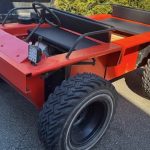
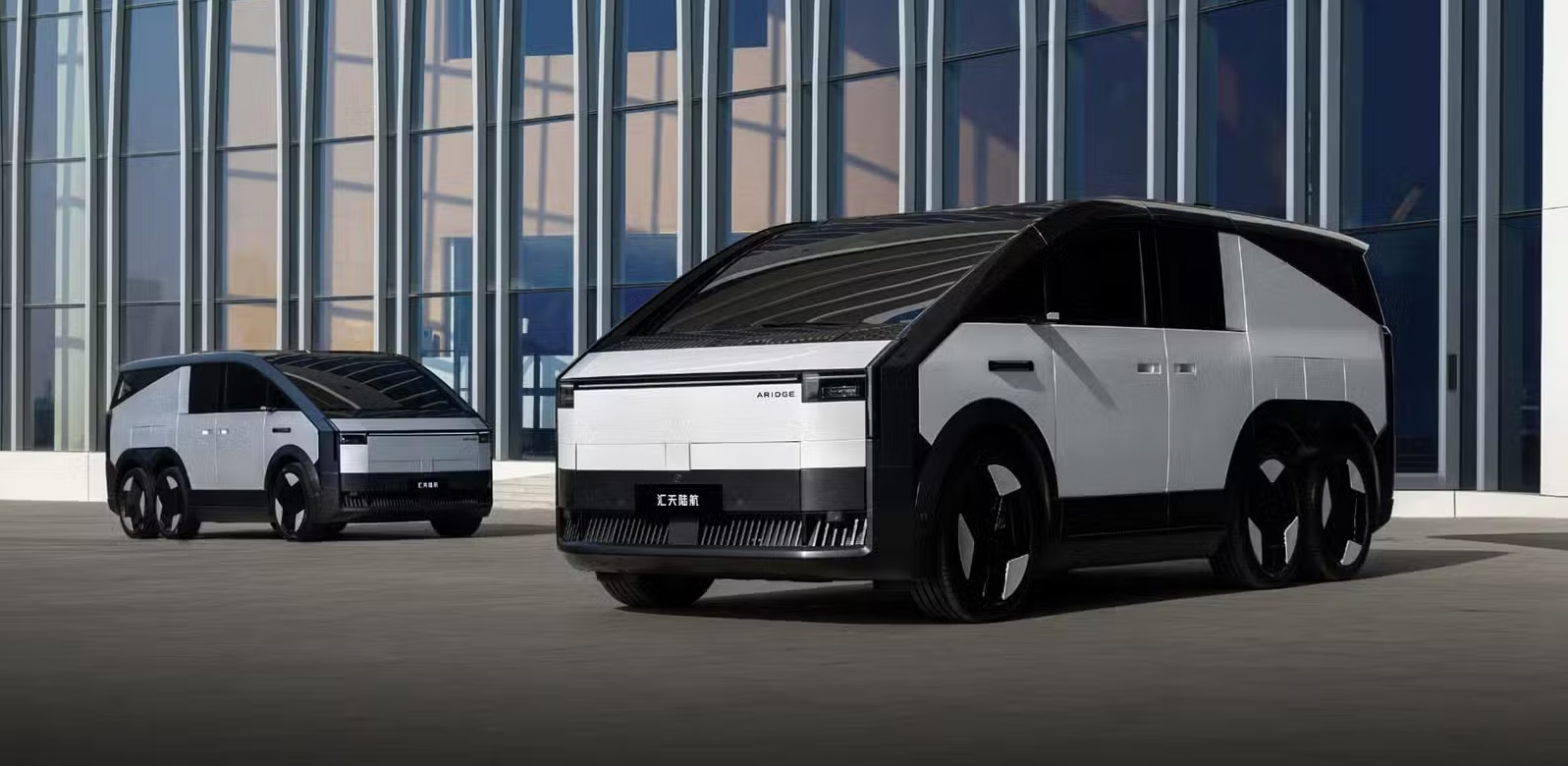
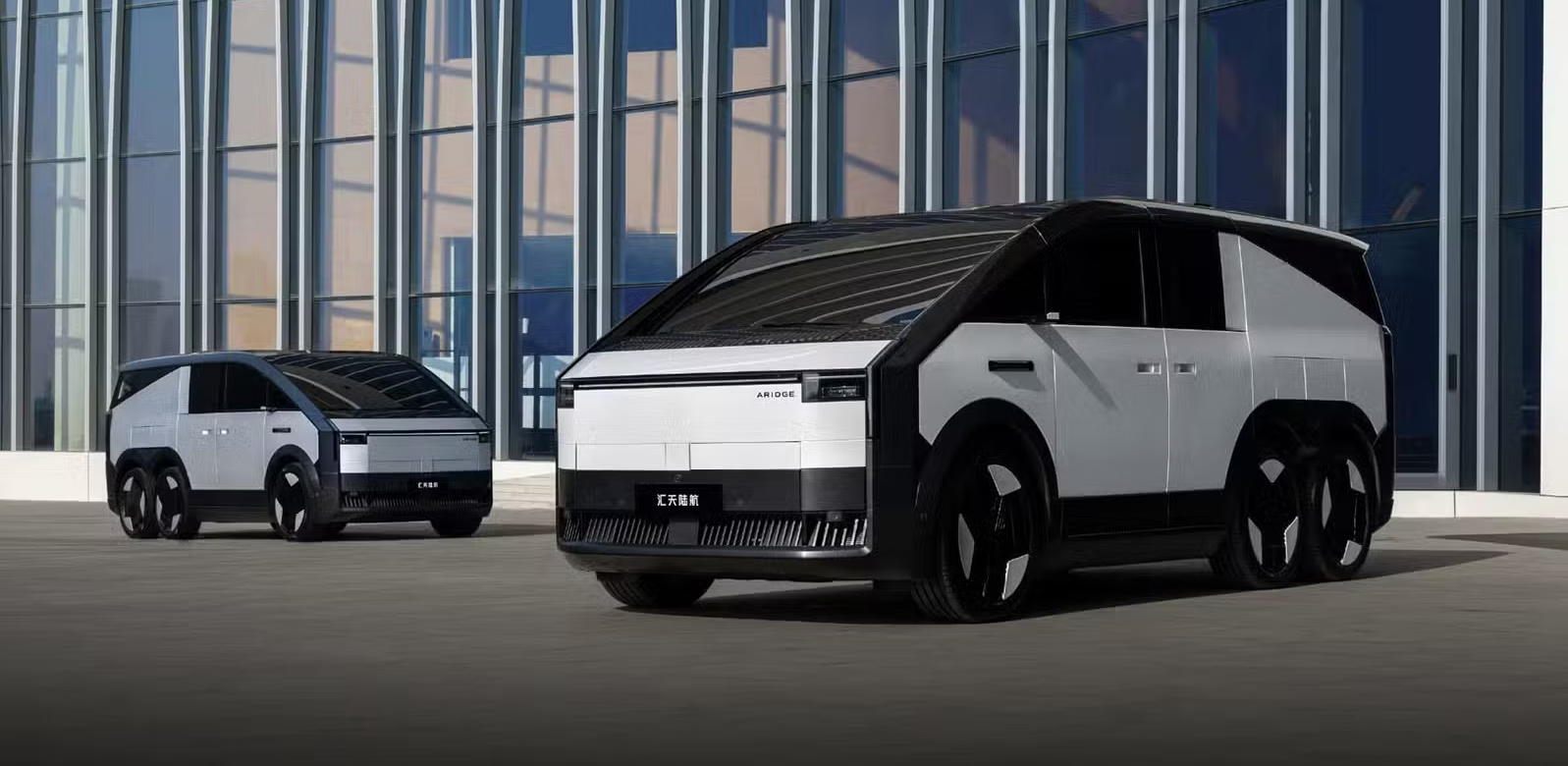
Xpeng expects to begin large-scale production of its so-called “flying car”—formally the Land Aircraft Carrier, a modular vehicle pairing a six-wheeled ground unit with a detachable two-seat eVTOL craft—in 2027, president Brian Gu told Reuters ahead of the Beijing Auto Show. Mass production of its Iron humanoid robot is also expected to begin in Q4 2026, with external commercialisation following in 2027.
During the interview, Gu described Xpeng as needing to be “nimble and willing to partner with different players in different regions”, and observed “tremendous potential” for expanded cooperation with Volkswagen, which began mass production of its first jointly developed electric vehicle, the ID.Unyx 08, in March 2026. Xpeng generated approximately 10% of its sales volume and 15% of its revenue from overseas markets in 2025, and is targeting more than 50% of revenue from outside China within the next decade.
The Land Aircraft Carrier’s design solves an efficiency problem that unified flying car concepts have struggled with: by separating the road vehicle from the aircraft, neither component carries the structural weight of the other. The ground module provides a 1,000-kilometre driving range and functions as a charging station and hangar; the air module, freed from road-legal crash structures and suspension, is substantially lighter than comparable eVTOL designs.
China’s state-sponsored eVTOL infrastructure provides a regulatory environment no Western market comes close to replicating at present. Indeed, cities including Shenzhen have built over 1,200 landing pads to date; by contrast the US has only around 92 and most of these remain in the planning or construction stages. This more supportive and agile regulatory environment has enabled Xpeng to make rapid progress, and now it has received more than 7,000 orders for the flying car, the majority from China. It is currently seeking aviation regulatory approval.
Meanwhile, purpose-built robotaxi testing is planned in Guangzhou in 2026, with 2027 described as a critical year for global testing with partners; Xpeng expects to produce hundreds to thousands of robotaxis over the next 12-18 months. The automaker is using a generative AI-based Vision-Language-Action (VLA) model, capable of entry-level SAE Level 4 capabilities.
The broader Xpeng strategy is explicitly framed around “physical AI”, a term its leadership shares with Tesla Chief Executive Elon Musk. However, the similarities between the two companies extend well beyond this uncommon nomenclature. Xpeng has, for example, removed LiDAR from its 2026 flagship models in favour of a camera vision-first architecture, directly mirroring Tesla’s camera-only position. It also claims adherence to the same underlying logic: that AI perceiving the world through pixels rather than laser point clouds is both cheaper and more generalisable.
Its Iron humanoid robot also runs on the same Turing chip and Vision-Language-Action AI model that powers its vehicles, paralleling Tesla’s use of a shared neural network stack across Optimus and Full Self-Driving. Both companies have also adopted gigacasting for vehicle production and sell directly to consumers without a dealer network. In virtually all cases, Tesla moves first, and then Xpeng follows.
The parallel is sometimes uncomfortably close: the IP dispute that followed Xpeng’s founding—Tesla sued a former engineer over Autopilot source code allegedly taken to Xpeng—has never entirely left the brand’s narrative, and the visual and functional similarities between Xpeng’s FSD-equivalent software interface and Tesla’s own have drawn consistent commentary from drivers and analysts alike.
What complicates a straightforward dismissal is that Xpeng’s autonomous driving performance on Chinese roads is performing better than FSD’s reliability in comparable conditions, and its humanoid robot is already operating on active assembly lines rather than in a demonstration setting.
Autonomous Driving,E-Mobility,Manufacturing,Markets,News,OEMs,Software-Defined Vehicle,Stewart BurnettStewart Burnett#Xpeng #eyes #flying #car #deliveries #robot #launch1776930637
More Stories
Pony.ai, CATL partner on first L4 electric light truck
UK lays regulations for automated passenger services
Leapmotor reveals China-only B05 Ultra at Beijing show