
The R2’s production start is the most consequential milestone in Rivian’s history, and the automaker is unwilling to let extreme weather get in the way. By Stewart Burnett
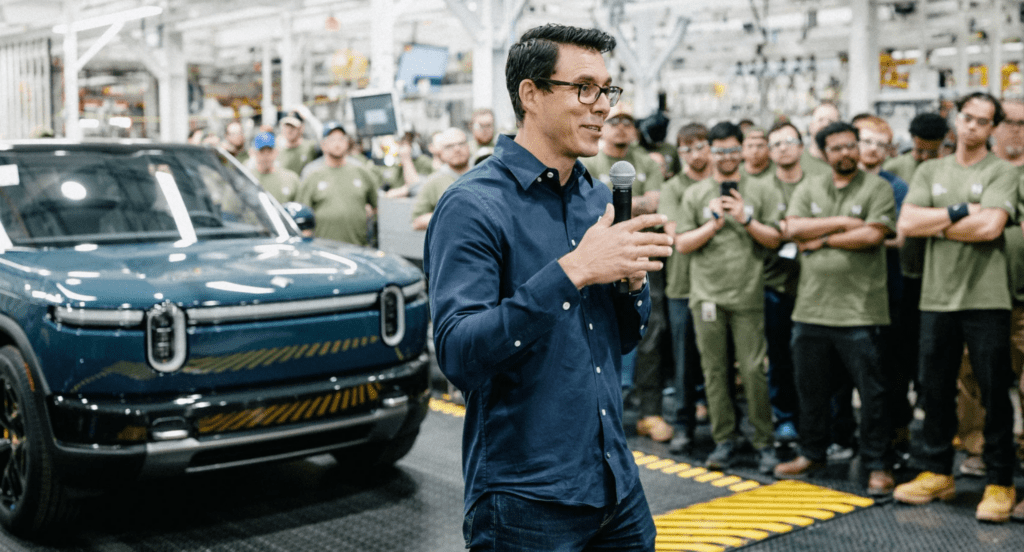
Rivian has confirmed the start of customer production of the R2 electric SUV at its Normal, Illinois plant, just five days after an EF-1 tornado damaged Building 2—the section specifically dedicated to R2 operations. Chief Executive RJ Scaringe drove the first customer-ready unit off the line on 22 April; customer deliveries are expected later this spring, with configuration invitations rolling out from June.
The first model available is, as was announced previously, the Performance Launch Edition at US$57,990, offering 330 miles of range and 656 horsepower from a dual-motor setup. A Premium trim at US$53,990 follows in late 2026; the Standard Long Range arrives in early 2027; and the US$45,000 base model Rivian has promoted since the R2’s reveal does not arrive until late 2027. The automaker and its chief executive have repeatedly alluded to this price point as being the sweet spot for mass market penetration, and associated it with the R2 in particular.
However, the pricing ladder is not incidental; it matters for margin management as Rivian scales production of the R2. The automaker has engineered significant cost reductions into the vehicle’s platform—die casting cuts costs by 32%, a redesigned drive unit by 25%, and simplified suspension by 72%—and at full production rate the R2 is expected to cost less than half as much to build as the R1. However, those savings compound at scale, and not at launch.
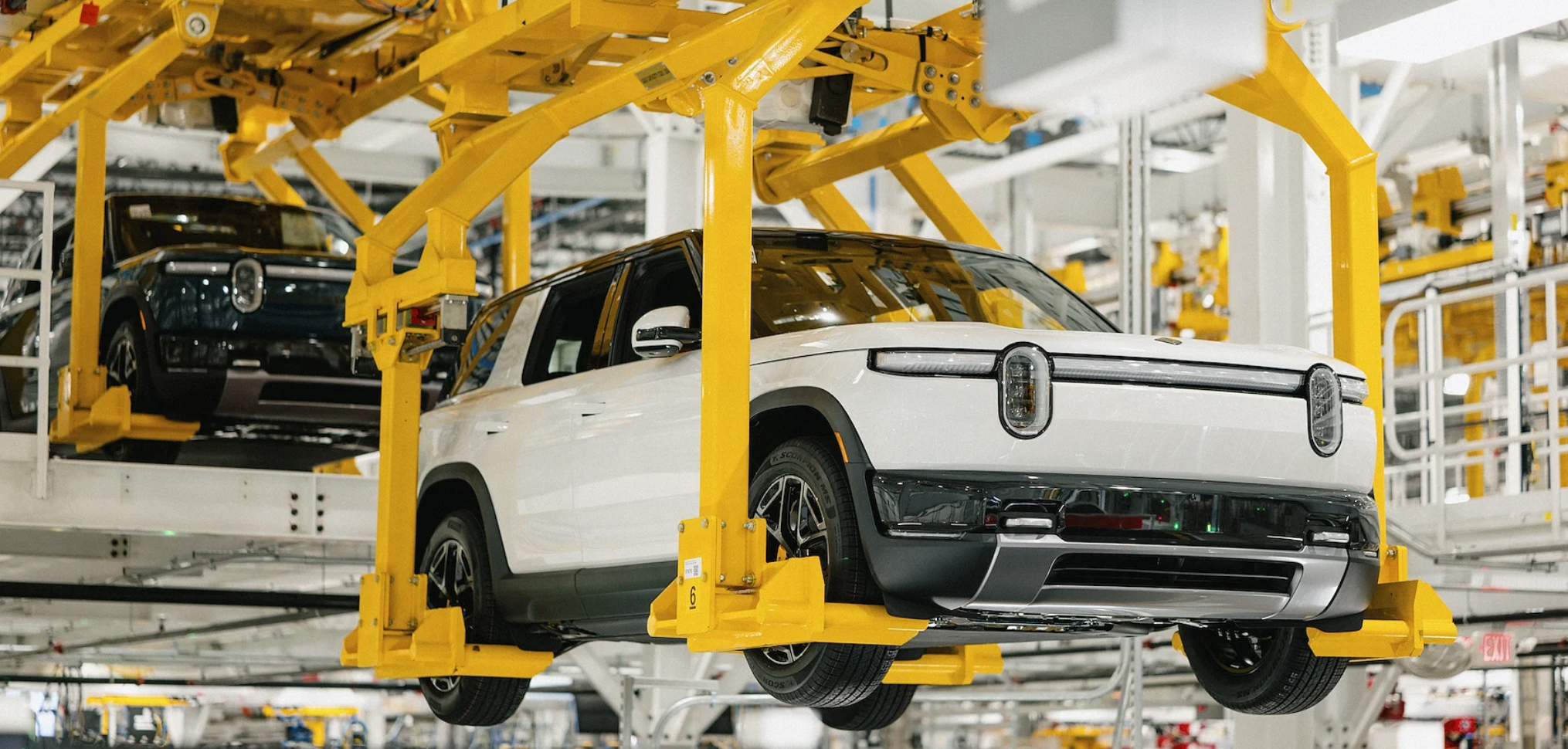
Full-year guidance of 62,000 to 67,000 deliveries, which the automaker has stuck to despite a relatively weak first quarter (particularly in California) requires the R2 to contribute an estimated 22,000 to 23,000 units at minimum. Analysts are broadly anticipating fewer than 400 R2 deliveries in Q2, around 7,000 in Q3, and approximately 15,000 in Q4—in other words, a steep ramp from a slow start. Rivian is targeting positive automotive gross margins by year end, which depends almost entirely on that ramp holding.
Of course, the tornado was not the only disruption. California registrations fell 35.9% in Q1, the steepest decline of any top-30 brand in the state, adding pressure ahead of an R2 launch in a market where the federal electric vehicle tax credit is gone and the Model Y offers an entry sticker price roughly US$18,000 below the launch-edition R2. Rivian’s Uber partnership, worth up to US$1.25bn for a future R2 robotaxi programme, provides a commercial demand floor alongside the reservation backlog of over 68,000 units.
Full Q1 financial results are due 30 April, when investors will be looking for detail on R2 ramp trajectory, supply chain readiness post-tornado, and any updated guidance.
E-Mobility,Manufacturing,Markets,News,OEMs,Stewart BurnettStewart Burnett#Rivian #starts #production #days #tornado #hits #factory1776934532
More Stories
Pony.ai, CATL partner on first L4 electric light truck
UK lays regulations for automated passenger services
Leapmotor reveals China-only B05 Ultra at Beijing show