

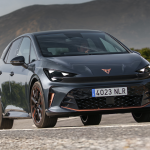



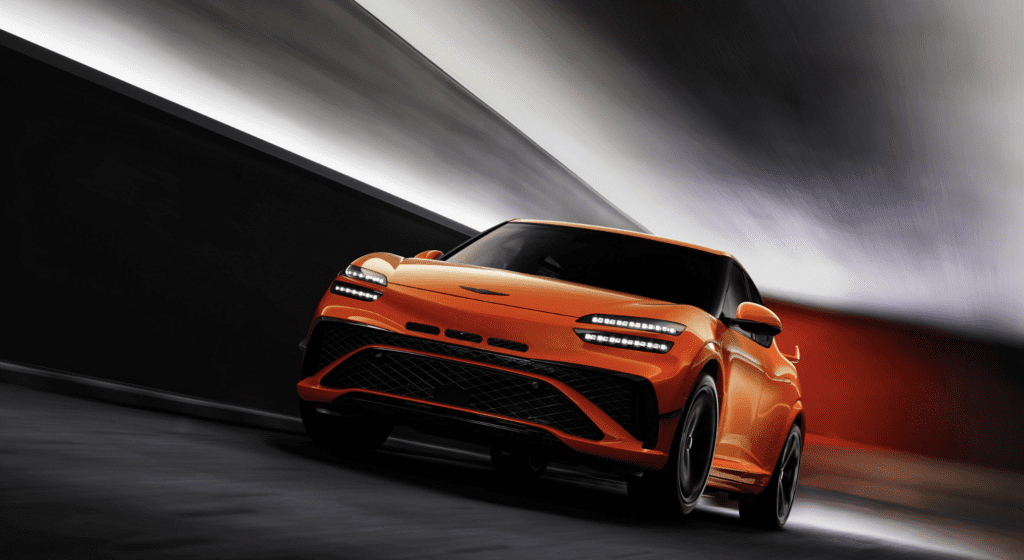
The new Magma sub-brand is presented as the “alter ego” to Genesis. By Megan Lampinen
Hyundai is pursuing high-performance luxury with the new sub-brand Magma in the expectation that it will fill a gap in the market. But just how big is this gap, and how will Magma differ from the many competitors already on the market?
In 2016 the automaker introduced Hyundai N as its high-performance sub-brand, with the ‘N’ referencing both the global Hyundai R&D centre in Namyang and the Nürburgring testing ground where the company’s Technical Center is located. Genesis has operated as Hyundai’s standalone dedicated luxury brand since 2015. The latest addition to the Group is Magma, which will be part of Genesis and introduce a high-performance aspect to the existing luxury element.
The first production model will be the Genesis GV60 Magma, a compact electric crossover based on the Hyundai Ioniq 5. The 84kWh battery offers up to 448km of range and takes 18 minutes to charge from 10% to 80%. Tapping into dual motors, the AWD setup promises 609bhp and 545lb ft, jumping to 650bhp on Boost mode. It promises a top speed of 164mph and can sprint from 0 to 62mph in 3.4 seconds with Launch Control engaged. But Magma, insists Hyundai, isn’t really about the numbers.
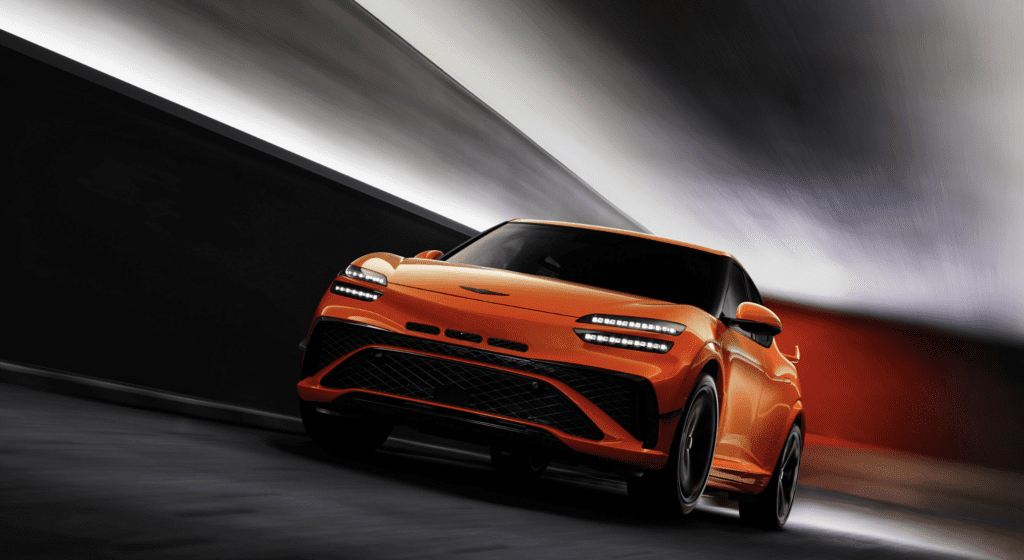
“Several brands claim to be luxury high performance, but our approach is a little bit different,” says Tyrone Johnson, Managing Director of Hyundai Motor Europe Technical Center (HMETC). “Our top priority is not to eke out the last extra bit of horsepower or shave off the last tenth of a second in the zero to 100kph sprint. There comes a point of diminishing returns with that game, and it doesn’t really make any difference to the customer whether its 727hp or 789hp.”
What Magma does prioritise is the driving experience and customer satisfaction. “Customers are much more interested in the experience of driving their car and what it gives them emotionally,” he tells Automotive World.
The foundational technologies
Part of the engineering directive was to provide “a sense of control that precisely aligns with the driver’s intent, prioritising the perfection of driving control.” To do this and reinforce that emotional connection to the car, the sub-brand will draw on a wide range of technologies. In terms of power, it will offer everything from internal combustion engines (ICE) to hybrid and full battery electric, though emissions regulations will mean a focus on electrified variants in Europe. For these models, Magma will draw on some of Hyundai’s previous innovations.
“Hyundai has some cars on the market that introduced certain technologies competitors don’t have, particularly in terms of sound, virtual gear shifting and ESC capabilities like Drift Mode. That will give us a real differentiator to many of the other premium, high-performance brands,” Johnson says.
Drivers have the option of three drive modes: Sprint, GT, and MY. The latter allows drivers to customise settings for the electronic limited-slip differential, ESC, and other performance parameters. The suspension system has been optimised by recalibrating the roll centre and refining the geometry. Electronic Control Suspension and End-of-Travel control systems balance cornering stability and ride comfort, while Hydro G-Bushings in the front suspension and dual-layer bushings in the rear crossmember reduce vibrations.
Johnson is particularly proud of the sound innovation in the GV60 Magna, which is intended to mirror the sound of a V6 engine, adjusting its tone and volume to acceleration, driving speed, etc. “People may say it’s just an MP3 file that’s being played in the background, but it’s much more complicated than that, simulating the driving variables in real time,” he points out.
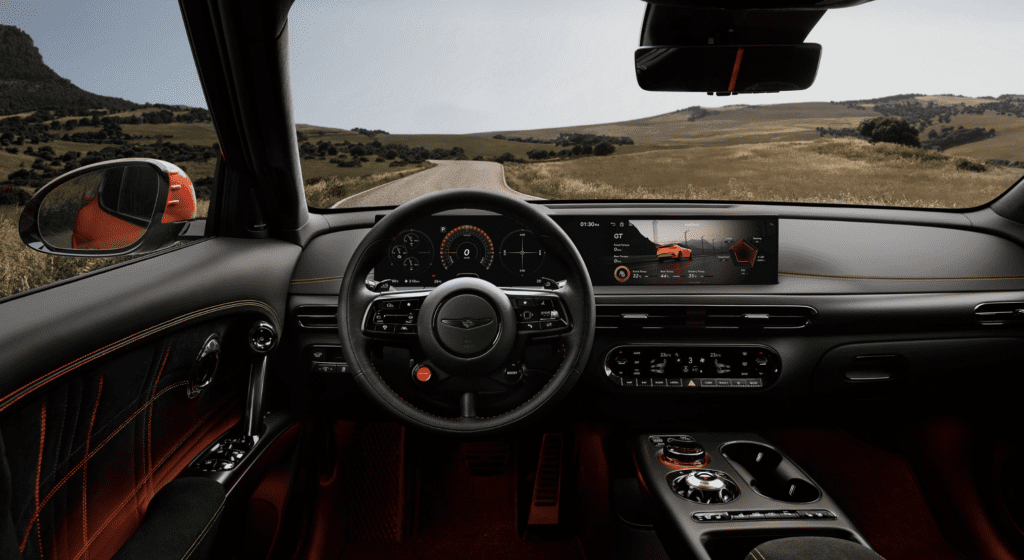
The performance-first approach also plays out in the HMI, where designers have prioritised the options and features most likely to appeal to driving enthusiasts. “Magma customers are a bit less interested in the PlayStation kind of interface and much more interested in the driving experience itself, and so the HMI has been adjusted significantly. We want to allow them to quickly get to the most important settings, rather than offering the same depth of setting options as another Hyundai product,” Johnson explains. All the usual options are still available, it may just take some more time to access them.
“Power and performance are important, but this customer base is interested in something else,” he observes, highlighting the design and HMI as standouts that should attract interest. Design is regarded as the most tangible expression of the Genesis Magma philosophy. According to the marketing material, the GV60 Magma’s design is intended to convey “subtle, untapped power” while deliberately avoiding “overtly ostentatious or aggressive styling.” Compared to the standard GV60, the Magma variant has wider proportions and a lower height. The bumper has been redesigned with a new three-hole structure that is not only visually distinctive but also improves airflow and cooling.
Not a big demographic, but an important one
Sales are scheduled to begin in the second half of 2026, and the expectation is that Magma could account for 8-10% of sales of the related Genesis model. “There’s a certain customer segment that is still interested in the driving experience. It’s not the majority, but at the same time not a negligible number either,” he adds.
While the debut Magma model is an EV, performance is more of a priority than green credentials. That said, Johnson insists sustainability still has a role to play within the high-performance realm, particularly in Europe. “Even performance customers are becoming much more conscious of efficiency in terms of energy usage. That applies not just to EVs but also hybrids. It may not be the highest priority for them, but they certainly take note of this.”
As for future innovations around battery or motor technologies, Johnson isn’t willing to share any details at this time but suggests that exciting developments are on the horizon. “Hyundai is a brand that is always looking towards new technologies, and in some situations we are first on the market.”
How that plays out with Magma is currently anybody’s guess, but like all the other high-performance sub-brands, it will likely serve as a technology showcase for performance possibilities. “Having a Magma unit spills over into the reputation of the brand. Not all Genesis customers will want a Magma, but having Magma is an aspirational kind of thing that gets people into the showrooms and attracts attention.”
The first Magma sales will begin later this year in Korea, followed by Europe and North America.
Articles,OEMs,Hyundai Motor Group,Megan LampinenHyundai Motor Group,Megan Lampinen#Whats #powering #Hyundais #highperformance #luxury #vision1771925176


More Stories
Pony.ai, CATL partner on first L4 electric light truck
UK lays regulations for automated passenger services
Leapmotor reveals China-only B05 Ultra at Beijing show