


The Supreme Court’s ruling has done little to assure automakers that President Trump will back away from his tariff regime. By Stewart Burnett
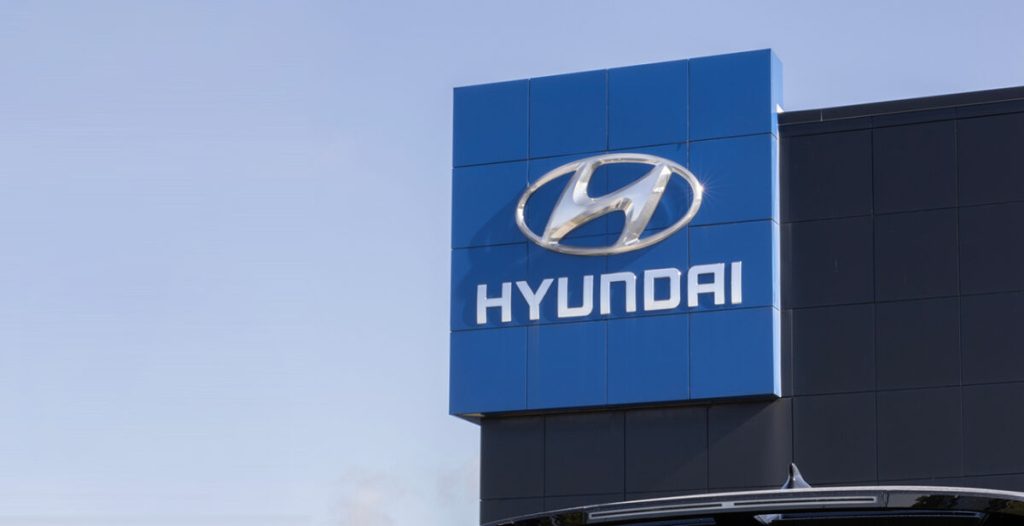
Hyundai President Sung Kim has warned that US tariff pressure on the auto industry may intensify in the wake of the Supreme Court’s ruling against President Donald Trump’s sweeping ‘reciprocal’ duty regime. Speaking at a meeting with South Korean lawmakers and business officials in Seoul, Kim urged parliament to proceed with delayed legislation underpinning a US$350bn US investment package—a deal that President Trump has called a critical condition for tariff reductions on its vehicles from 25% to 15%.
“I think that with the reciprocal tariffs now nullified, there may be increased pressure to raise sector-specific tariffs,” Kim told lawmakers (translation according to Bloomberg). He also warned that a return to 25% rates would “inevitably weaken” the competitiveness of Korean automakers at a moment of sweeping industry change in terms of electrification and software development. Their ability to compete is already affected: Hyundai and Kia reported a combined financial hit of KRW 7.2tr (US$4.98bn) from US tariffs during 2025.
Kim’s concerns proved to be well-founded almost immediately. On 21 February—just one day after the Supreme Court struck down the US administration’s IEEPA-based tariff authority — Trump announced a new 15% global levy under Section 122 of the 1974 Trade Act, applicable from 24 February onwards. The law permits a maximum 15% rate for 150 days, after which Congressional backing is required. Automotive tariffs imposed under Section 232, which covers national security justifications, were unaffected by the court ruling and remain in place.
Any market optimism that the ruling would trigger a broader unwinding of trade barriers was unsurprisingly short-lived. Indeed, the implications have not exactly been spelled out for automakers: Ford said only that it was “studying” the decision and “assessing” what it might mean; General Motors and Stellantis offered no public comment whatsoever. The European Parliament’s trade committee chair was more upfront, describing the situation as “pure tariff chaos”.
For South Korea, the immediate priority is passing enabling legislation for its US investment deal before President Trump escalates further—a task complicated by domestic political gridlock. The US President has made recent declarations about tariff hikes in an effort to pressure Korean lawmakers to hurry and pass the funding bill; Korean lawmakers were apparently surprised by this, having not interpreted the bill’s delay as a condition for tariff reductions.
The tariff environment is arguably reshaping trade alignments in ways that could cut against Washington’s interests. German Chancellor Friedrich Merz arrived in Beijing on 24 February flanked by a roughly 30-strong business delegation, marking his first visit to China since taking office. The agenda centres on rare earth access, protection of German industrial interests against Chinese competition, and the stabilisation of a trade relationship that Berlin views as commercially irreplaceable.
Like UK Prime Minister Keir Starmer and Canadian counterpart Mark Carney before him, Merz is prioritising economic pragmatism over longstanding reliance on the US. Arguably Canada’s pivot is the most dramatic: amid a backdrop of political signaling that the US-led rules-based world order had come to an end, Carney announced last month that his government would cut tariffs on Chinese-made EVs from 100% down to just 6.1%.
President Trump retaliated against the development with fresh threats of 100% tariffs on Canadian imports, but nothing has yet come of this. Given that these tariffs were non-industry specific, it is likely they are no longer a serious consideration and will instead be replaced by—if anything—duties on specific sectors, most likely automotive.
By contrast, the UK’s efforts to tighten its links to China are at an appreciably more advanced stage. The latter’s automakers already benefit from no tariffs beyond standard VAT on imported vehicles. Reports have also emerged that the UK is in early talks to use a Jaguar Land Rover plant to produce Chery-branded vehicles, part of a broader effort to reverse declining domestic vehicle production. The EU is softening its approach a little too, formalising individual automaker negotiations on EV price minimums as an alternative to fixed tariffs.
The direction of travel is arguably quite consistent: US tariff pressure is pushing trading partners toward deeper commercial engagement with China, including in regional auto industries wherein Chinese players have quickly established demand for their products and are now moving ahead with plans to build local manufacturing presence.
For automakers like Hyundai with critical exposure to US markets, the picture is one of lingering uncertainty. Sector-specific tariffs on steel, aluminium and vehicles will remain intact regardless of the Supreme Court’s ruling, and Trump’s stated willingness to penalise countries that “play games” with existing trade agreements adds a further layer of risk for any government—including Seoul’s—that is are perceived to be hedging between Washington and Beijing.
Analysis,Manufacturing,Markets,OEMs,Hyundai Motor Group,Stewart BurnettHyundai Motor Group,Stewart Burnett#Hyundai #tariff #danger #lives #postSupreme #Court #ruling1771928875
More Stories
Pony.ai, CATL partner on first L4 electric light truck
UK lays regulations for automated passenger services
Leapmotor reveals China-only B05 Ultra at Beijing show