

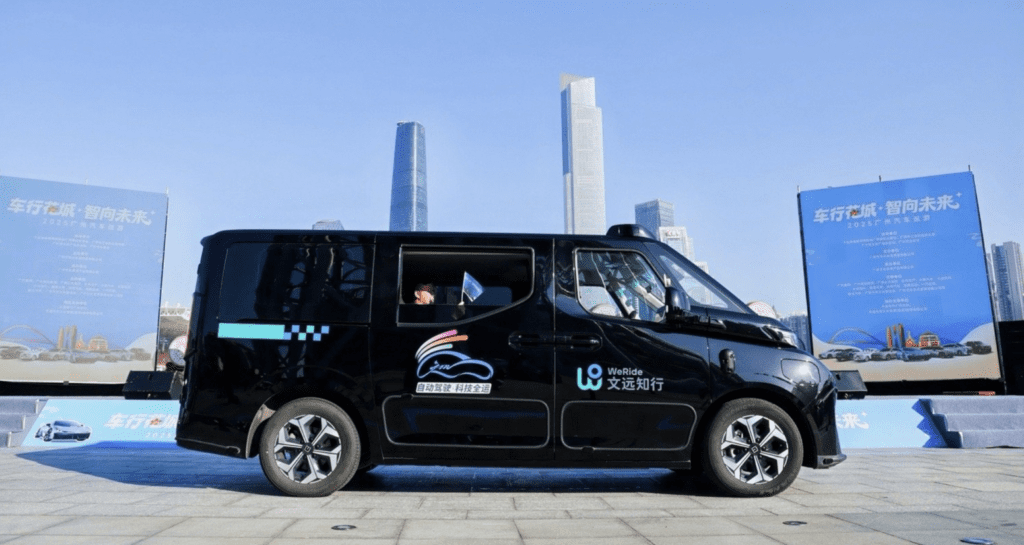
The 2,000 production order with Farizon will test WeRide’s ability to successfully scale its operations. By Stewart Burnett
WeRide and Geely commercial vehicle arm Farizon have signed an expanded cooperation agreement that sees the pair committing in 2026 to 2,000 deliveries of the next-generation autonomous model, Robotaxi GXR, with production scheduled to kick off in Q3. The deal would exponentially boost the size of WeRide’s global operating fleet to a total of more than 2,600 vehicles by year-end; as of January the fleet sat at around 1,000 units.
The updated GXR is built to run WeRide’s Gen8 autonomous driving system, centred around a thousand-line LiDAR unit with a 600-metre detection range—effectively two to three times that of mainstream solutions, according to WeRide.
The company is touting various design improvements that improve the efficiency of the manufacturing process. Among them is the adoption of the Farizon SV’s drive-by-wire chassis, which purportedly cuts assembly time from around one hour to under ten minutes per unit and is expected to reduce total vehicle cost by a further 15%.
The 2,000-unit target serves as the metric by which WeRide will measure its ability to successfully scale its operations. The company has previously stated that it intends to deploy tens of thousands of robotaxis by 2030; the GXR ramp-up will mark the first instance of it attempting production at anything approaching mass scales.
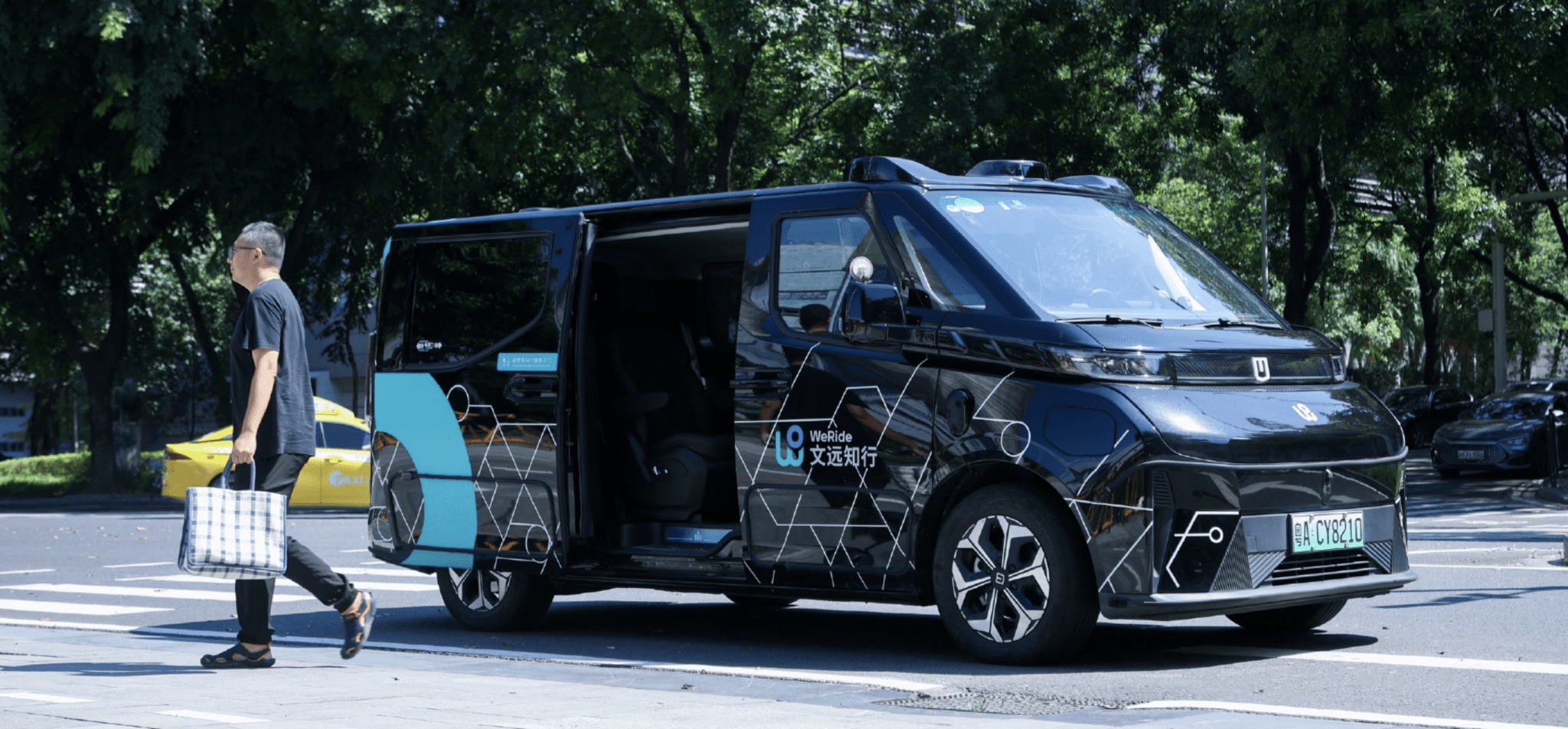
Thus far WeRide’s robotaxi deployments have largely been concentrated in tier one Chinese cities like Beijing and Guangzhou, but it is taking steps towards enacting a global strategy. Last year, the firm deployed its first-ever overseas service in Abu Dhabi. An additional service is expected to go live in Dubai later in March. Europe is the next target on its list, with testing operations currently either underway or live services running across France, Switzerland, Belgium, and Spain.
For Farizon, the agreement extends a commercialisation narrative that goes well beyond the GXR. The division has positioned itself as Geely’s go-to manufacturing platform for autonomous commercial vehicles, and a 2,000-unit robotaxi run provides tangible validation of both its drive-by-wire architecture and its ability to produce at speed. Farizon’s broader ambition—one million annual sales by 2030 across electric vans, trucks, and buses—will hinge on successfully demonstrating that its platform can be scaled across multiple vehicle form factors.
Production is ramping up for a number of players in China’s autonomous driving segment. Pony.ai is scaling production in partnership with a number of players including GAC and Toyota. In the case of the latter it is using the Toyota bZ4X model as a base, with a general emphasis on consistency over assembly speed within the Toyota Production System. Meanwhile, Baidu’s RT6—a purpose-built SUV with a detachable steering wheel—holds the cost floor at around US$28,350 and is targeting European markets through Uber and Lyft partnerships.
Autonomous Driving,Commercial Vehicle,Manufacturing,Markets,News,OEMs,Software-Defined Vehicle,Geely,Stewart BurnettGeely,Stewart Burnett#WeRide #Geelys #Farizon #prepare #scale #production1773054197
More Stories
Pony.ai, CATL partner on first L4 electric light truck
UK lays regulations for automated passenger services
Leapmotor reveals China-only B05 Ultra at Beijing show