


VinFast is pursuing autonomous solutions that are both cutting-edge and widely accessible. By Megan Lampinen
Autonomous driving strategies vary widely, and what works for one brand may not work for another. Whether it’s the in-house vs brought-in debate, the use or absence of LiDAR, or the decision on whether to bypass SAE Level 3 (L3), the decisions made today could determine the leaders of tomorrow.
Vietnam’s rapidly rising star VinFast offers an interesting case study as it seeks to chart a course from L2 ADAS today to fully autonomous ‘Robo-Cars’ in the future. As a vertically integrated electric vehicle (EV) newcomer, it serves not only as a challenger to China but also a potential template for others in a rapidly evolving landscape where legacy is as much of a liability as an asset.
L2 “crucial” to attracting new buyers
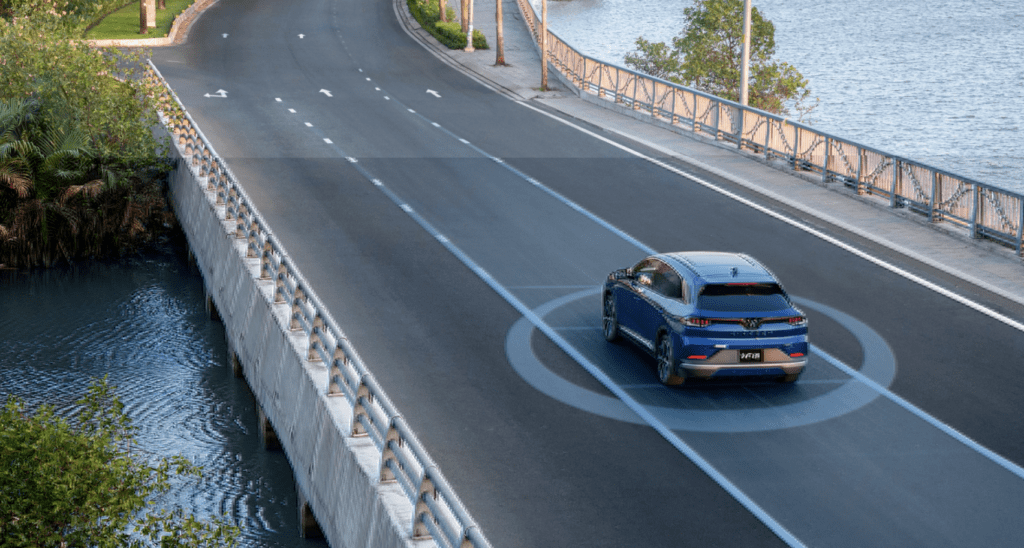
VinFast’s current EV passenger line-up is equipped with L2 driving assistance features targeted at both safety and comfort. L2 covers a vast range of specific functions, such as lane keeping assist, adaptive cruise control, highway driving assist, forward collision warning, blind spot detection, intelligent speed assist, traffic sign recognition, and many more. In terms of global adoption, L2 has been steadily trending upwards. “Looking at the history of ADAS adoption, the penetration of L2 systems increased from roughly 15% in 2011 to about 90% in 2024,” says Nguyen Van Duong, Global Deputy Chief Executive of VinFast and Director of the company’s ADAS/AD Research Institute. “This indicates that L2 ADAS is on the way to becoming a must-have for all new passenger cars in all markets. In other words, it is crucial to have ADAS L2 system to attract new buyers from now on.”
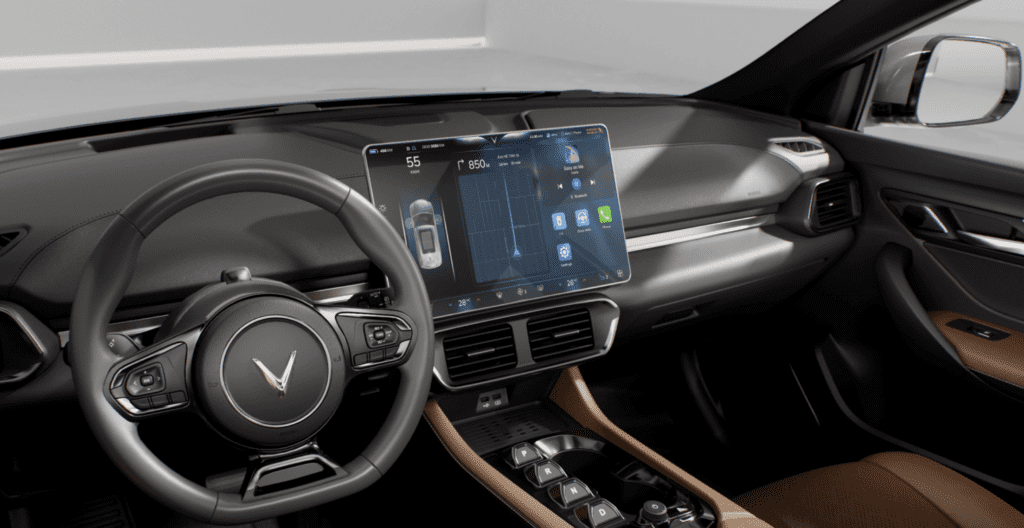
Up next is an upgraded L2++ system, currently undergoing pilot testing on the VF 8 and VF 9 models, with specific features yet to be confirmed. But after that, VinFast might skip L3 and go right to L4. Only a handful of brands offer L3 systems on the market today. “L3, or conditional automation, represents a difficult regulatory hurdle because it operates in a grey zone where the vehicle manages driving, but a human must be ready to intervene within seconds,” notes Van Duong. Numerous other players have expressed the same concerns.
“Our next step depends on the specific need of each individual market,” he adds. “Things are changing very quickly nowadays. We are developing both systems in-house, but from a strategic perspective, we see more potential to jump directly to L4 as it brings more value to customers and leverages our advanced driving technology at the same time.”
Autobrains collaboration
Central to VinFast’s autonomy roadmap is Israeli AI expert Autobrains. It first invested in the technology company several years ago, and the two have worked together on L2 systems. In January 2026 they announced an extended collaboration to work on both L2++ systems and a new autonomous vehicle architecture “capable of transforming any car into a self-driving one.”
Commenting on the choice of Autobrains as a partner, Van Duong tells Automotive World: “It is a start-up with quite strong advantages in terms of advanced AI technology and agility.” Autobrains emerged from AI tech company Cortica and was spun off in 2019 to focus on unsupervised AI for automotive applications. It believes the key to unlocking automated and autonomous driving lies in the creation of a neural net that learns on its own, processing and interpreting data from a vehicle’s surroundings in real time. While Van Duong concedes that it’s a young company, he flags its agility and dedication as key assets.
Leapfrogging LiDAR?
VinFast’s long-term vision for the Robo-Car entails a unique AI architecture that reportedly eliminates the need for expensive LiDAR, radar arrays, or high-definition maps. These are currently regarded as the fundamentals for autonomous driving by most developers, with a handful of notable exceptions. Instead, VinFast and Autobrains believe they can leverage seven standard cameras and a compact, high-performance computing chip capable of processing approximately 20 trillion operations per second. The promise: advanced autonomous functionality at a fraction of the cost and complexity of traditional systems.
However, this may take time, and Van Duong explains that the company will take a step by step approach towards robotaxis. The initial units will still feature LiDAR, radar, cameras, and ultrasonic sensors. “Only later will we remove some of the sensors, after reaching a good maturity level for camera and radar-based systems. Camera-based technology is advancing daily, which enables many new areas and applications including autonomous driving. By observing our in-house AI technology progress, in addition to Autobrain’ agentic AI, we are confident in this path.”
While camera technology is advancing, so too is LiDAR. System costs today are a fraction of what they were just a few years ago, but Van Duong believes there are other important considerations. “Our aim is to move advanced driving technology from early adopters to everyday drivers. For that, we must realise affordable L4 system. It is not just bill of materials costs but the complications involved in the production line and maintenance.” He goes on to emphasise that ensuring the accuracy of LiDAR over a vehicle’s lifetime, which can easily run more than a decade, “is a big challenge.”
While the Robo-Car remains some ways out, VinFast is currently evaluating different business models for the self-driving vehicle, including direct sales to ride-hailing fleets and other potential partnership structures. As for its range of passenger cars, these could also go fully autonomous at some point. “It just depends on future market needs,” he concludes. “Our ultimate goal is to offer full autonomy in the future, even in our passenger cars. For now, we see two parallel threads due to quite different business use-cases…but we are committed to making autonomous mobility safe, affordable, and available to all.”
Articles,Autonomous Driving,OEMs,Megan LampinenMegan Lampinen#VinFast #roadmap #LiDARless #robotaxis1771838498


More Stories
Pony.ai, CATL partner on first L4 electric light truck
UK lays regulations for automated passenger services
Leapmotor reveals China-only B05 Ultra at Beijing show