




The Afeela project was wholly dependent on Honda’s EV strategy, and is among the larger casualties tied to its JP¥2.5tr March writedown . By Stewart Burnett
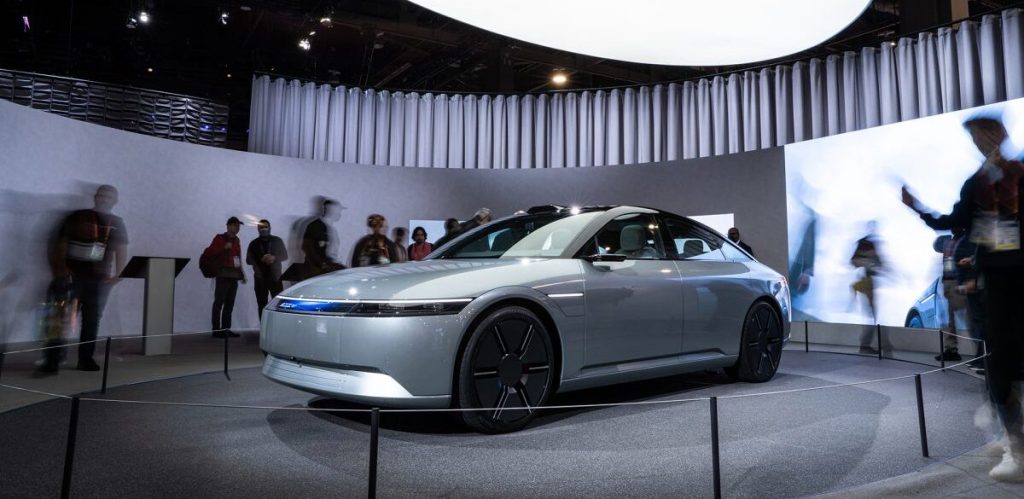
The Sony-Honda Mobility joint venture has announced it will discontinue the development and launch of both the Afeela 1 and its planned second model, stating there is no longer “a viable path forward” to bring the cars to market. The decision follows Honda’s 12 March announcement of a sweeping electrification strategy overhaul involving a writedown of up to JP¥2.5tr (US$15.7bn), which withdrew the platform and assets originally committed to the joint venture.
Reservation holders will be issued full refunds. The Afeela 1 had been priced from US$89,900 and was expected to begin California deliveries later in 2026, with a second model targeted for as early as 2028. Both were built around Honda’s e:Architecture platform, the same underpinning cancelled across Honda’s wider 0 Series programme. Without that platform, Sony’s contribution—sensors, entertainment systems, PlayStation integration, and other software offerings—had no vehicle to sit in.
Sony chose an asset-light structure deliberately, relying on Honda’s manufacturing footprint and electric vehicle (EV) platform rather than building its own production infrastructure. That approach reduced Sony’s capital exposure, but left the venture wholly dependent on Honda’s strategic continuity. When Honda’s electrification plans collapsed under US tariff pressure and the removal of federal EV tax credits, the joint venture had little to fall back on.
The project was arguably one of the more genuinely interesting concepts in the EV segment—an attempt to bridge the gap between automotive engineering and consumer electronics and entertainment in ways that neither company could achieve alone. In totality the project was not unlike the software ecosystem play currently being executed successfully by Xiaomi, although the latter opted to handle everything in-house and benefited from more favourable economics.
For Western consumers, though, the project had some credible differentiators: Sony’s CMOS sensors, Unreal Engine-based user interface, and content ecosystem among them. Unsurprisingly, the Afeela prototype drew favourable attention at multiple trade shows. By the time it reached the reservation stage, however, the US$89,900 price point looked increasingly difficult to justify in a market already reeling from cost-of-living concerns.
Sony Honda Mobility said it will continue discussions with both parent companies about its future direction. Whether that means a revised vehicle programme, a technology licensing model, or a wind-down of the joint venture entirely remains to be seen. In a statement, Sony said it did not expect the project’s current discontinuation to have a meaningful impact on its finances.
E-Mobility,News,OEMs,Software-Defined Vehicle,Honda,Stewart BurnettHonda,Stewart Burnett#SonyHonda #scraps #Afeela #Hondas #retreat #deepens1774439566


More Stories
Pony.ai, CATL partner on first L4 electric light truck
UK lays regulations for automated passenger services
Leapmotor reveals China-only B05 Ultra at Beijing show