


BlueCruise let drivers disengage and speed while going unmonitored, and NTSB says updated versions would not have changed either outcome. By Stewart Burnett
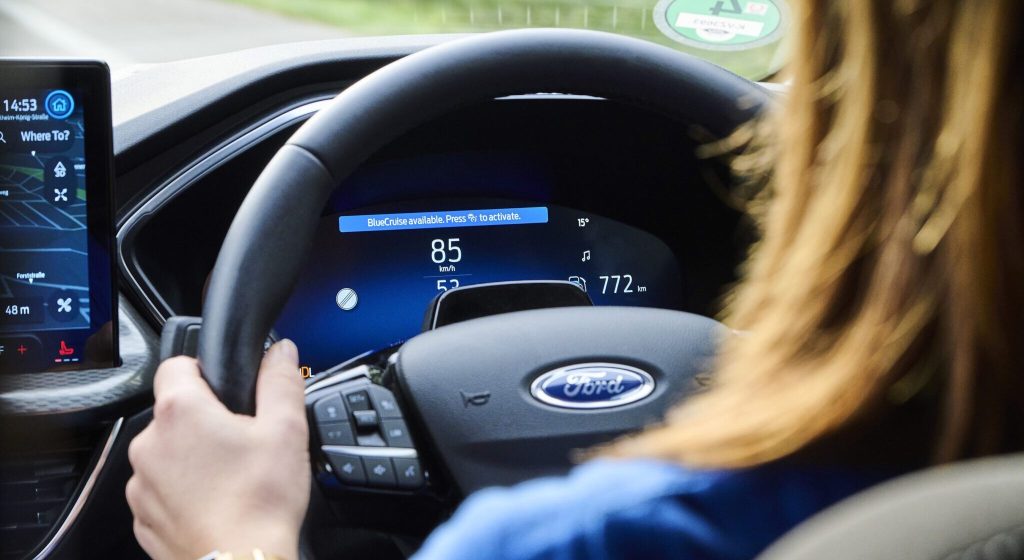
The US National Transportation Safety Board (NTSB) has concluded that Ford’s BlueCruise advanced driver assistance system (ADAS) failed to mitigate driver distraction in two fatal 2024 crashes, and that neither incident would have been avoided even under the system’s updated version. The findings, delivered at a three-hour hearing on 31 March 2026, also criticised the absence of federal performance standards governing partial automation systems and urged regulators to address the gap.
Both crashes involved 2022 Ford Mustang Mach-E SUVs operating on BlueCruise on interstate highways—one in San Antonio in February 2024, and the other in Philadelphia just one month later. In either case, the vehicle struck stationary cars at highway speed with no braking recorded from either the driver or the system, resulting in a total of three fatalities.
NTSB found that BlueCruise’s driver monitoring failed to detect inattention in both instances, and that the system permitted drivers to engage in aggravating driving decisions. Specifically, it allowed the drivers to disable automatic emergency braking and permitted speeds up to 20 mph above the posted limit.
In a statement, Ford said that it would take the recommendations under serious consideration, while also noting that one of the two drivers had been impaired by alcohol. The National Highway Traffic Safety Administration, which currently has three open investigations into BlueCruise, confirmed it would review the findings. NTSB chair Jennifer Homendy offered her assessment, saying: “We cannot take a hands-off approach to hands-free driving technology. Lives depend on it.”
The absence of a federal framework for SAE Level 2 systems—that is, those that automate steering and speed but require a human to keep their eyes on the road—has allowed automakers to essentially set their own parameters for monitoring, speed limits, and data recording. NTSB criticised the opacity this arrangement has led to; indeed, the lack of mandatory data recording requirements meant critical information was difficult to reconstruct. It called upon the Department of Transportation to establish standardised performance requirements across the industry.
The findings add to a pattern of NTSB scrutiny directed at partial automation systems, including a 2023 Tesla Autopilot investigation that prompted a recall of two million vehicles. The agency is also conducting investigations into fully-autonomous driving operations, most prominently a series of incidents—apparently still ongoing—in US school districts involving Waymo robotaxis illegally passing stopped school buses.
Autonomous Driving,Markets,News,OEMs,Software-Defined Vehicle,Ford Motor Company,Stewart BurnettFord Motor Company,Stewart Burnett#NTSB #faults #Fords #ADAS #tech #fatal #highway #crashes1775035955

More Stories
Pony.ai, CATL partner on first L4 electric light truck
UK lays regulations for automated passenger services
Leapmotor reveals China-only B05 Ultra at Beijing show