


Wayve and Uber expand their global robotaxi deployment strategy onto Japanese city streets. By Stewart Burnett
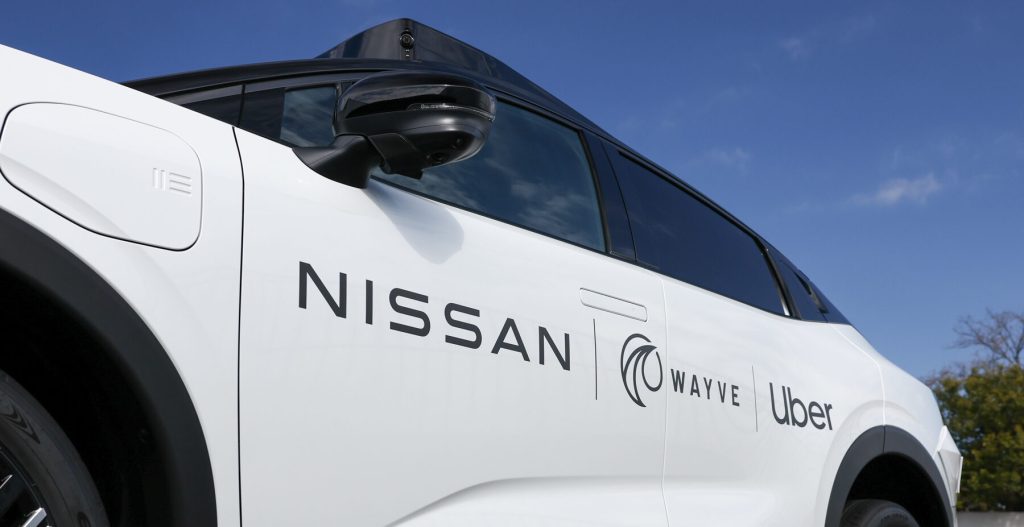
Wayve and Nissan have expanded their autonomous driving collaboration, signing a memorandum of understanding to deploy robotaxi services in Tokyo by late 2026. Nissan Leaf vehicles equipped with Wayve’s AI Driver system will be made available to riders via the Uber platform.
Upon launch the robotaxis will operate under the oversight of a trained safety driver, before eventually transitioning to fully driverless in the typical fashion. Uber—which again finds itself expanding its network of autonomous driving partners—has said it intends to launch the service tthrough a licensed Japanese taxi partner, which it is currently in the process of selecting.
The ride hailing firm has thus far accumulated partnerships expected to make it the platform of choice for robotaxi experiences in the US, UK, continental Europe, east Asia and the MENA region. The tie-up with Wayve and Nissan will be its first in Japan. Through 2026 the firm is planning deployments in more than ten cities worldwide; others include London, Madrid and Hong Kong.
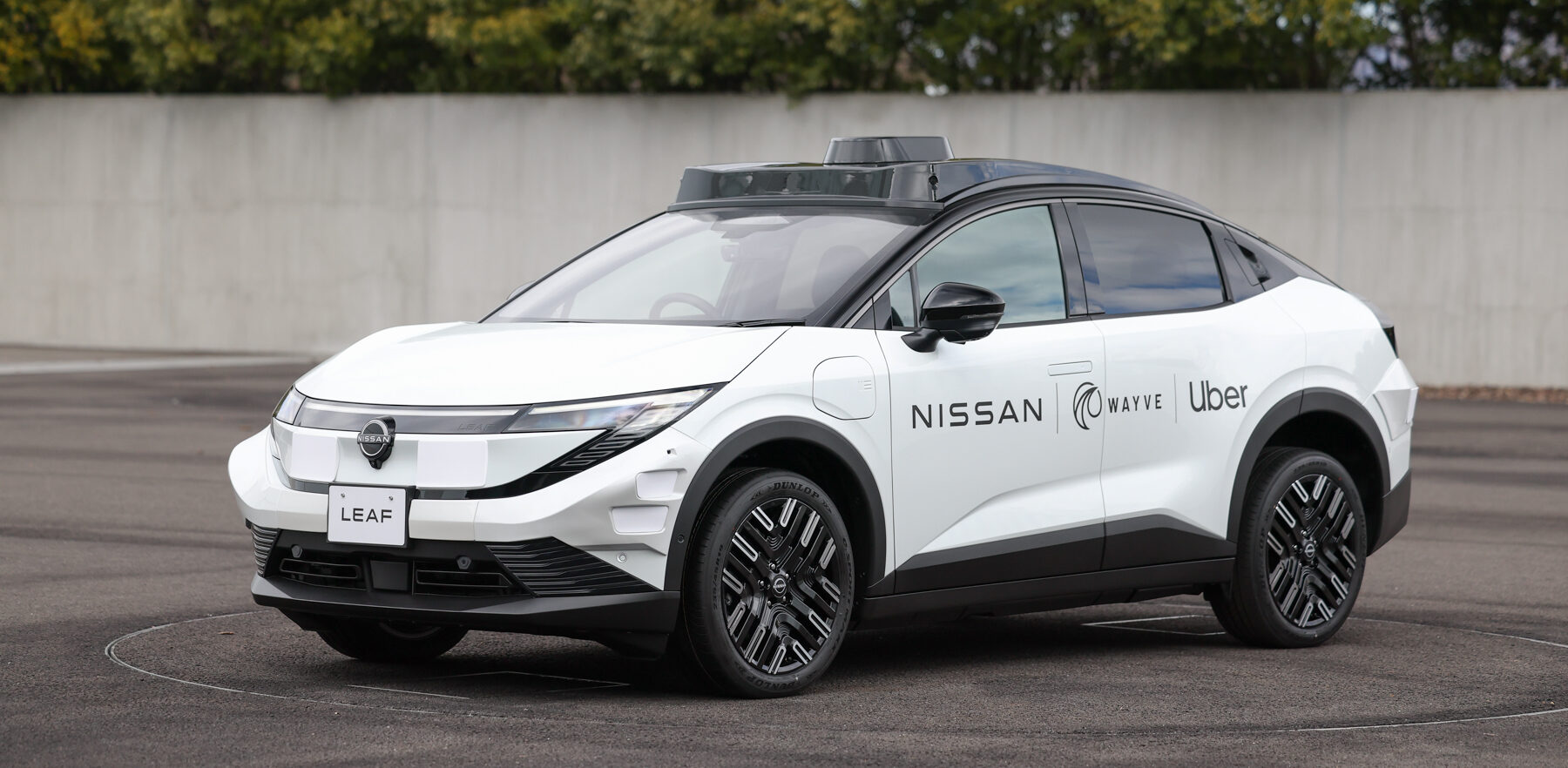
For Nissan the choice of Wayve is largely a matter of strategy. The automaker is in the midst of a dramatic restructuring to reverse its present financial woes; outsourcing to Wayve prevents the need for in-house development. Wayve is also likely the cheaper bet among external partners: still largely unproven in commercial operations, its AI Driver system is designed to generalise across new environments without the need for HD maps. Wayve argues this approach also enables faster deployment into complex urban markets like Tokyo.
The British firm raised US$1.2bn in a funding round last month, with investors including both Uber and Nissan, as well as SoftBank, Nvidia, Microsoft, Mercedes-Benz, and Stellantis. The breadth of that investor list indicates that Wayve’s positioning—as an AI driving platform applicable across vehicle types and markets, rather than a vertically integrated robotaxi operator—is resonating with the intended audiences.
Nissan is projecting a net loss of approximately US$4bn for the current fiscal year, having missed the hybrid transition and ceded its early lead in electric vehicles—notably with the pioneering original Leaf—to Chinese competitors. Integrating Wayve’s autonomous stack into the Leaf is intended to signal to the industry that Nissan’s existing consumer hardware is both intended and fully capable of serving as the foundation for autonomous driving systems. Its next-generation ProPilot driver assistance systems are planned for launch in fiscal year 2027.
Autonomous Driving,Markets,News,OEMs,Software-Defined Vehicle,Nissan,Stewart BurnettNissan,Stewart Burnett#Nissan #Uber #Wayve #join #forces #Tokyo #robotaxi #pilot1773321156

More Stories
Pony.ai, CATL partner on first L4 electric light truck
UK lays regulations for automated passenger services
Leapmotor reveals China-only B05 Ultra at Beijing show