


The engineering specialist has been working on extended-range EVs for 15 years, writes Megan Lampinen
Extended-range electric vehicles (EREVs) have been around for years, but only in small numbers. More recently, the technology has begun to take off in China, where EREVs are classified within the wider new energy vehicle (NEV) segment. Interest is now trending westward, and several global players have confirmed plans to introduce EREV models in Europe and North America.
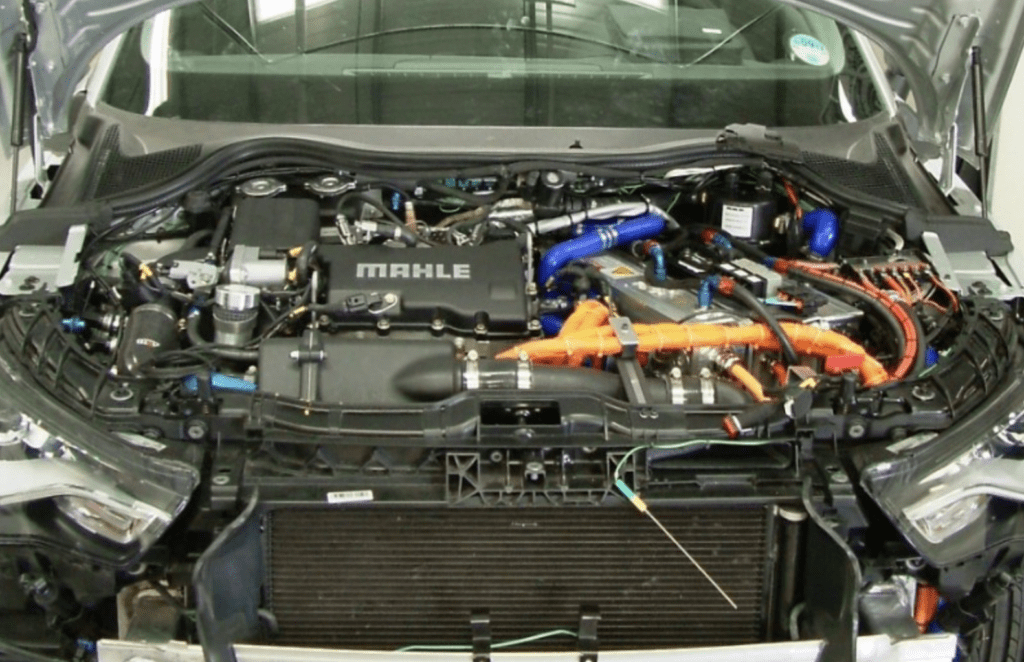
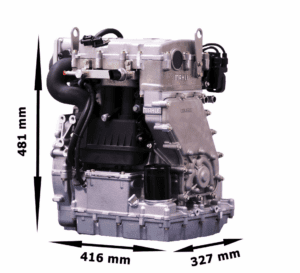
Helping to usher in this wave is German company Mahle Powertrain, which was at the forefront of EREV development 15 years ago. When engineering a vehicle for a range-extended powertrain, OEMs can either modify an existing engine to accommodate a generator or develop a bespoke power unit specifically tailored to the application. Mahle has overseen both approaches through its work with automakers in China and Europe. As a result, Engineering Director Mike Bassett has a front-row seat to the innovation strategies that will shape upcoming model line-ups.
“We’ve been doing this for 15 years, but now suddenly everybody wants to explore the possibilities,” he tells Automotive World.
How has EREV technology changed over the years?
It’s more that the emphasis among automakers has changed. We developed a concept for Europe 15 years ago that was very much focused on being low cost, lightweight and compact. Efficiency was not quite at the bottom of the priority ranking, but it was low down. The idea was that the vehicle would drive predominantly electrically, and people would only charge or use the range extender for infrequent, longer journeys.
In China, we’ve recently seen a big focus on very high thermal efficiencies. That has skewed the engineering emphasis: prioritising thermal efficiency means that the specific power might not be as high, so brands will introduce turbocharging and other technologies that make the engine larger and more expensive.
China is by far the largest market for EREVs, but what’s your outlook for adoption in other regions?
I think we’ll see interest in North America, where the charging infrastructure is less mature, and the distances people expect to be able to drive are much greater than in Europe. The US favours larger vehicles, and pick-ups are particularly popular—that’s the kind of market where we expect big growth.
How does policy promote the uptake of EREVs?
In Europe, EREVs are treated like a plug-in hybrid. In China they’re classed as NEVs, and some of the newer automakers only have a licence to make pure electric or range-extended vehicles. That’s partly why we’re seeing a proliferation of these new models: the newer automakers don’t have a licence to produce a conventional powertrain vehicle but can produce an EREV.
Going forward, European legislation aims to push players more towards low-carbon fuels. How might that impact the use of EREVs?
Ethanols or methanols are really good for internal combustion engines. Range extenders, being less dynamic in operation, are easier to optimise for thermal efficiency for a variety of fuels.
Is there scope to further improve or evolve today’s EREV systems?
With the range extender technology, you are putting two powertrains on the vehicle. That’s not ideal. When the battery technology improves sufficiently or the charging infrastructure becomes more established, EREVs will fade away. If charging were plentiful and faster, people wouldn’t feel the necessity for such a big battery pack, and range anxiety would just disappear.
So is the implication that charging developments will eat away at the EREV’s advantages?
Absolutely. Quite how long that takes depends on where you are and how fast that infrastructure is developing.
What’s your outlook for EREVs over the next few years?
There’s certainly a lot of interest at the moment. We’ve seen a big uptick in the number of enquiries and conversations, with a huge focus on it at events and conferences. When we started our first EREV projects all those years ago, we were definitely pioneers at that stage. With hindsight, I would say we were ahead of our time. Now all of a sudden interest has returned, and everyone is taking it very seriously.
Articles,E-Mobility,Megan LampinenMegan Lampinen#Mahle #EREV #explore #possibilities1773650253
More Stories
Pony.ai, CATL partner on first L4 electric light truck
UK lays regulations for automated passenger services
Leapmotor reveals China-only B05 Ultra at Beijing show