




Tesla’s Semi arrives seven years later than originally promised, boasting cost and range advantages its incumbent peers will struggle against. By Stewart Burnett
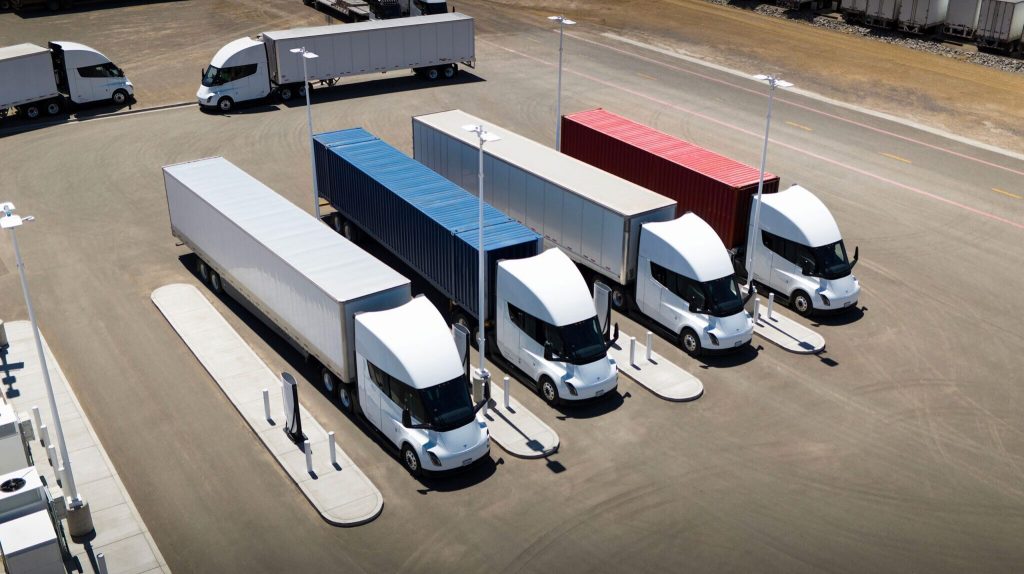
Tesla has confirmed that the first Semi e-truck has rolled off a high-volume production line at its Nevada Gigafactory, marking the electric vehicle maker’s long-awaited transition from a limited pilot programme to series production. Tesla announced the milestone, which comes seven years later than originally forecast, as it gears up for eventual production of up to 50,000 units annually.
The announcement came by way of a 29 April post on social media platform X. Semi Programme Director Dan Priestley confirmed that production is now ramping at the 1.7-million-square-foot facility in Sparks, Nevada. Tesla embarked on a hiring spree at the plant starting in early 2025 to gear up for eventual mass production of the Semi.
The Semi was first unveiled in 2017, with Chief Executive Elon Musk pledging in usual fashion that production would begin in 2019. That target unsurprisingly slipped into 2020, then 2021, then 2022, before a low-volume pilot line delivered a small number of units to PepsiCo. A US$3.6bn expansion of the Nevada facility in 2023 included a dedicated high-volume factory, though mass production was once again deferred.
By contrast, Volvo Group unveiled its electric truck a year after the Semi’s debut and entered volume production in 2019—and is now the global leader in e-truck manufacturing by units shipped. The Swedish truck maker currently leads in both the European and North American e-truck segments, although the overdue arrival of the Semi will pose a credible challenge to this dominance.
The production-specification Semi available in 2026 differs meaningfully from earlier iterations. Tesla has reduced the total vehicle weight by approximately 450 kg through a shift to 48V low-voltage architecture and optimised battery housing, and has moved to fully electric steering assist. The truck is available in two variants: a Standard Range model boasting a 325-mile range at an 82,000-pound maximum load, and a Long Range version rated at 500 miles. Both use a three-motor powertrain capable of up to 800 kW output, with charging via an MCS connector at up to 1.2 MW—sufficient to replenish 70% of range in around 30 minutes.
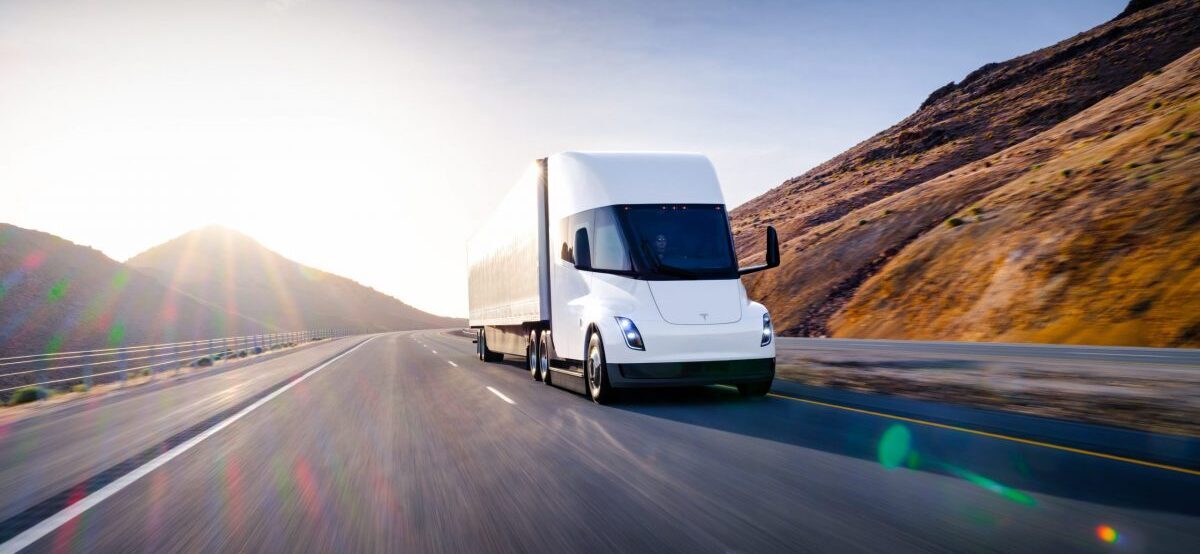
Production is tied directly to 4680 battery cell output at the Nevada site, an integration Tesla says is designed to insulate the programme from external supply chain disruption. Tesla is claiming an efficiency of around 1.7 miles per kilowatt-hour, which is arguably the Semi’s most defensible competitive claim. Fleet operators calculate total cost of ownership over millions of miles, and at that metric the Semi’s energy consumption advantage over diesel and shorter-range electric rivals is noteworthy.
Still, the competitive landscape has shifted quite a lot during the seven-year delay. Daimler’s Freightliner eCascadia is the current North American market leader for Class 8 e-trucks specifically, with its modest 230-mile range offset by a service network spanning thousands of existing bays. Meanwhile, BYD’s 8TT is expanding globally and targeting charging speeds that would directly challenge Tesla’s Megacharger infrastructure.
The most formidable challenge of all arguably comes from Chinese startup Windrose, whose truck mirrors the Semi’s aerodynamic centre-seated design. While lacking the service network, scale or brand recognition of its established Western counterparts, it undercuts all of them—including Tesla—on cost while boasting range and charging speed that come close to Tesla’s. Even in the face of 70% import duties on Chinese-made e-trucks, it can outdo Tesla’s Semi on cost at US$285,000 against US$300,000.
Despite a maximum capacity of 50,000 at Nevada, expectation should remain measured. Analyst estimates put full-year Semi output at 5,000 to 15,000 units, a fraction of the volumes Volvo and Daimler have already placed. Musk has indicated previously that Tesla will bring the Semi to Europe in 2026; Gigafactory Berlin is expected to supply regional markets as and when this occurs.
Commercial Vehicle,E-Mobility,Manufacturing,News,OEMs,Stewart Burnett,TeslaStewart Burnett,Tesla#Longawaited #Tesla #Semi #enters #volume #production #Nevada1777556688


More Stories
VW: “fundamental transformation” needed amid war, tariffs
Stellantis “reset” in progress, but is it convincing?
MG to debut Momenta’s R7 system in apparent Tesla challenge