


Audi’s new RS 5 uses electromechanical torque vectoring at the rear axle, which Audi says is a world first in a production vehicle
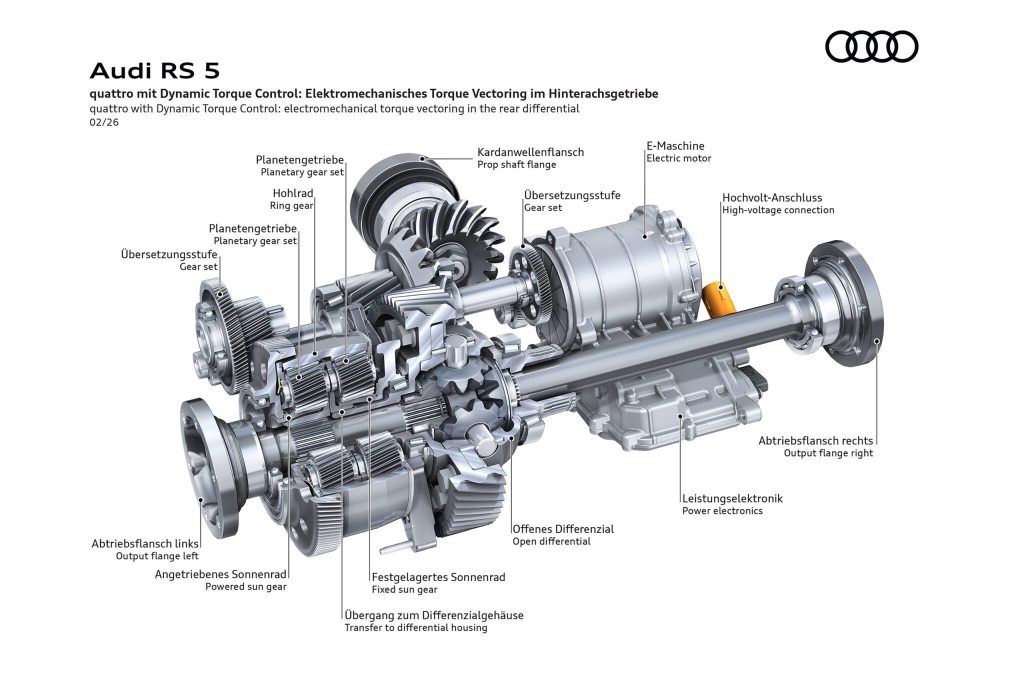
Audi has introduced electromechanical torque vectoring at the rear axle of the new RS 5, which the automaker describes as a world first in a production model. The system, called quattro with Dynamic Torque Control, forms part of a modular plug-in hybrid drivetrain and can distribute torque differences of up to 2,000 Nm between the rear wheels in 15 milliseconds, operating independently of drivetrain load.
The rear transaxle is purpose-designed for the RS 5’s hybrid drive and houses a water-cooled 400-volt permanent-magnet electric motor producing 8 kW and 40 Nm, acting as a high-voltage actuator. Overdrive gears and a conventional differential with a low lock percentage work in combination with the actuator to direct torque to individual rear wheels. Unlike clutch-based torque splitters, the system functions when off-throttle and under braking, giving it a broader operational envelope than previous approaches.
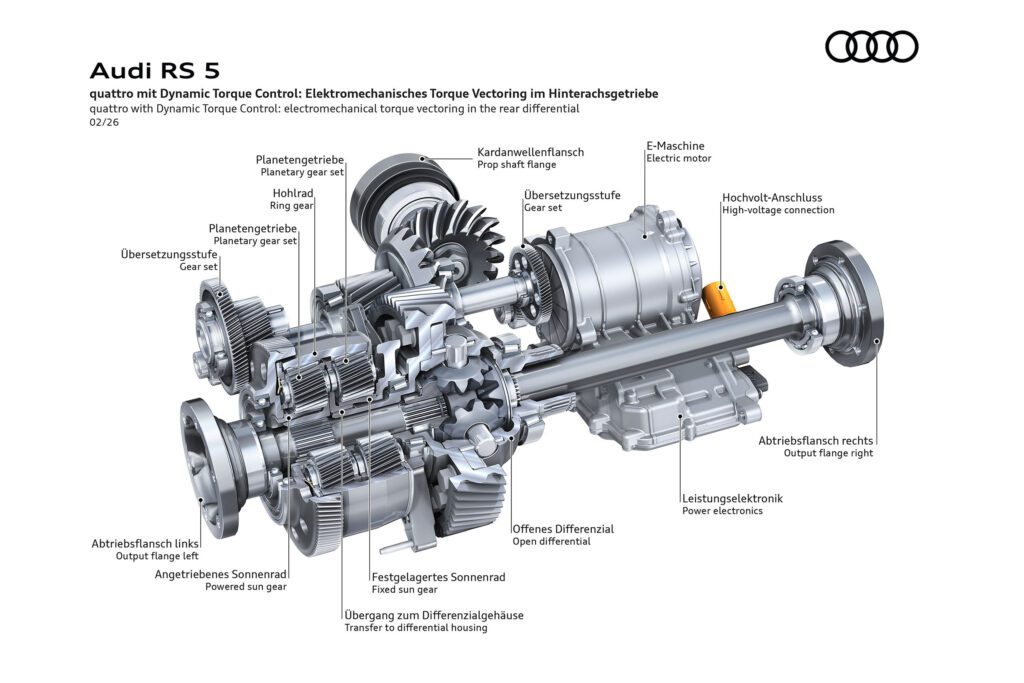
Audi says the system is managed by the HCP1 High-Performance Computing Platform, the central control unit for drivetrain and suspension functions, which integrates steering input, vehicle dynamics data and environmental conditions to coordinate torque distribution in real time. The RS 5’s electromechanical torque vectoring works alongside a front-axle electronic differential lock, brake torque vectoring, and twin-valve adaptive shock absorbers calibrated to the rear system.
The RS 5 is offered across multiple Audi drive select modes, ranging from neutral and balanced to rear-biased configurations.
Source: Audi
E-Mobility,News,OEMs,Volkswagen GroupVolkswagen Group#Audi #introduces #torque #vectoring #world1775098996

More Stories
Pony.ai, CATL partner on first L4 electric light truck
UK lays regulations for automated passenger services
Leapmotor reveals China-only B05 Ultra at Beijing show