

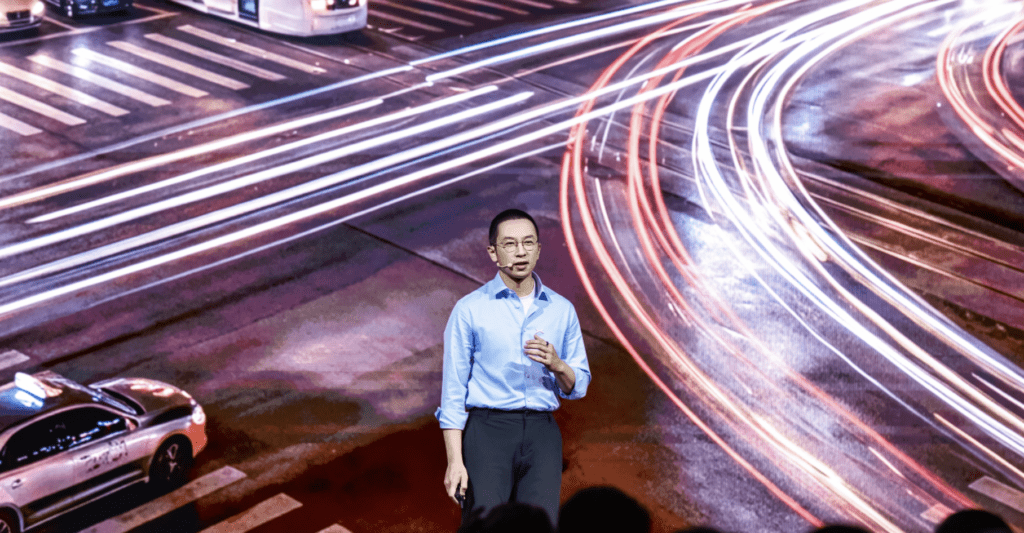
The latest update to Xpeng’s multimodal AI model positions it at the vanguard of China’s automated driving push. By Megan Lampinen
Xpeng’s AI ambitions have taken a significant step forward with the unveiling of its new VLA 2.0 automated driving solution. The system, a vision-language-action multimodal AI model, is being positioned as the first and only intelligent driving model in China capable of rivalling Tesla’s FSD. Like FSD, VLA 2.0 remains a “supervised” intelligent driving system but can support up to SAE Level 4 while reducing reliance on HD maps and pricey LiDAR. It is pivotal to Xpeng’s long-term vision of becoming a “global embodied intelligence company”, where automotive is just one of several key verticals alongside robotics and electric vertical take-off and landing (eVTOL) aircraft.
The physical AI world
Chief Executive He Xiaopeng has described Xpeng as a “mobility explorer in the physical AI world”, and progress towards an AI-shaped paradigm could be faster than many expect. Automated driving is paving the way, and Xpeng has developed its own full stack AI-based approach.
The company has spoken in the past of the challenge of developing intermediate automation levels, particularly L2+. Talking to CarNewsChina in 2025, Xpeng Director of Autonomous Driving Candice Yuan observed: “For human-driven L2+, it is very complex. If the system does the right thing but is slower than the driver expects, he will take over [control]… As a result, greater L2 autonomous driving for passenger vehicles is more complex in some areas than the L4 we developed in Alibaba for unmanned vehicles.”
The company has its sights firmly on full automation, which takes form in its Robotaxi. Speaking at the VLA Media Experience Day on 2 March 2026, Chief Executive He predicted that fully autonomous driving will be realised within one to three years, and all cars will become super intelligent agents within three to five years.
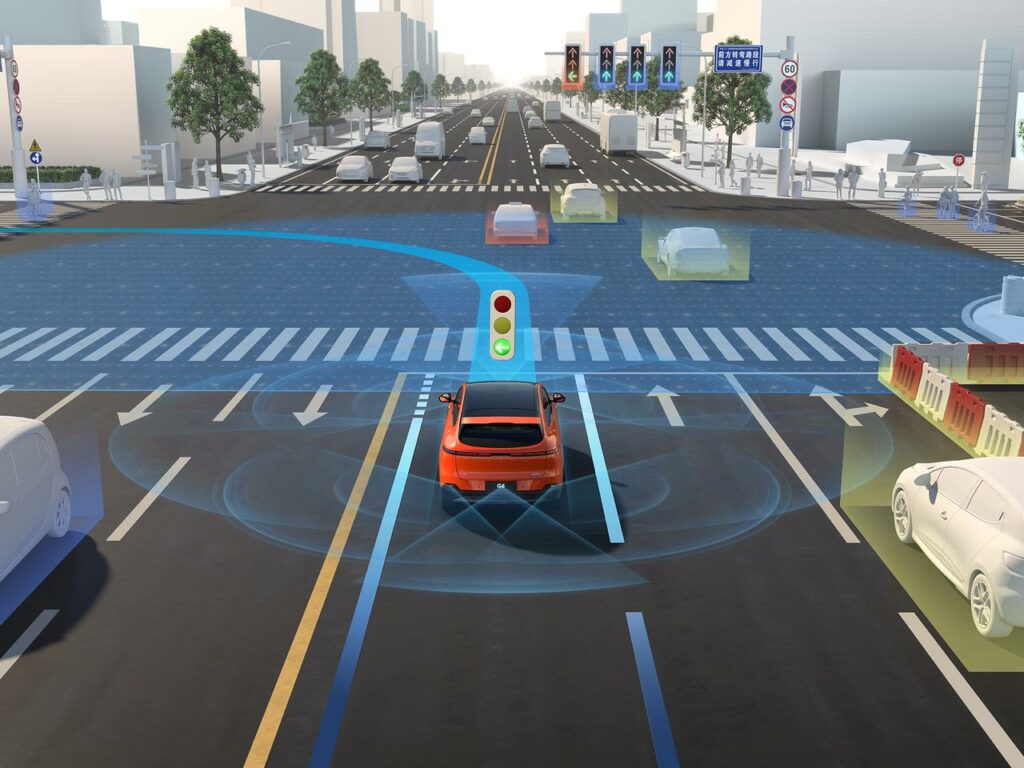
VLA 2.0 is at the heart of this: environmental data gathered from seven cameras is fed into the system at a speed of 5,000 inputs per second, which can then infer what will happen with the surrounding vehicles, road users and objects. The latest architectural advances with the system entail the removal of the intermediate L (Language representation) layer in favour of directly processing visual signals from the physical world to generate actions. The promise is faster comprehension and command output. Internal testing suggests inference speed is 12 times faster than the previous generation, and nearly five times ahead of leading rivals when it comes to takeover rates, smoothness, and supported operational scope.
Road testing of the VLA 2.0 in the Robotaxi has begun in China, with global trials to follow soon. A market launch for VLA 2.0 is scheduled for 2027, but Xpeng has cautioned that “the commercialisation of higher levels of automation will progress in accordance with evolving regulatory frameworks around the world.” The company also plans to supply the system to other automakers, starting with Volkswagen. The two already work together on software platforms and electrification. Notably, VW’s use will be limited to vehicles sold in China, presumably due to various market restrictions on the use of Chinese-sourced autonomous driving technology.
The cutting edge
While this sort of backing from a global giant like VW is a huge validation of Xpeng’s technological capability, it’s Tesla that Xpeng has been benchmarking, both for its automated driving solutions and its strategic diversification. In a Weibo post from December 2025, Chief Executive He praised the latest version of Tesla’s Full Self-Driving, specifically highlighting the “reassuring and smooth” ride. Both automakers plan to leapfrog L3 and go directly from L2 to L4, avoiding LiDAR in favour of an AI- and vision-heavy solution.
Neither company is content to simply build cars, instead positioning themselves as AI companies. Xpeng’s AI ecosystem is currently gathering data from robotics in shopping centres, cars on the road and eVTOLs in the sky, feeding a growing competency in arguably the most influential technology of the age.
Morgan Stanley analysts have predicted that “high-growth emerging markets, led by China, will drive the adoption of self-driving vehicles” and that robotaxis will account for 8% of China’s total taxi and ride-sharing fleet (the equivalent of around 360,000 vehicles) by 2030. Following the Media Experience Day unveiling of VLA 2.0, a Morgan Stanley team led by analyst Tim Hsiao described the development as “a bold leap forward to capture the X factor”. Given the current momentum, it may soon be Xpeng against which other players are measuring their own success.
Articles,Autonomous Driving,OEMs,Megan LampinenMegan Lampinen#Xpeng #VLA #Tesla #run #money #race1772709379
More Stories
Pony.ai, CATL partner on first L4 electric light truck
UK lays regulations for automated passenger services
Leapmotor reveals China-only B05 Ultra at Beijing show