
The revival of Scout Motors was conceived as a pure EV play, but consumer demand has pushed it squarely back towards ICE. By Stewart Burnett
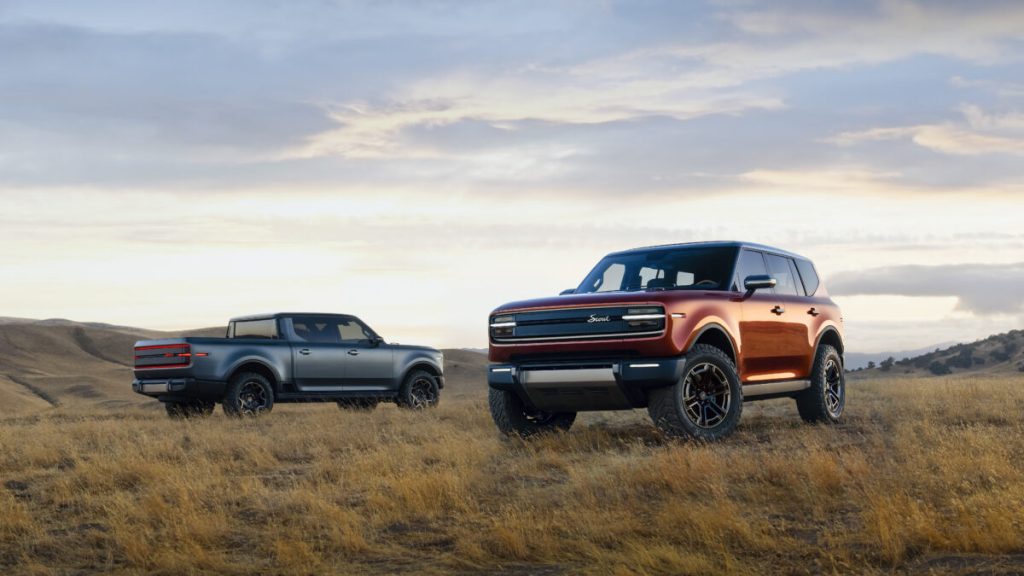
Volkswagen’s Scout Motors brand has taken more than 160,000 reservations for its Terra pickup and Traveler SUV, with 87% of prospective buyers opting for the extended-range electric vehicle (EREV) version over the battery-electric vehicle (BEV) original. Scout Chief Executive Scott Keogh had anticipated a roughly 60/40 split in favour of the EREV, which was introduced after original plans to be a pure-electric brand were shelved.
Scout Motors—once a pioneer of off-road US passenger vehicles—was revived as a purely electric brand in 2022 before reversing course to include EREVs as US BEV growth stalled. Scout is far from alone among off-road players in opting for this route: Ford is planning a range-extender for its next-generation F-150 Lightning, while Ram and Jeep also have EREVs arriving this year. More broadly, hybrids have proven the more ‘safe’ and lucrative option for electrification in Western markets; even Chinese players like BYD have adjusted their strategies accordingly to boost their regional appeal.
The EREV version pairs a roughly 63 kWh LFP battery pack offering approximately 150 miles of electric range with a four-cylinder generator, extending the model’s total range to approximately 500 miles. The BEV variants are expected to offer a more modest 350 miles—punching above its weight for the segment, but still appreciably less than the EREV. By contrast, the standard edition F150 Lightning BEV comes in around 240 miles, while the high-end configuration offers 300 miles.
Both models will be built at a new plant currently under construction in South Carolina, with Scout planning to launch the EREV versions first given the substantially higher demand. Pricing will start below US$60,000, although the company has not confirmed whether the EREV or EV will carry a premium.
The 87% EREV preference among Scout reservation holders is arguably one of the clearest data points yet on where US pickup and SUV buyers actually stand on electrification. Whether this represents a durable structural preference or a transitional one likely depends entirely on improvements to battery technology, charging infrastructure, and affordability. Demand will likely remain diminished through at least 2028 given the Trump administration’s vocal opposition to vehicles that do not rely on fossil fuel extraction.
While 160,000 represents a potentially very strong debut for the revived Scout brand, not all is peachy for the automaker. Indeed, its direct-to-consumer sales model has generated considerable legal pushback from Volkswagen’s existing dealer network. Two dealers in Connecticut and New York filed a class-action lawsuit on 3 March alleging that Scout is an extension of Volkswagen and therefore bound by the automaker’s existing franchise agreements.
Separate dealer lawsuits have been filed in Colorado, California and Florida. Scout has maintained that it operates independently of Volkswagen’s dealer network, with Keogh describing direct sales at a recent press event as the approach that “made the most sense, without a doubt”. However, the concessions that permit direct-to-sales models for pure EV players presumably no longer apply to Scout since it pivoted towards hybrids.
E-Mobility,Markets,News,OEMs,Stewart Burnett,Volkswagen GroupStewart Burnett,Volkswagen Group#Scout #Motors #hit #reservations #opted #EREV1772704841
More Stories
Pony.ai, CATL partner on first L4 electric light truck
UK lays regulations for automated passenger services
Leapmotor reveals China-only B05 Ultra at Beijing show