


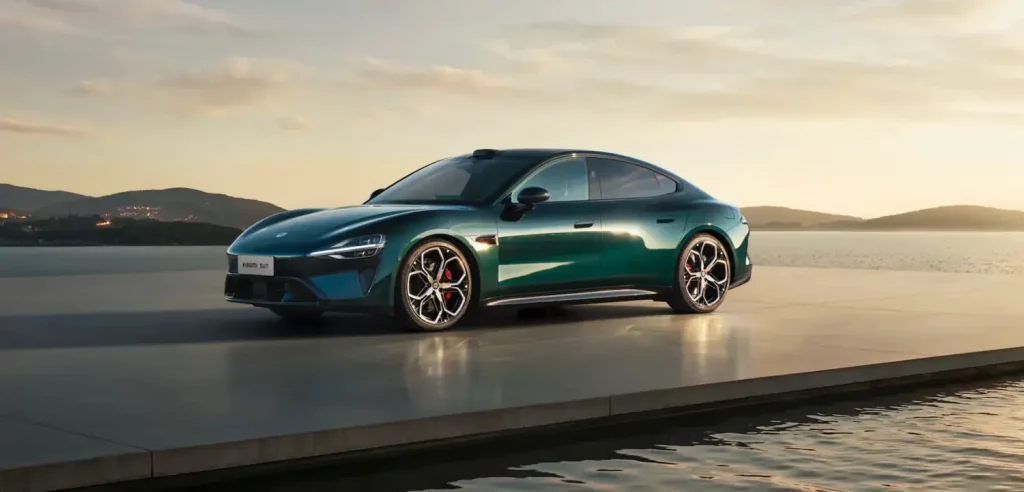
Xiaomi has launched a refreshed SU7 at a marginal price increase, keeping Tesla firmly in its sights while addressing safety concerns that dogged the first generation.
Xiaomi has unveiled an updated version of its flagship SU7 sedan priced from CN¥219,900 (US$31,870), a 1.9% increase over the first generation, with Chief Executive Lei Jun attributing the rise to material cost increases of close to CN¥20,000 per vehicle. The refreshed model secured 15,000 locked orders within eight hours of its reveal at an 18 March event in Beijing.
The most substantive changes address safety questions directed towards Xiaomi on multiple occasions in the last year. Concerns have centred around its driver-assist technology and the Tesla-style electronic door handles it uses in its vehicles. On the latter, the SU7 has a new triple-redundant door unlocking system including a separate backup power supply that operates when both the main and auxiliary batteries are depleted. China is moving to ban hidden handles entirely from next year, and the updated SU7 is fully compliant ahead of that deadline.
To improve ADAS reliability, LiDAR is being made a standard feature across all three variants rather than reserved for higher trims. Rather than using consumer-grade chips—which the automaker drew industry criticism for doing with its YU7 SUV—Xiaomi is pairing its updated perception system with Nvidia Thor-U computing hardware. 4D mm-wave radars will also be used.
Automotive World has previously questioned how organic the domestic backlash against Xiaomi really is, given the relative lack of impact such safety concerns have had on sales and the fact its technology isn’t doing anything appreciably different from its competitors. Electronic door handles are common to many Chinese electric vehicle makers, and take their cues from industry pioneer Tesla. The backlash arguably has more to do with how well-positioned Xiaomi is—particularly in terms of capital and software ecosystem—to capture a sizeable portion of the Chinese market.
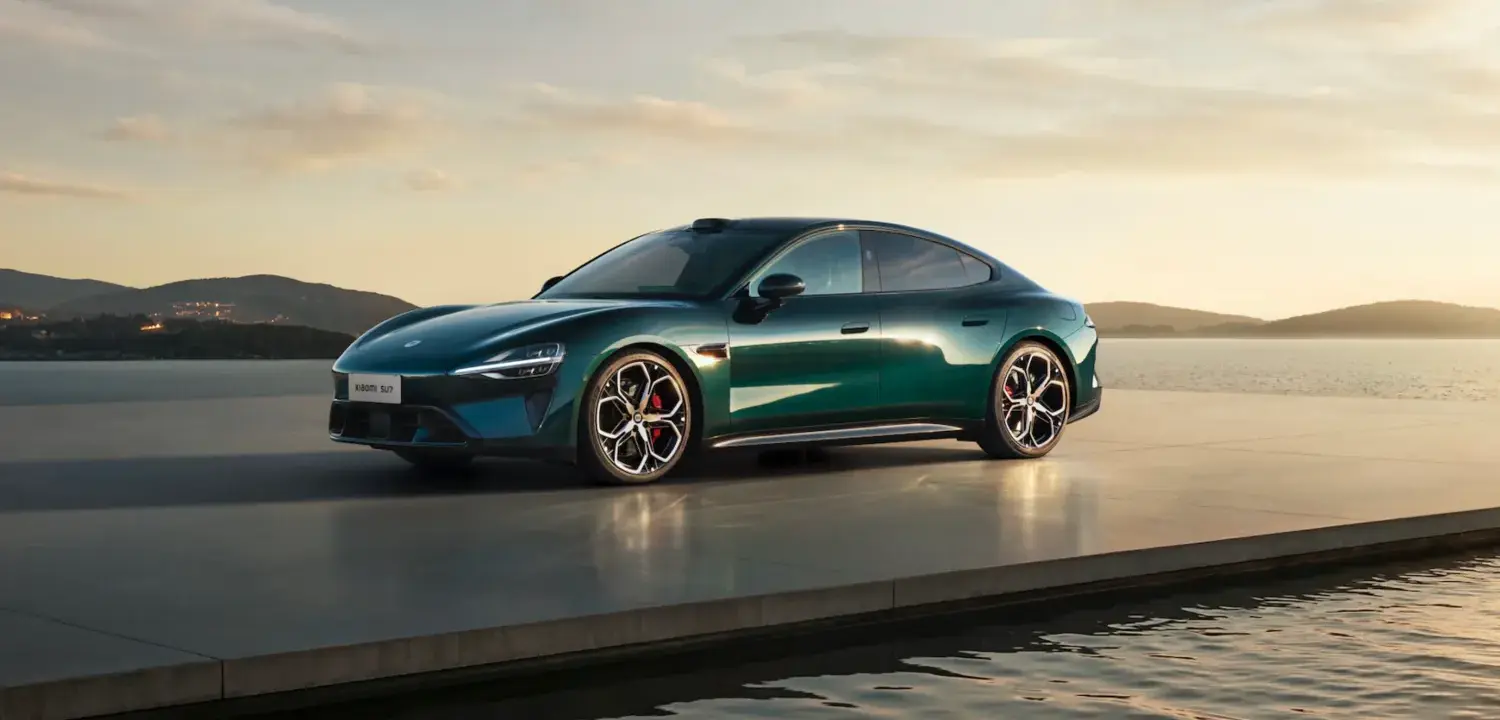
Beyond matters of safety, both the SU7’s range and charging speed have been given a meaningful boost. The Pro variant, priced at CN¥249,900 (US$36,200), claims a CLTC range of 902 km on a 96.3 kWh lithium-iron-phosphate battery. Both the standard and Pro versions have moved from a 400V to a 752V high-voltage architecture, supporting 3.5C charging with a claimed 20-minute 10-80% time. The Max variant’s 897V architecture supports 5.2C charging, completing a 10-80% charge in just 12 minutes.
Xiaomi has wasted little time iterating on the early success of the original SU7. The automaker’s first-ever consumer vehicle, the SU7 was first launched in March 2024 and has already delivered more than 600,000 vehicles. In the Chinese market it bested legacy incumbents like BMW, Mercedes, and Audi in its segment during 2025. The automaker is targeting 550,000 deliveries in 2026 and plans to begin shipping vehicles to Europe—its first overseas market—in 2027.
It is often assumed that, among Chinese automakers, BYD is the automaker best positioned to weaken Tesla’s EV leadership—particularly in global markets. In many ways, this is true; the automaker offers a substantially wider range of products than its US counterpart, and boasts the structural advantages of cost, manufacturing scale and battery technology. While Xiaomi can also handily compete on cost, its primary advantages are its software ecosystem, rapid production iteration, and brand coherence across devices. For consumers that were once drawn to Tesla for its futuristic take on what a vehicle could be, this could prove a decisive selling point.
Xiaomi also appears to be the Chinese brand that has had the most sobering impact for Western executives. It was the technological advantages of Xiaomi, not BYD, that Ford Chief Executive Jim Farley described as “humbling” in 2025. It was also a first-generation SU7 Ultra that Farley had imported into the US for his morning commute.
E-Mobility,Markets,News,OEMs,Software-Defined Vehicle,Stewart BurnettStewart Burnett#Xiaomi #refreshes #SU7 #safety #upgrades #minor #cost #bump1774000354

More Stories
Pony.ai, CATL partner on first L4 electric light truck
UK lays regulations for automated passenger services
Leapmotor reveals China-only B05 Ultra at Beijing show