




Novo Energy is the latest Europe-lead battery manufacturing project to be put on pause indefinitely or halted entirely. By Stewart Burnett
Volvo Cars has suspended operations at battery subsidiary Novo Energy and dismissed all 75 of the unit’s remaining employees after failing to secure a technology partner. In a statement, the Geely-owned Swedish automaker stated it had “intensively searched for a new partner over the past year” but currently sees no path forward for the Gothenburg facility as originally planned.
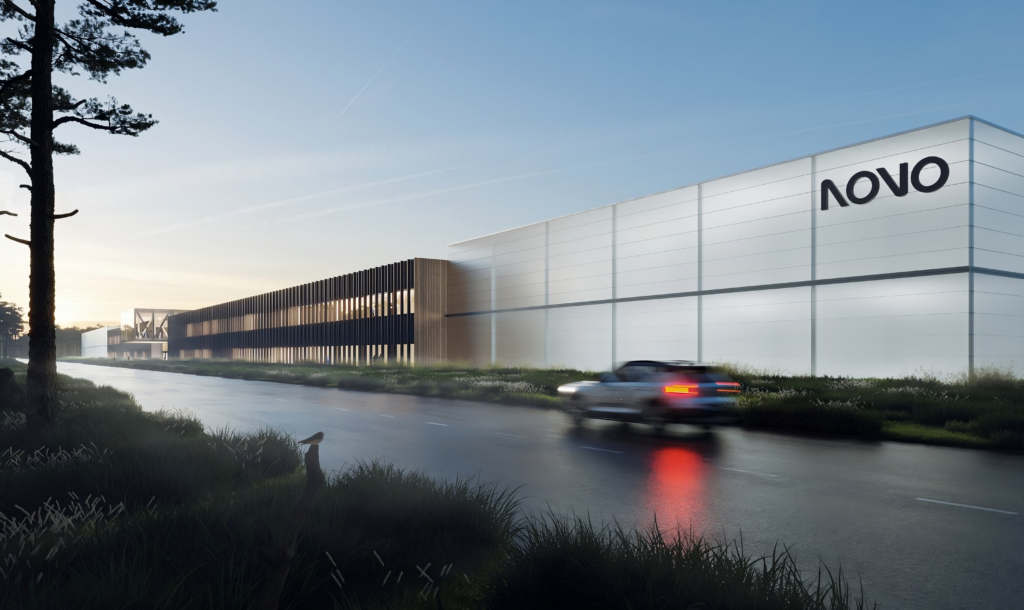
Novo Energy was established back in 2021 as a joint venture with now-defunct battery maker Northvolt to produce up to 50 GW/h annually, supplying Volvo’s European plants and potentially other brands within the Geely family. Construction of the Gothenburg factory began in September 2023 with plans to create up to 3,000 jobs and commence production in 2026. Now, the near-complete building sits without even manufacturing equipment installed.
The JV unravelled following Northvolt’s Chapter 11 US bankruptcy filing in November 2024, which prompted Volvo to acquire full ownership for a purchase price of effectively zero two months later. Northvolt subsequently filed for a second bankruptcy in Sweden in March 2025, leaving Novo Energy stranded without a technology partner. Volvo laid off 150 employees in May 2025 and divested the R&D branch to the truckmaker Volvo Group in July 2025 before this week’s final suspension.
Volvo maintains a “long-term ambition” to produce batteries in the Gothenburg area but cannot specify when production might begin or under what organisational structure. Katarina Atterström of the Swedish Union of Engineers told Swedish broadcaster SVT the closure represents “a loss for Gothenburg and western Sweden”, adding she held little hope operations would resume.
The Novo factory becoming stranded is the latest reflection of the steep challenges Europe has faced mounting a viable challenge to the battery manufacturing dominance of China. While the US has been able to gain some local capacity through JVs between automakers and South Korean firms like LG Energy Solution, Europe has continued to struggle.
At the time of writing, there is little by way of an established value chain for battery production across the continent. Automotive Cells Company, the Mercedes-Benz, Stellantis and TotalEnergies joint venture has been producing in France since 2023, but halted construction of its German and Italian facilities in 2024. For European firms trying to go it alone, the double bind of high capital costs and Chinese competition makes it almost entirely unfeasible. This is in spite of a €1.5bn (US$1.7bn) EU support package.
Volkswagen’s PowerCo—one of the few bright spots–-recently launched production in Salzgitter using technology from Chinese manufacturer Gotion, in which VW holds a stake. CATL already produces battery cells in Germany, and is building a larger plant in Hungary due to commence production in 2026.
News,Geely,Stewart BurnettGeely,Stewart Burnett#Volvo #Cars #puts #indefinite #halt #battery #unit #Novo1768406988


More Stories
Pony.ai, CATL partner on first L4 electric light truck
UK lays regulations for automated passenger services
Leapmotor reveals China-only B05 Ultra at Beijing show