

Tesla looks to boost recurring revenue by eliminating the ability to outright purchase FSD. By Stewart Burnett
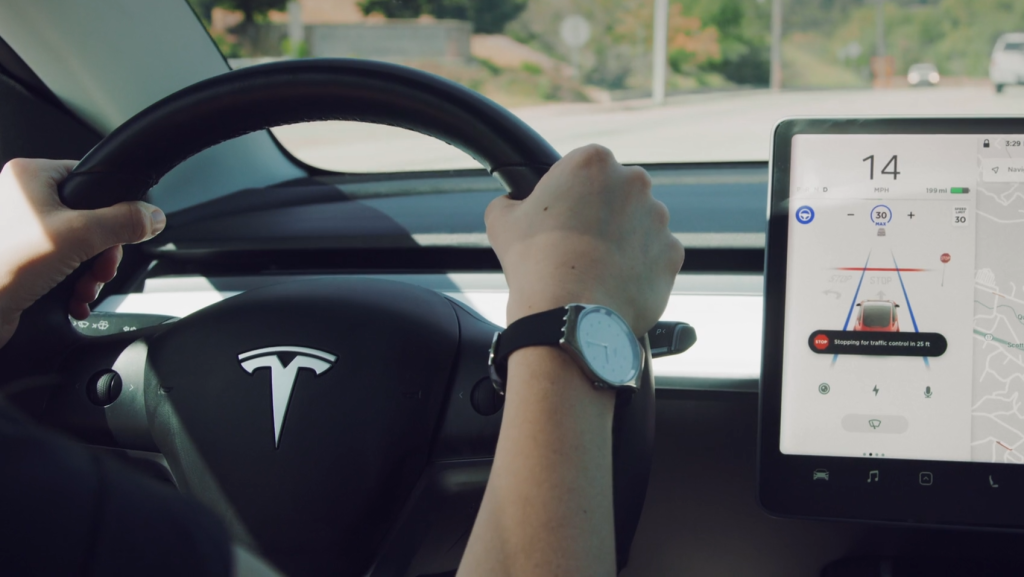
Tesla plans to eliminate the option to purchase its Full Self-Driving (FSD) software outright from 14 February onwards, according to a 13 January post on X by Chief Executive Elon Musk. Customers who did not previously make a purchase will only be able to use the system via the US$99 monthly subscription, the price of which has not changed.
This ends a longstanding choice for US customers, who could previously pay US$8,000 upfront or opt for monthly billing. Musk did not provide any explanation for the decision, nor has Tesla offered clarification or further detail through official channels.
The timing of the development is noteworthy given the growing legal scrutiny on Tesla’s ability to meet its own ambitions regarding the advanced driver-assistance system (ADAS) software. FSD (Supervised)—the name of which was changed back in September 2025—remains an SAE Level 2 system requiring constant human attention and readiness to intervene.
Specifically, Tesla faces legal challenges from customers with vehicles equipped with HW3, which Musk conceded in January 2025 cannot actually support full autonomy as originally promised. Customers have purchased FSD for prices of up to US$8,000, stretching back as far as 2016, under the pretext of eventual recurring revenue through leasing their vehicles out as robotaxis.
Tesla has simultaneously struggled to convert vehicle owners into paying FSD subscribers, despite extensive marketing efforts. Chief Financial Officer Vaibhav Taneja disclosed in October 2025 that only 12% of the company’s current fleet subscribes to the software. Take rates for Model Y and Model 3 vehicles sit between 12% and 18%, while Model S and Model X achieve 50% to 60% adoption, likely driven by bundled luxury packages.
Low conversion rates at Tesla’s current premium price point may suggest that the market remains sceptical about the overall value proposition, particularly given the highly-publicised struggles to improve the technology and ongoing safety concerns. The US National Highway Traffic Safety Administration opened an investigation last year into 2.88 million Tesla vehicles equipped with FSD, following more than 50 reports of traffic safety violations and multiple crashes.
At the same time, Tesla needs to demonstrate the viability of its recurring revenue streams given its dwindling sales, particularly in core markets like the US and Europe. In the latter, sales collapsed by 27.8% year-over-year in 2025 as intensifying competition and widespread revulsion at Musk’s far-right political antics took centre stage.
Unfortunately, Tesla has historically struggled to meet either timelines or expectations around its ADAS capabilities. Musk has repeatedly set out ambitious—often implausible—self-driving targets, including rolling out robotaxi access to over 50% of the US population by the end of 2025. Currently, the service remains available as a limited pilot in only one city. Earlier in January, Musk also revised his prior claim that Tesla would require seven billion miles of real-world training data to achieve safe unsupervised self-driving; now he estimates it will require ten billion.
Tesla released FSD v14 in October, its first major update since dropping full autonomy promises from marketing materials in September. The software introduces arrival options for curbside and driveway stops, camera-based navigation for blocked roads, and refined emergency vehicle detection. The automaker has launched free 30-day FSD trials across North America to boost awareness.
News,Stewart Burnett,TeslaStewart Burnett,Tesla#Tesla #abandons #FSD #purchases #subscriptiononly1768402192
More Stories
Pony.ai, CATL partner on first L4 electric light truck
UK lays regulations for automated passenger services
Leapmotor reveals China-only B05 Ultra at Beijing show