

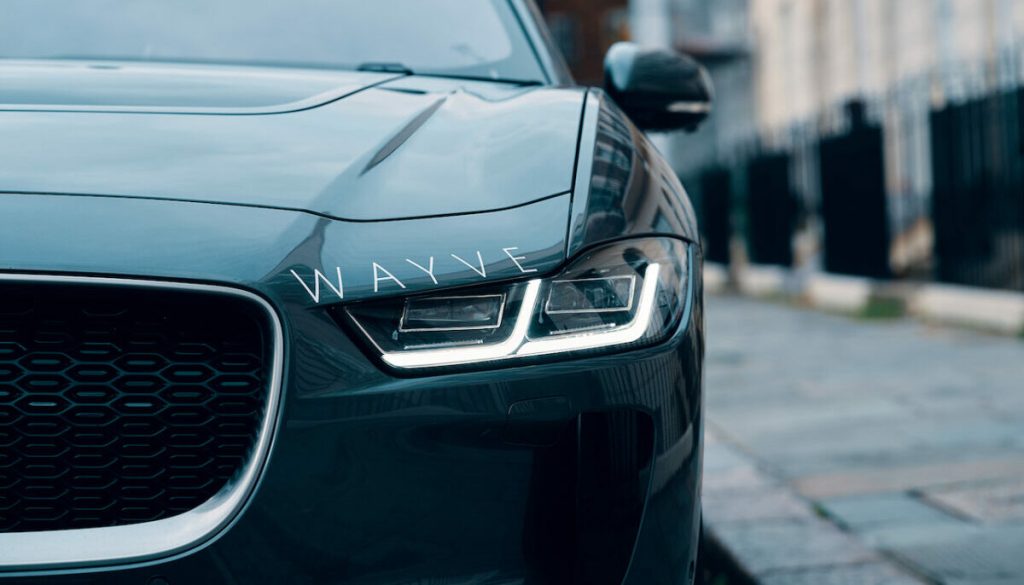
With US$1.5bn raised and Uber as a distribution partner, Wayve gets ready to test its vision of autonomy against the more established Waymo. By Stewart Burnett
UK autonomous driving startup Wayve has raised US$1.5bn in a Series D round, valuing the company at US$8.6bn and bringing its total capital raised to US$2.5bn. The round was led by Eclipse Ventures, Balderton Capital and SoftBank Vision Fund 2, and saw the first-ever investments from automotive industry players—Mercedes-Benz, Stellantis and Nissan, respectively.
The raise includes a US$300m tranche from Uber, contingent on Wayve hitting certain milestones, to fund a fleet of robotaxis running on Wayve’s software across ten cities in multiple countries. The first of these cities will be London, and is expected to take place later in 2026. beginning in London this year.
The company has confirmed that Mercedes and Stellantis are currently exploring the possibility of deploying its autonomous driving systems in their own vehicles; Nissan, on the other hand, has a confirmed partnership to integrate the technology into its next-generation ProPilot driver assistance system, due in 2027.
“Wayve is moving from an R&D stage to a commercialisation phase,” said Co-Founder and Chief Executive Alex Kendall to the Financial Times. The first consumer vehicles using Wayve’s AI driver—made by Nissan—will go on sale next year, initially offering a hands-off, eyes-on-the-road SAE Level 2 system requiring driver supervision. Kendall also indicated that the company was in talks with “every western carmaker who is not Tesla” about licensing its software.
Wayve’s pitch to automakers rests on the generalisability of its approach. Rather than relying on pre-mapped routes or rule-based systems, its AI is designed to learn from real-world driving data and transfer across vehicle types and cities without location-specific tuning. In other words, it aims to accomplish what Tesla promised: autonomy without geofencing. Whether it succeeds where Tesla continues to struggle remains to be seen.
To be sure it is putting the work in: over the past year alone, Wayve conducted driving tests in more than 500 cities across Europe, North America and Japan without city-specific preparation. Kendall argues that this software-licensing model (that is, avoiding the capital costs of operating large proprietary fleets) could ultimately produce higher margins than the approaches taken by more hands-on players like Tesla or Waymo.
If automakers are willing to pay for an AI layer they can integrate with their own hardware, Wayve avoids the billions in capex that have made robotaxi operations financially precarious. Neither Waymo, Tesla, Pony.ai or any other player has seen its driverless ride-hailing revenues exceed its hefty R&D and deployment costs. The closest is likely Baidu’s Apollo Go, which announced during mid-2025 that it had achieved unit-level profitability in Wuhan. This means that revenue from rides in individual vehicles now exceeds the cost of deploying, operating and maintaining it.
London is emerging as a major battleground as the race for robotaxi commercialisation heats up. While no paid robotaxi services currently exist anywhere in the UK, the capital will see the deployments of fleets from Waymo and the aforementioned Apollo Go via Uber and Lyft. However, Wayve’s home advantage and established road-testing history in the capital give it a credible claim to pole position, although it operates with considerably less financial firepower than Waymo, which raised US$16bn and reached a US$110bn valuation earlier this month.
Autonomous Driving,Markets,News,Software-Defined Vehicle,Stewart BurnettStewart Burnett#selfdriving #startup #Wayve #closes #US1.5bn #funding1772023829
More Stories
Pony.ai, CATL partner on first L4 electric light truck
UK lays regulations for automated passenger services
Leapmotor reveals China-only B05 Ultra at Beijing show