

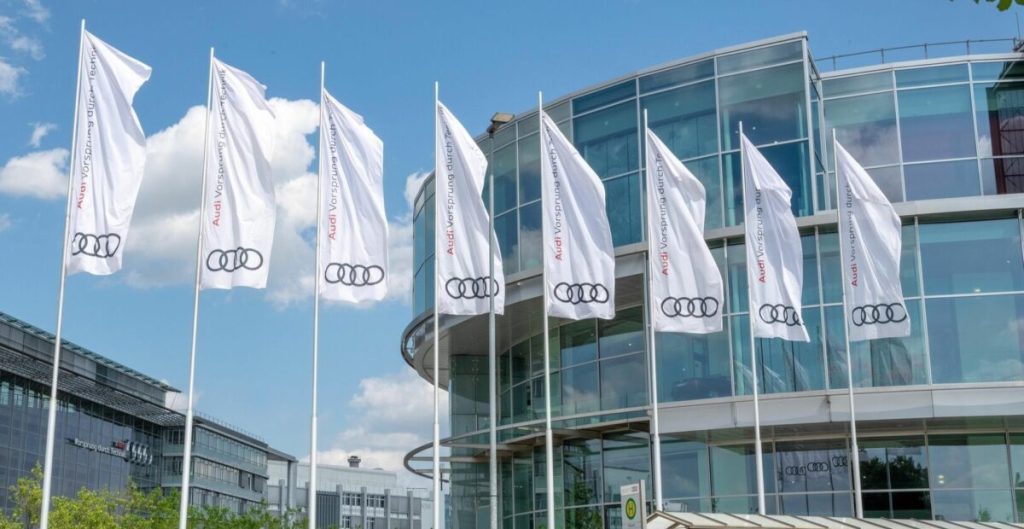
Chief Executive Oliver Blume warns of the material impact on US investments that President Trump’s tariff regime is having. By Stewart Burnett
Volkswagen has stepped back from plans to open a factory in the US, blaming President Donald Trump’s abrupt imposition of new tariffs and an unreliable trading environment. Chief Executive Oliver Blume confirmed the development in an interview with Handelsblatt, noting that tariffs had cost Volkswagen €2.1bn (US$2.14bn) in the first nine months of last year, rendering the planned Audi facility no longer possible.
“With unchanged tariff burdens, a large additional investment is not financially feasible,” Blume said. “Reduction of costs in the short term and reliable business conditions in the long term are what we need.” He also noted that the discussions he had thus far conducted with the Trump administration were “always fair and constructive, but we’ve not come to a solution so far”.
The shift in plans marks a significant blow to Trump’s strategy of using tariffs to pressure foreign companies to shift their investment and operations to the US. Audi is highly exposed to the Trump administration’s duties because it does not currently manufacture cars in the US. The EU only managed to negotiate the rate down to 15% from 25% in the trade deal it struck back in August. Nearshoring to reduce the cost burden is likely unfeasible too: Mexican car exports to the US now face 25% tariffs unless they meet stringent local-content rules.
The Audi project has evolved substantially since its initial proposal back in 2023, with the automaker first examining a standalone facility “a large plot of land” in South Carolina before shifting focus to a twin plant within the Chattanooga, Tennessee complex where the electric ID.4 sport utility vehicle is currently produced.
The road to US Audi production was not without bumps: Volkswagen faced internal resistance from German labour representatives who demanded employment and production guarantees before backing the US expansion. Works Council Chief Jörg Schlagbauer warned back in August that unions would only back US plans if accompanied by long-term commitments.
Audi’s European footprint was already running below optimal levels at the time US plans appeared to be moving forward. Audi had previously agreed in March to eliminate 7,500 German positions through 2029 while extending job security guarantees for remaining workers until 2033.
Meanwhile, the Scout Motors facility in Blythewood, South Carolina continues at full pace with the main 1.3 million-square-foot assembly building now enclosed and currently in the process installing equipment. The first of more than 700 robots were delivered to the body shop in January 2026, with the South Carolina Department of Transportation constructing a dedicated highway interchange and railroad bridge to support the factory. Scout targets late 2027 for first production of its Traveler sport utility vehicle and Terra pickup truck.
There is the possibility that Audi may ultimately move in with Scout rather than construct a standalone facility. This approach would allow Audi to manufacture vehicles in the US and avoid tariff burdens without committing a fresh US$4bn to dedicated infrastructure, leveraging existing Scout capacity while the trade environment remains volatile.
Manufacturing,Markets,News,OEMs,Stewart Burnett,Volkswagen GroupStewart Burnett,Volkswagen Group#Trump #tariffs #force #Audi #hit #brakes #Audi #plant1769486445
More Stories
Pony.ai, CATL partner on first L4 electric light truck
UK lays regulations for automated passenger services
Leapmotor reveals China-only B05 Ultra at Beijing show