



Toyota is joining Daimler and Volvo’s cellcentric fuel cell venture. By Megan Lampinen
Hydrogen has emerged as the underdog in the decarbonisation race, but it has a growing share of proponents. Many believe it has an important role to play in specific applications—particularly heavy, long-haul transport where the freight load capacity needs to be maximised—and could prove a useful complement to battery electric setups. Volvo Group and Daimler have been among the more active investors through their cellcentric equal-parts joint venture, established in 2021. Progress since then has been slow, but the arrival of a third partner could shake things up.
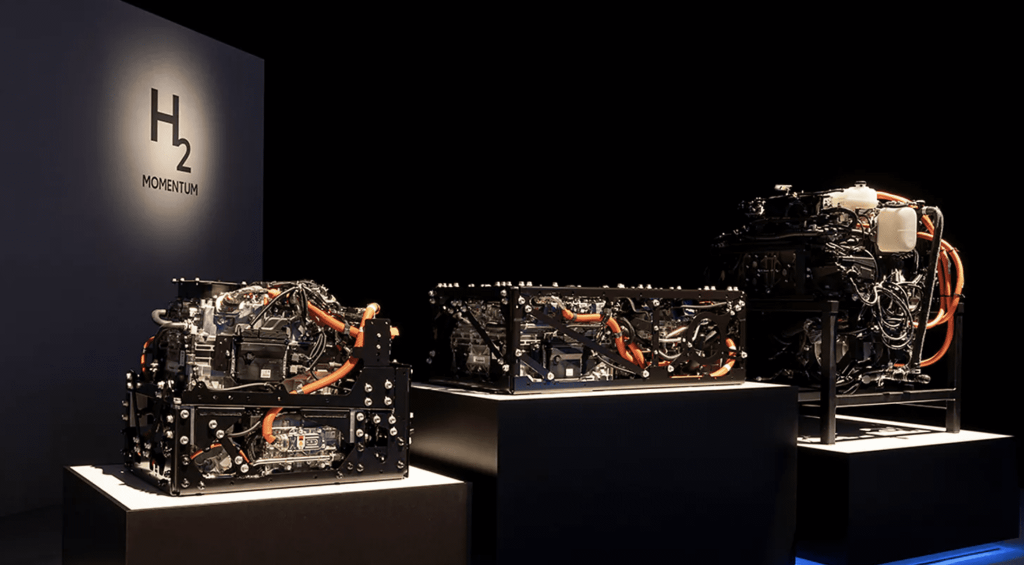
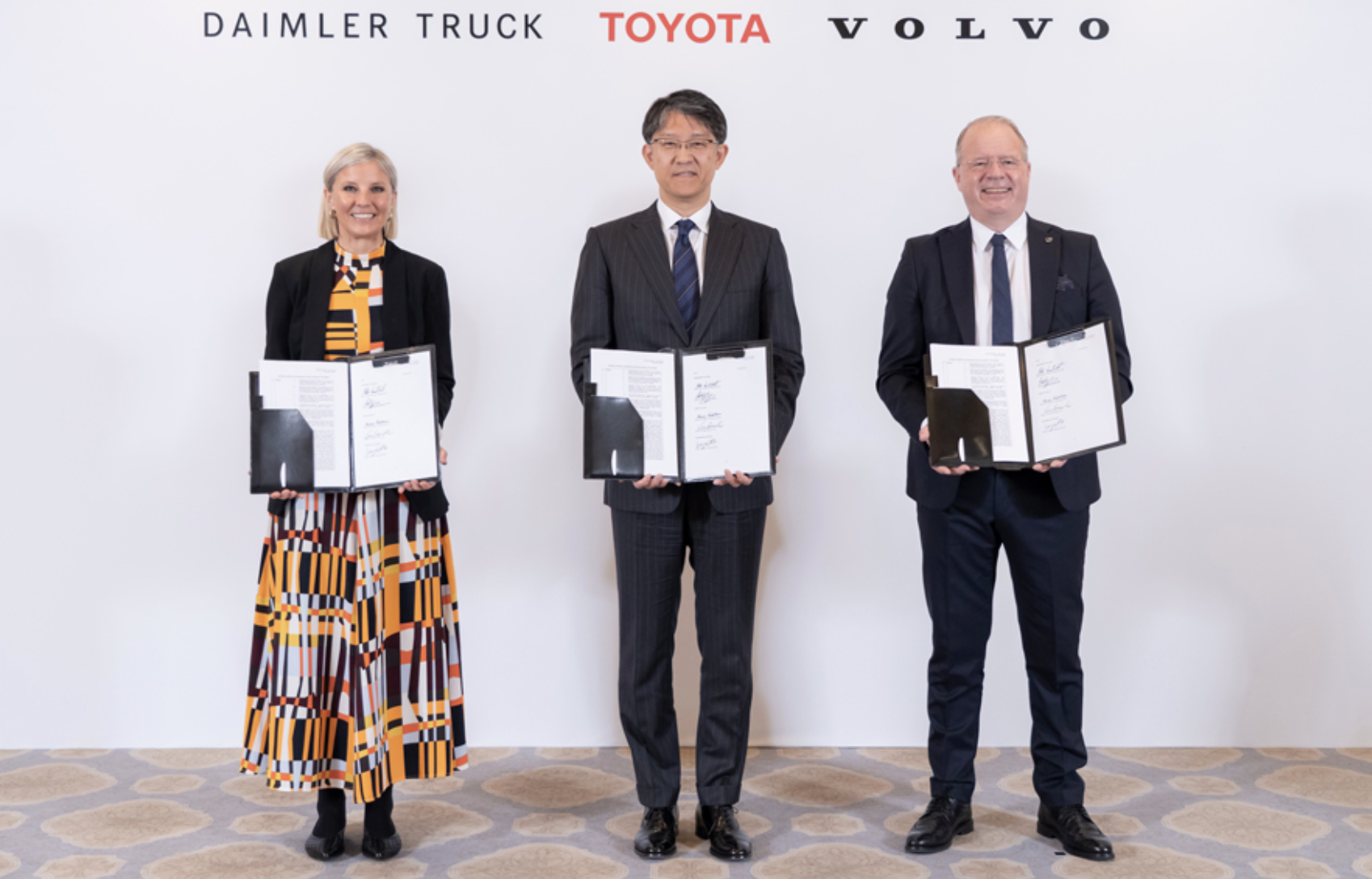
Toyota now wants in, and the companies are rejigging plans for a three-way ownership structure. The focus will remain on positioning cellcentric as a centre of competence for the development and production of fuel cell systems for heavy-duty on- and off-road transport, as well as other heavy-duty applications. Toyota is not only the world’s largest automaker but will bring the welcome addition of expertise in fuel cell unit cells―the power-generating element of a fuel cell system that converts chemical energy into electricity, heat, and water.
A game changer
Adding a third partner brings scale, infuses fresh capital and helps spread out R&D costs. In this case, Toyota’s Asian foothold also adds greater geographic diversity. Andreas Gorbach, Daimler Truck Board Member responsible for Truck Technology and former cellcentric Chief Executive, commented: “Joining forces with the world’s largest automotive manufacturer and fuel cell pioneer is a privilege for us―and a game changer in making hydrogen in transportation a reality and cellcentric the go-to place for fuel cell technology in commercial vehicles worldwide.” Volvo Group Chief Executive Martin Lundstedt commented on how its addition to the JV will help “accelerate and create critical mass for hydrogen applications.”
Daimler and Volvo may have decades of truck and bus expertise, but Toyota is a heavy-hitter itself when it comes to hydrogen, with more than three decades of fuel cell technology research. Its Mirai model was the first mass-produced fuel cell passenger car when it launched in December 2014, with a second-generation following in 2020. Sales volumes have been miniscule, totalling just 28,000 units. Toyota hasn’t been deterred, and it introduced a fuel cell version of the Crown sedan in Japan in 2023 and has been trialling a GR Corolla race car fuelled by liquid hydrogen.
Its main focus is now on heavy vehicles and stationary applications. In 2019, the automaker began supplying fuel cell systems for buses, trucks, trains and stationary power generators, working with such big names as Hino, Paccar and VDL Group. As of 2025, more than 2,700 units have been delivered to more than 100 customers globally. Toyota has also been operating hydrogen trucks for its own deliveries in Japan and Europe and running them at its sites in Japan’s Chubu region.
In 2025, the company announced a third-generation fuel cell system specifically adapted for commercial vehicles. It claims to halve costs, increase efficiency by 20%, and improve range. Notably, the company’s hydrogen strategy extends beyond vehicles to include production, transportation and storage. It developed electrolysis equipment and is working with various partners to create a “hydrogen society”.
Volvo and Daimler certainly wouldn’t be Toyota’s only collaborators; it has teamed with Hyundai and BMW for various hydrogen collaborations over the years and continues to do so. These are unlikely to impact the cellcentric partnership: the BMW work has focussed primarily on light vehicles, while the Hyundai alliance is less of a formal joint venture and more of an ecosystem alignment around hydrogen advocacy and standards.
Outlook
As well as scale, Toyota’s move is validation of the future of hydrogen, which remains uncertain. In October 2025, S&P issued a report entitled ‘Hydrogen-powered vehicles face a rough road ahead’, highlighting the automakers that have been backing away from hydrogen. In February 2025, Renault and Plug Power’s fuel cell joint venture Hyvia was liquidated, putting an end to their plans for a range of hydrogen-powered light commercial vehicles (LCVs). In July that year, Stellantis confirmed it was discontinuing its fuel cell programme due to steep costs and limited fuelling infrastructure, noting that it no longer expected hydrogen LCVs to see any market traction before 2030. In October 2025, GM announced it would discontinue development of hydrogen fuel cells under the Hydrotec brand, citing similar reasons.
The difference with cellcentric is the focus on heavy vehicles and stationary applications, where momentum is building. While Trevor Milton’s rallying cry of “diesel is dead” proved overly optimistic, hydrogen could plug a real gap in those parts of the world that lack the grid capacity to support large battery electric fleets. MarketsandMarkets expects the global hydrogen truck market to grow from US$1.93bn in 2024 to US$10.79bn by 2035, and that’s not including other heavy vehicles or stationary applications. To realise this growth, cooperation is becoming increasingly necessary.
Toyota is not yet on board—the signed agreement is non-binding, and any final agreement is subject to approval by everyone’s boards and the regulatory authorities. But if and when it does, cellcentric will stand a stronger chance of securing a solid foothold in the hydrogen economy.
Articles,Commercial Vehicle,E-Mobility,OEMs,Daimler Truck,Megan Lampinen,Toyota Group,Volvo GroupDaimler Truck,Megan Lampinen,Toyota Group,Volvo Group#Toyota #lend #critical #mass #cellcentric1774970346


More Stories
Pony.ai, CATL partner on first L4 electric light truck
UK lays regulations for automated passenger services
Leapmotor reveals China-only B05 Ultra at Beijing show