




Japan appears to be putting up barriers for foreign workers to support local manufacturing precisely when they are needed most. By Stewart Burnett
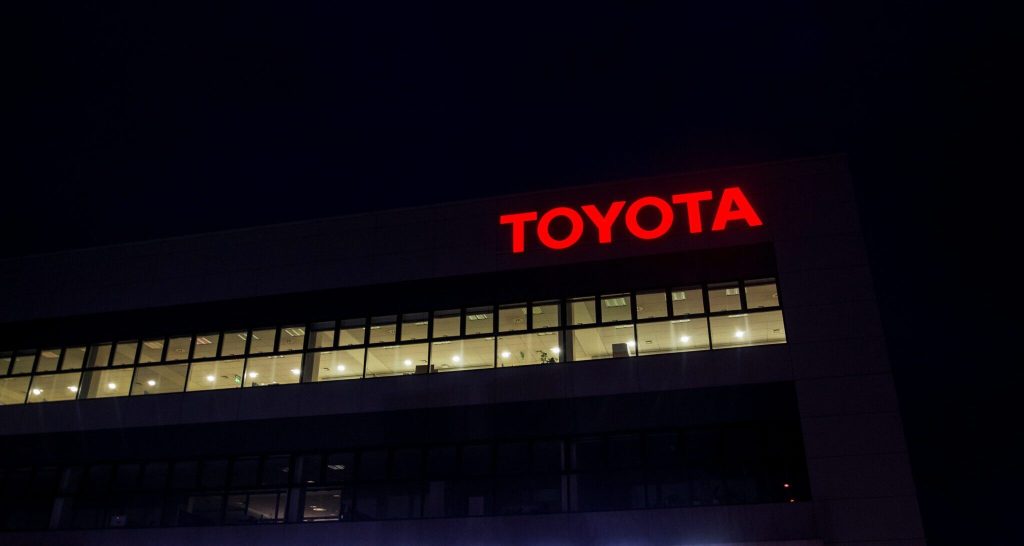
Toyota plant managers are sounding the alarm on worsening labour shortages in Japan, and the automaker is now leaning on retention programmes for foreign workers to offset less-than-accommodating government policy. At its Motomachi plant, a dedicated 12-person team has been assigned to support Filipino workers, providing interpretation, workplace integration, and cultural support.
The initiative, known as Team Salamat Po—using the Tagalog phrase for “thank you very much”—has recorded zero staff turnover since its introduction, according to a 25 March Nikkei report. The programme signals a meaningful shift in Toyota’s hiring posture. Indeed, the automaker has historically avoided aggressive recruitment of foreign nationals to avoid competing with smaller suppliers that depend on them more heavily.
Toyota’s domestic supply chain is sprawling, encompassing around 60,000 companies—many of which cannot function without the support of foreign workers. Motomachi Plant Deputy General Manager Masahiko Ishibashi told Nikkei that the automaker has reached a point where it “can no longer maintain production” without changing course.
The numbers bear that out. Foreign workers in Japanese manufacturing have exceeded 100,000 for the first time, more than double the 2008 figure, and the Japan International Cooperation Agency estimates the sector will require a staggering 276,000 by 2040. Meanwhile, Toyota has set a target of maintaining domestic production at three million vehicles annually, and executives acknowledge that even with deep AI integration, many operations across the automaker’s production network remain heavily dependent on human labour.
Demographic factors indicate that foreign workers will be essential for Japan’s manufacturing future. The country’s working-age population of around 75 million in 2020 is projected to fall 17% to 62 million by 2040 as birth rates continue to decline. The number of children being born has fallen for ten consecutive years, and business bankruptcies rose more than 30% last year due in part to worsening labour shortages.
As such programmes for supporting Filipino workers are an operational necessity given the country’s otherwise unwelcoming disposition towards immigrants. Beyond Filipino migrants, Toyota also leans heavily on Brazilian and Vietnamese immigrants to support its domestic operations. Labour shortages are also weighing on the commercial transit sector, pushing many regional players—among them Isuzu, PlusAI and Tier IV—to advance autonomous driving as a potential solution.
Unfortunately for Toyota and virtually all other Japanese manufacturers, the political environment is moving to make immigration more difficult. Prime Minister Sanae Takaichi, who took office in October 2025, has introduced measures that would raise the naturalisation residency requirement from five to ten years, introduce mandatory Japanese language certification for permanent residency, and increase visa fees significantly. Her administration has also proposed powers to revoke permanent residency for administrative infractions including unpaid taxes.
Japan’s manufacturing base—arguably Toyota’s supply chain in particular—is structurally dependent on foreign labour at precisely the moment its government is making Japan a less attractive destination for long-term settlement. Toyota can run integration programmes and interpret at the factory floor, but it cannot resolve the tension between an economy that needs foreign workers to stay and a political framework increasingly designed to keep them at bay.
Manufacturing,Markets,News,OEMs,Stewart Burnett,Toyota GroupStewart Burnett,Toyota Group#Toyota #plant #leaders #press #importance #foreign #labour1774419575

More Stories
Pony.ai, CATL partner on first L4 electric light truck
UK lays regulations for automated passenger services
Leapmotor reveals China-only B05 Ultra at Beijing show