

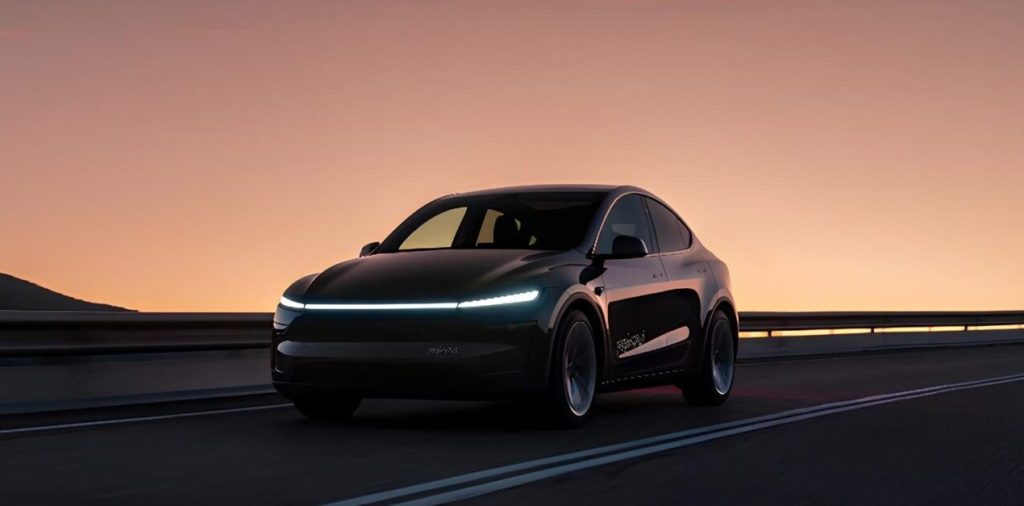
Tesla’s Austin robotaxi service has steadily improved since its June 2025 launch, but it continues to lag competitors like Waymo. By Stewart Burnett
During his remarks at the World Economic Forum summit in Davos, Tesla Chief Executive Elon Musk confirmed the automaker had removed safety drivers from its robotaxi service in Austin. The majority of vehicles in the limited fleet still operate with safety drivers present, but a small number no longer do, and this number will likely increase over time.
Musk first announced that testing without human oversight was underway last month. The development marks the latest in a series of improvements to Tesla’s pilot service in Austin, following two expansions to the geofenced areas the robotaxis operate it, and one expansion of the fleet’s overall size. Currently, the number of vehicles sits at 34; by contrast, Waymo offers over 100 vehicles in the same city.
Some industry observers have questioned the safety of Tesla’s Austin service, which has reported eight crashes over six months to the National Highway Traffic Safety Administration. This translates to roughly one incident every 40,000 miles; by contrast human drivers log a crash roughly every 500,000 miles in the US. Tesla redacts most information in crash reports including narrative descriptions of incidents, preventing assessment of fault or circumstances.
Tesla also operates a “chauffeur” service with human drivers using driver-assist in California’s Bay Area—after promising a robotaxi service the same year—but has not requested permission to test self-driving vehicles proper in the state. Musk claimed that the company would offer robotaxi coverage to half of the US population by end-2025; it did not.
California regulators found last year that Tesla engaged in deceptive marketing regarding its driverless capabilities. Similarly, the automaker was required to change the name of its Full Self-Driving technology to ‘Intelligent Assisted Driving’ in China due to new regulations requiring that companies do not overstate their autonomous driving technology’s capabilities.
Tesla lags competitors already operating commercial driverless services including Alphabet’s Waymo, which began offering autonomous rides in Phoenix in late 2018 and subsequently expanded to offer paid rides in Austin, Los Angeles, San Francisco, Atlanta and Miami. Waymo’s fleet now exceeds 2,000 vehicles, and the company expects to launch its first overseas service in London during 2026.
Autonomous Driving,Markets,News,OEMs,Software-Defined Vehicle,Stewart Burnett,TeslaStewart Burnett,Tesla#Tesla #starts #removing #safety #drivers #Austin #robotaxis1769183946
More Stories
Pony.ai, CATL partner on first L4 electric light truck
UK lays regulations for automated passenger services
Leapmotor reveals China-only B05 Ultra at Beijing show