

California continues to push ahead with its electrification mandate, despite substantial headwinds from federal policy. By Stewart Burnett
California surpassed 2.5 million cumulative sales of new zero-emission vehicles (ZEVs) in 2025, the California Energy Commission (CEC) announced on 21 January. The state recorded 79,066 new ZEV sales in the fourth quarter representing 18.9% of all new car purchases, with cumulative sales growing over 300% since the end of 2019 in no small part due to state-specific policies and incentives.
The performance is noteworthy given the elimination of federal tax credits for electric and hybrid vehicles on 30 September 2025, part of a wider effort by President Donald Trump’s administration to prioritise vehicles that run on fossil fuels. In other parts of the country, this effort has proven quite successful: national ZEV sales fell to just 5.8% of new vehicle purchases in the fourth quarter from 10.5% in the third quarter according to Cox Automotive data.
In the state’s preliminary budget revealed on 9 January, Governor Gavin Newsom proposed a US$200m state incentive programme to support market demand for ZEVs amid what the state describes as unprecedented uncertainty from federal government actions. In a statement, Energy Commissioner Nancy Skinner noted that “no state in the union can match California’s five-year growth in ZEV sales […] Each quarter, even in the face of increasing federal headwinds, tens of thousands of consumers are purchasing a ZEV in the Golden State”.
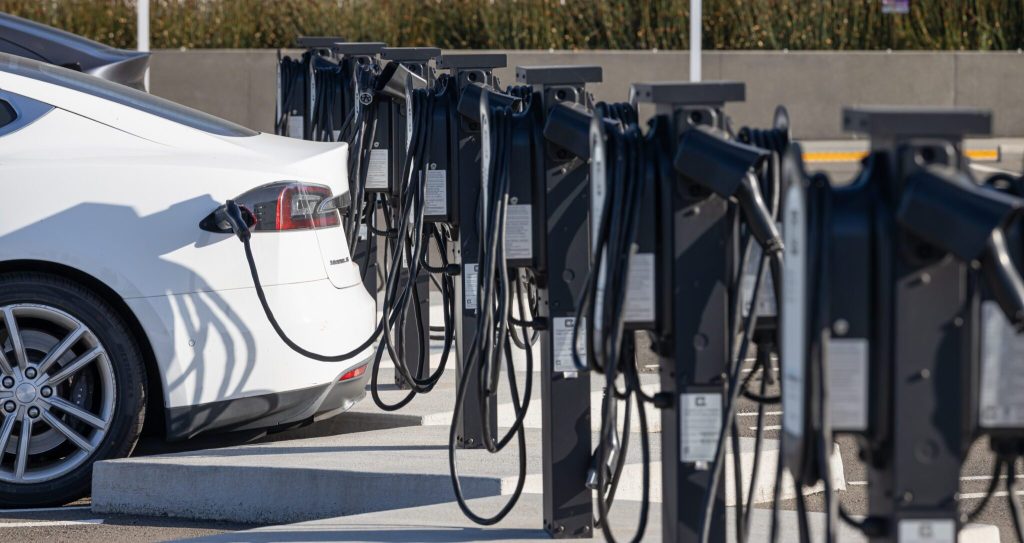
As of January 2026, California has over 200,000 public and shared private charging stations, in addition to an estimated 800,000 home chargers. The CEC allocated US$98.5m in funding for passenger vehicle charging for fiscal year 2025-2026. Much of the investment focuses on Level 1 and Level 2 charging in locations with longer vehicle dwell times like multi-family residences.
Despite major federal headwinds California is continuing to forge ahead, implementing Advanced Clean Cars II which mandates that 100% of new passenger vehicle sales be zero-emission by 2035. The broader goal is to cut greenhouse gas emissions from vehicles in half by 2040. Californians had 149 ZEV models available for purchase in the fourth quarter of 2025, encompassing both battery-electric and hybrid options.
The state’s Air Resources Board Chair, Lauren Sanchez, stated: “While the federal government reversed and put up roadblocks, the global zero-emission vehicle market surged ahead last year […] Governor Newsom’s new rebate proposal sends a clear message: California isn’t slowing down, we’re still leading the pack. It’s not just about clean air, it’s smart economic policy.”
E-Mobility,Markets,News,Stewart BurnettStewart Burnett#California #hit #2.5m #ZEV #sales #federal #cuts1769187830


More Stories
Pony.ai, CATL partner on first L4 electric light truck
UK lays regulations for automated passenger services
Leapmotor reveals China-only B05 Ultra at Beijing show