
Tesla continues to raise the stakes of its AI and robotics bet, but how long can it actually sustain annual spending north of US$25bn? By Stewart Burnett
Tesla has lifted its 2026 capital expenditure guidance to more than US$25bn, a sharp increase from the US$20bn it forecast in January and close to triple the US$8.5bn it spent in 2025. The increase was disclosed during the automaker’s Q1 earnings call and covers AI training infrastructure, chip design, Terafab, expanded Optimus manufacturing capacity, robotaxi operations, and supply chain investment in batteries, energy, and AI silicon.
The spending news came alongside a better than expected quarterly result for Tesla: Q1 revenue came in at US$22.39bn, up 16%, with net income of US$477m—up 17% year-on-year but the second-weakest quarterly profit figure in five years. Free cash flow was a positive US$1.44bn for the quarter, but Chief Financial Officer Vaibhav Taneja warned that the company will move into negative free cash flow territory through the rest of the year.
The scale of the spending increase drew sharp reactions from analysts. At the time of writing, Tesla holds US$44.7bn in cash and short-term investments, but an annual capex run rate approaching US$25bn, sustained for what Taneja described as a couple of years—will erode that position materially. Jefferies analyst Philippe Houchois remarked: “Ambitious capex plans are set to create loss centres for a while”, adding that this “may fuel concern about funding and raise the logic of an eventual merger with SpaceX”.
SpaceX is among the safest ventures in Musk’s business empire due to its reliable stream of government contracts. The company is currently filing for a public listing at a US$1.75tr valuation and has already absorbed Musk’s xAI and X platforms. It was unexpectedly rolled into Tesla’s Terafab wafer fab project during the March 2026 reveal event.
The spending is distributed across ambitions at varying stages of commercial readiness. Terafab has emerged to sit at the forefront of these plans, but it currently lacks a construction timeline—a start date of 2029 has been passed around but remains unconfirmed. Intel’s involvement has effectively transferred operational control of the project to an established foundry; Chief Executive Elon Musk had previously framed the project as a bid for supply chain independence.
Optimus production has been pushed back again, with Musk positing July or August on the call. Internal applications and testing operations will be the first priority, and external commercialisation is set to follow in 2027. The robotaxi service, which Musk has said will not generate meaningful revenue until at least next year, currently operates across three Texas cities with a combined active fleet in the low tens of vehicles. The two most recent deployments in Dallas and Houston, quietly announced just days before the earnings call, only comprise around two vehicles per city making it a symbolic effort at best.
Musk justified the capex scale by drawing comparisons to the AI infrastructure spending of Big Tech rivals. Amazon, for example, is projecting US$200bn in capital expenditure in 2026; Google is planning between US$175bn and US$185bn. Tesla’s US$25bn is a fraction of those figures but represents an extreme acceleration relative to its historical spending habits and its current revenue base. Whether Musk’s emphatic—arguably very questionable—transition from an automaker to a “physical AI” company can actually be funded from a stalling vehicle business is another matter entirely.
A new Optimus manufacturing facility has been cleared outside the Austin Gigafactory, and Tesla confirmed that the Fremont plant is shifting capacity away from Model S and Model X production toward the humanoid robots. In-keeping with his tendencies towards grandiosity and unreliable forward outlook, Musk described Optimus as “probably the biggest product ever” and indicated a potential internal capacity target of ten million units per year—a figure that, if achieved, would dwarf any automotive programme Tesla has operated. Last month, he described the Terafab plant producing one million chips per year at full capacity, roughly 70% of TSMC’s total global output.
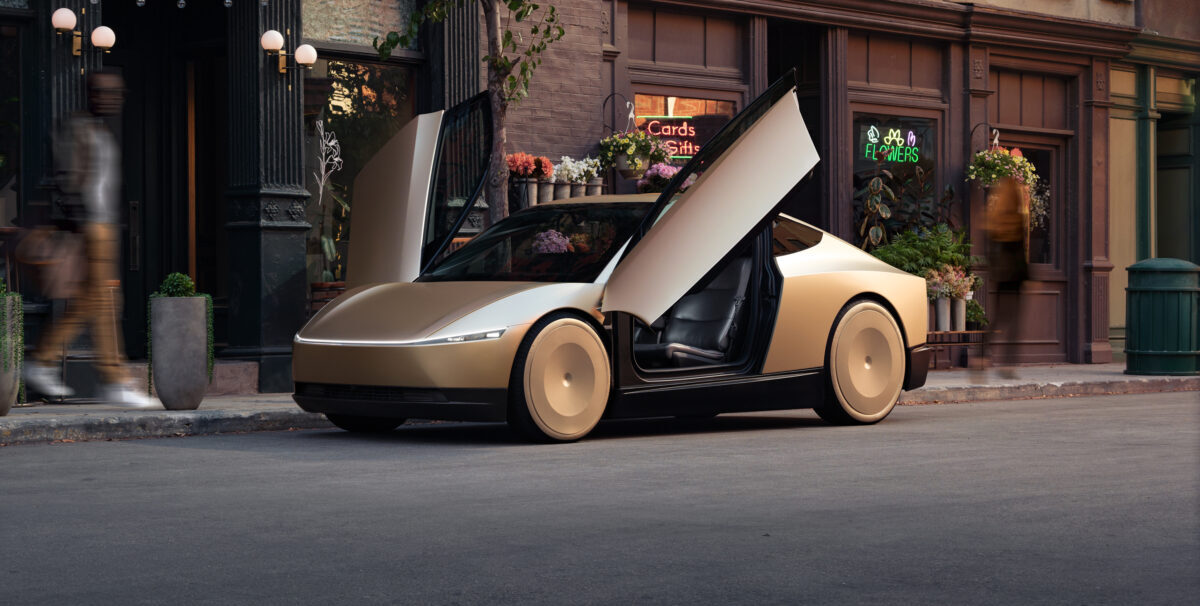
Trial production of the Cybercab autonomous vehicle began in February, and Musk has warned previously that scaling the product will likely be “agonisingly slow”. There is no particular need to go faster, given the lack of a clear regulatory framework for vehicles without any manual controls. Tesla has also cleared ground for a dedicated Optimus factory in Austin.
The energy generation and storage division remains the clearest current bright spot, with sustained demand for grid-scale batteries supporting margins that the automotive segment is under pressure to match.
Autonomous Driving,E-Mobility,Manufacturing,News,OEMs,Software-Defined Vehicle,Stewart Burnett,TeslaStewart Burnett,Tesla#Tesla #raises #capex #25bn #Musk #doubles #bet1776952956
More Stories
Pony.ai, CATL partner on first L4 electric light truck
UK lays regulations for automated passenger services
Leapmotor reveals China-only B05 Ultra at Beijing show