



Pony.ai’s Zagreb launch is the opening move in a European robotaxi race that is drawing in players from around the world. By Stewart Burnett
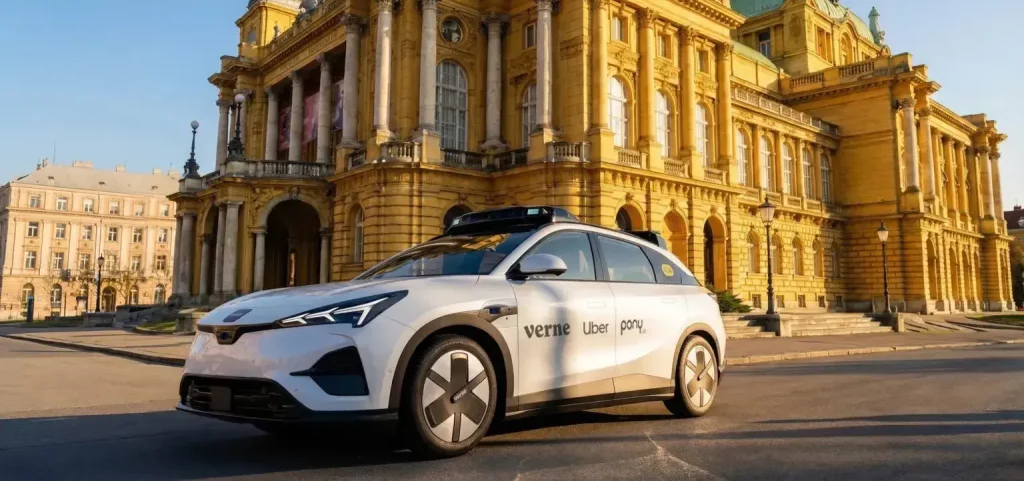
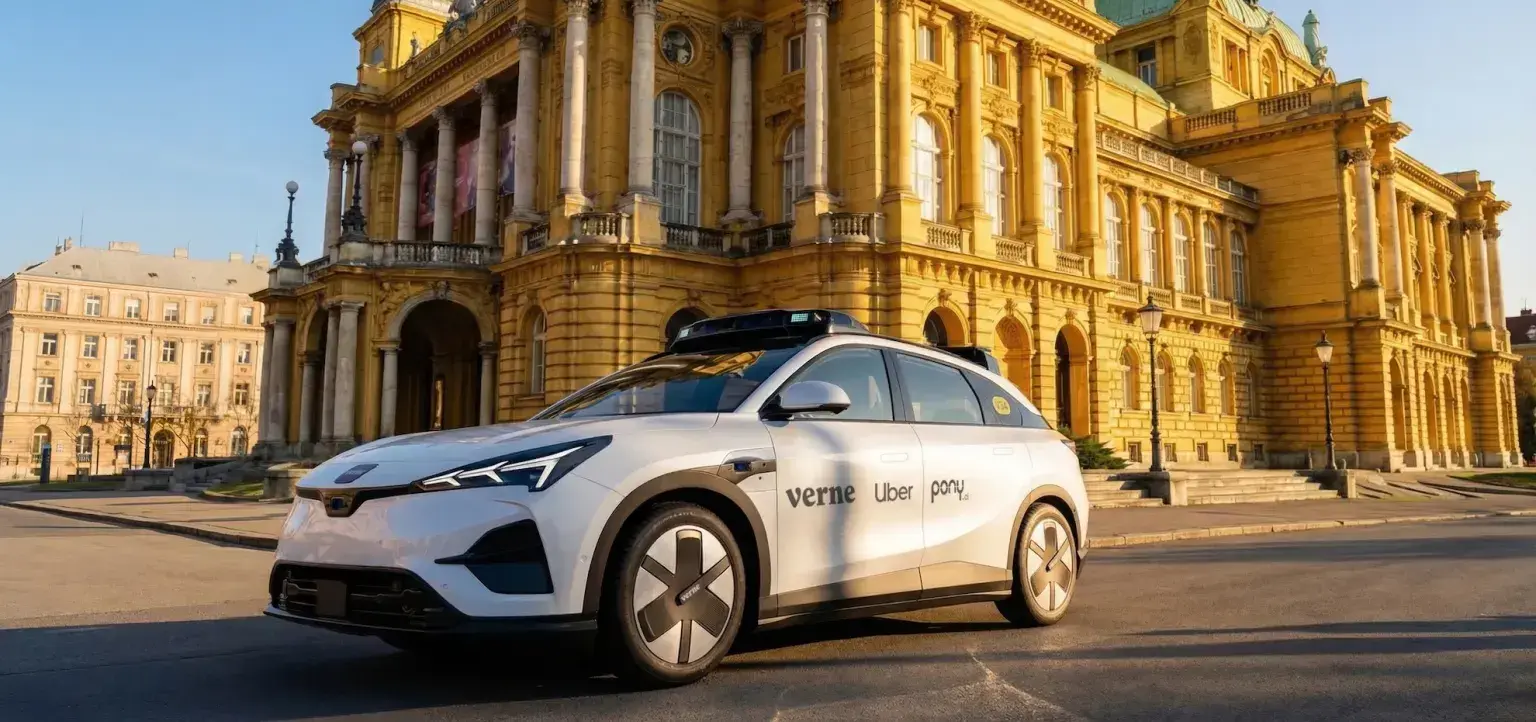
Pony.ai’s commercial robotaxi service in Zagreb, Croatia, launched on 8 April in a tripartite arrangement with Croatian mobility operator Verne and Uber, marking the first-ever instance of paid autonomous ride-hailing in Europe. The initial service zone covers approximately 90 square kilometres across central Zagreb, including the airport, using BAIC Arcfox Alpha T5 vehicles equipped with Pony.ai’s seventh-generation autonomous driving system.
Under the partnership structure, Pony.ai contributes the autonomous driving platform and operational expertise; Verne owns the fleet and leads local operations and regulatory execution; Uber provides platform integration, with ride bookings to be made available through the Uber app shortly.
As is typical for autonomous vehicle deployments, safety operators remain onboard during the initial phase, with a transition to fully driverless operation subject to regulatory approval further down the line. Verne—which is a subsidiary of the Mate Rimac-owned Rimac Group—is targeting expansion into 11 cities across the EU, UK, and Middle East, with a further 30 under consideration.
Croatia’s emergence as Europe’s first robotaxi destination, ahead of larger, more obvious markets, is largely attributable to the players involved. Verne has operated in Zagreb since its 2024 founding, and Rimac Group’s longer-standing local presence gave the company a years-long head start in regulatory engagement that markets like Germany or the UK—where multiple competing programmes are at earlier stages—have not yet replicated.
Verne, which primarily considers itself a manufacturer of premium electric vehicles, has already developed a purpose-built two-seat autonomous vehicle, designed without steering wheel or pedals and manufactured at a new factory in Lučko. This in-house model is expected to replace the Arcfox platform, itself a product of existing Pony.ai partnerships, as the fleet scales.
The Zagreb launch reflects a pattern of Chinese robotaxi players pushing into Europe via technology licensing rather than direct market entry. Pony.ai’s joint-deployment model is also the approach Baidu’s Apollo Go is pursuing through a deal with Lyft—which itself recently acquired FreeNow in Europe—targeting Berlin and London. Momenta counts Uber as its regional partner, and Mercedes-Benz and General Motors among its automaker investors.
Western players can take a slightly more direct approach. Waymo is conducting mapping and testing across London boroughs ahead of a planned commercial service later in 2026, while Volkswagen’s MOIA unit is scaling ride-pooling operations in Hamburg and Munich using Mobileye-equipped ID. Buzz vans. Tesla’s Cybercab remains an aspiration in Europe pending regulatory acceptance of its camera-only perception architecture and complete lack of manual controls.
Autonomous Driving,Markets,News,Software-Defined Vehicle,Stewart BurnettStewart Burnett#Pony.ai #launches #Europes #robotaxi #service #Croatia1775654696


More Stories
Pony.ai, CATL partner on first L4 electric light truck
UK lays regulations for automated passenger services
Leapmotor reveals China-only B05 Ultra at Beijing show