



Muernier’s remarks reflect a growing problem around the affordability of cars for US consumers. By Stewart Burnett
Nissan Americas Chairman Christian Meunier told an industry forum in New York in late March that entry-level cars cannot be manufactured profitably in the US, as the automaker continues to press lawmakers for tariff relief on the models it produces in Mexico. “We couldn’t build these entry-level cars in the US at the same cost, we couldn’t do it,” Meunier remarked. “The problem is the margin.”
Meunier’s comments reflect a tension that has already claimed one model in 2026. The Versa—which at US$17,390 had been the last new car sold in the US below US$20,000—was discontinued going into the new year. An updated 2026 version remains in production at Nissan’s Aguascalientes facility in Mexico, but is being directed to Latin American markets where the unit economics remain viable. The Versa’s exit leaves Kia’s K4, at US$23,385, as the de-facto new price floor for cars sold in the US.
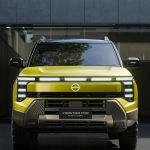
Nissan’s Sentra and Kicks, both also built in Mexico, endure in the US market and start at US$22,600 and US$22,430 respectively. The unforgiving economics and volatility of President Donald Trump’s tariff regime, however, could leave them exposed to future cancellations. Meunier, for his part, noted that current tariffs add approximately US$2,500 to US$3,000 to the cost of each vehicle it sells.
Meanwhile, Nissan continues to hack away at its domestic manufacturing footprint as part of the dramatic restructuring plan it embarked on in early 2025. Seven of its 17 global car factories will be closed as part of this campaign, including several in North America. The automaker’s Canton, Mississippi plant—long plagued with underutilisation problems—is among those potentially still on the chopping block. Internal discussions to produce cars for Honda and Mitsubishi Motors were reported last year by Nikkei.
Two Mexican plants will be shuttered under the restructuring. The first, in Cuernavaca, is Nissan’s longest-running factory outside Japan, having opened in 1966. The second, in Aguascalientes, operates through a joint venture with Mercedes-Benz, and will cease operations by May 2026. Several Chinese automakers—including BYD, Chery and Great Wall—are among the main bidders to acquire the plant.
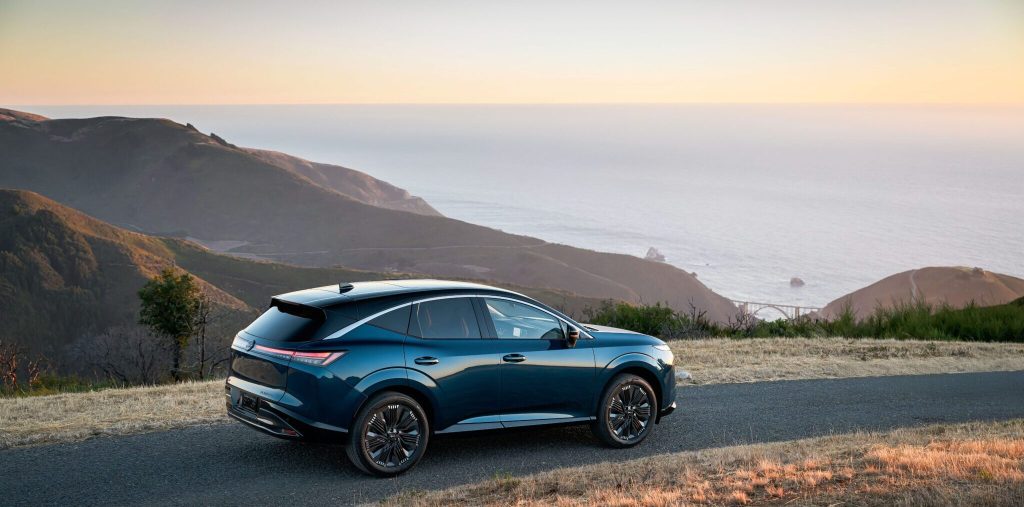
The manufacturing footprint of Nissan’s US-market cars—or even which cars it can viably sell there—remains a bit of an open question. Mexican-built cars accounted for more than a third of the automaker’s US sales volume in 2025. It has already wound down production of the Infiniti QX50 and QX55 at its joint-venture plant in Mexico, consolidating the luxury brand around three large SUV models, the most recent being the QX65. This is a mid-size petrol SUV built in Tennessee and priced at US$53,990.
The QX65 and the discontinued Versa stand at opposite ends of the strategic logic now governing Nissan’s North American product decisions. Models that can absorb US manufacturing costs or carry sufficient margin to survive import duties remain; those that cannot are being wound down or redirected. The automakerhas also delayed large-scale EV production at Canton to 2028-29, filling the gap with a Rogue plug-in hybrid—the brand’s first for North America.
The USMCA review scheduled for 1 July, originally expected to be procedural, has become a live negotiation entangled with US demands on migration, defence, and drug trafficking. Meunier noted that Washington has been receptive to industry arguments about affordability, but that the trade talks have so far been too encumbered by adjacent political issues to produce the relief Nissan is seeking.
Manufacturing,Markets,News,OEMs,Nissan,Stewart BurnettNissan,Stewart Burnett#Nissan #urges #lowcost #cars #Mexico1775043475

More Stories
Pony.ai, CATL partner on first L4 electric light truck
UK lays regulations for automated passenger services
Leapmotor reveals China-only B05 Ultra at Beijing show