




It could take months of sustained gasoline price hikes for consumers to change their purchasing habits. By Stewart Burnett
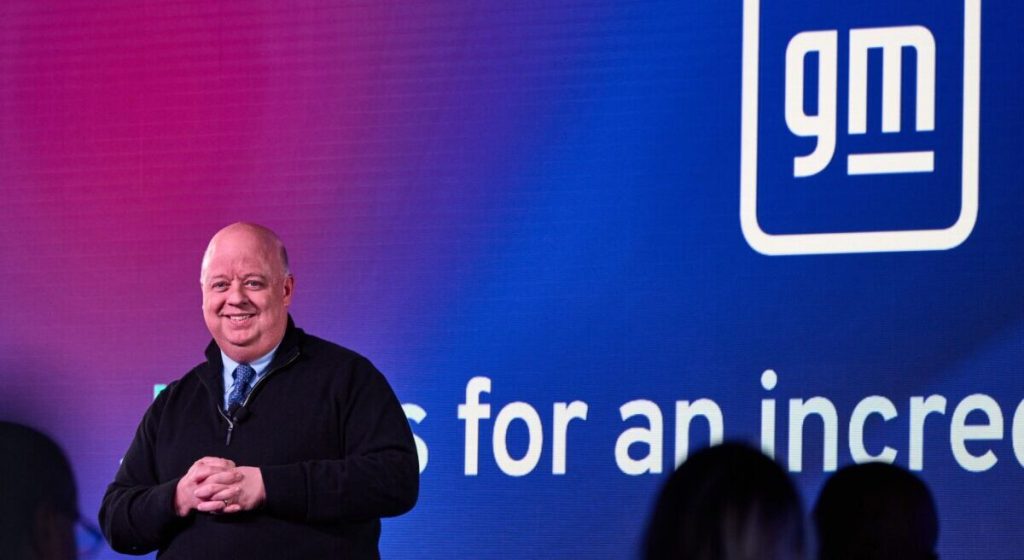
General Motors Chief Financial Officer Paul Jacobson said on 18 March that the 27% rise in US average gasoline prices since late February—driven by Hormuz shipping disruptions amid the wider US-Israel-Iran conflict—has yet to impact consumer vehicle purchasing habits materially. Speaking at a Bank of America conference, he observed that first-quarter sales were affected more by weather conditions and lower truck inventory than higher fuel costs.
Jacobson went as far as to put a timeline on when this sort of behavioural change typically arrives. “Usually it takes four to six months of sustained high oil prices before people start to think, ‘Maybe I should go for less mileage, or maybe I should buy down,’” further noting that GM has not yet seen that dynamic take hold. The US Energy Information Administration reported the average gallon of gasoline price at US$3.72 on 17 March, up from around US$2.93 in late February.
Some analysts have speculated that sustained increases to gasoline prices would trigger renewed interest in zero-emission vehicles. Indeed, the US$4 per gallon threshold is widely cited as the psychological tipping point at which interest in electric vehicles (EVs) and hybrid models would see a measurable increase. Kevin Roberts of CarGurus noted that US$4 represented a shift point during the 2022 oil shock following Russia’s invasion of Ukraine.
Cox Automotive research offered a more conservative estimate of US$6 per gallon to prompt a majority of consumers to consider switching. At current prices, Cox’s Stephanie Valdez-Streaty believes the more likely near-term effect is that buyers hold off on purchases altogether amid broader uncertainty around tariffs and inflation.
Early signals from Europe are more pronounced. EV-related traffic on German online dealer MeinAuto has risen 40% since the conflict began, and a Carwow survey of 1,164 German respondents found 48% said spiking fuel costs would influence their decision to consider an EV or hybrid. In the UK, used EV dealers have reported record footfall. The divergence reflects higher baseline EV adoption in Europe: 19.5% of new car sales during 2025 versus 7.7% in the US. Europe also largely benefits from the continued availability of government purchase incentives, whereas the US eliminated them in September 2025.
At a recent UK Society of Motor Manufacturers and Traders event, leadership from both Volkswagen and Volvo Cars expressed their concerns about the war’s impact. Volkswagen Passenger Car Sales Chief Martin Sander said the brand was already observing a decline in customer sentiment across multiple markets, describing the conflict as “another layer of anxiety” on top of existing uncertainty. Volvo’s UK Managing Director Nicole Melillo Shaw echoed this concern, noting that the particular combination of cost-of-living pressures and geopolitical instability could significantly dissuade consumers from buying new vehicles.
The Detroit Three’s exposure to a sustained price shock is structurally significant. Ford, GM, and Stellantis consistently rank at the bottom of EPA real-world fuel economy tables, and all three have retreated towards high-margin pick-ups and SUVs under loosening emissions regulations. Stellantis is arguably the most exposed, having doubled down on V8 derivatives, including Ram and Jeep models, on the assumption that the regulatory environment would remain permissive. All three have undertaken hefty write-downs in 2025 as they dialled back their electrification goals.
Regardless of present demand impact, the timing of the US-Israel into Iran is still far from ideal. Pinning the blame on automakers for retreating from EVs towards ostensibly safer product portfolios is not fully warranted. Indeed, it was the Trump Administration that dismantled the primary consumer incentive for the technology most insulated from oil price volatility, then initiated a conflict that sent that volatility surging.
The administration was also responsible for pushing a rollback of California’s zero-emission targets, which had 19 other states plus Washington, DC as co-signatories. California has vowed to fight this rollback and is proceeding with its latest slate of rules. The administration is also proposing local content rules on government-funded charging infrastructure that have been criticised by various groups, including multiple state attorneys general, as unmeetable. The proposed rules require 100% local parts; no commercially-available charger even meets the present target of 55%.
Jacobson’s four-to-six month lag estimate means the structural risk to pick-up and SUV demand could emerge around July or August if prices hold, or precisely when the Detroit Three’s new model launches are expected to drive their financial recovery. A sustained price shock at that point could do more than dampen demand; it could accelerate a repeat of the 2008 dynamic in which Asian automakers with fuel-efficient lineups absorbed market share that their US counterparts struggled to recover.
Lower US vehicle sales in 2026 were already forecast before the conflict began, due in large part to affordability challenges and the removal of the EV tax credit. Additional softness driven by fuel costs and low consumer confidence could trigger potential inventory pileup and margin pressure, adding more uncertainty for OEMs precisely when it is least needed.
E-Mobility,Markets,News,OEMs,General Motors,Stewart BurnettGeneral Motors,Stewart Burnett#CFO #Iran #war #impacted #car #salesyet1773928985


More Stories
Pony.ai, CATL partner on first L4 electric light truck
UK lays regulations for automated passenger services
Leapmotor reveals China-only B05 Ultra at Beijing show