


The arrangement would have made Xiaomi the first Chinese pure EV brand to enter the US car market. By Stewart Burnett
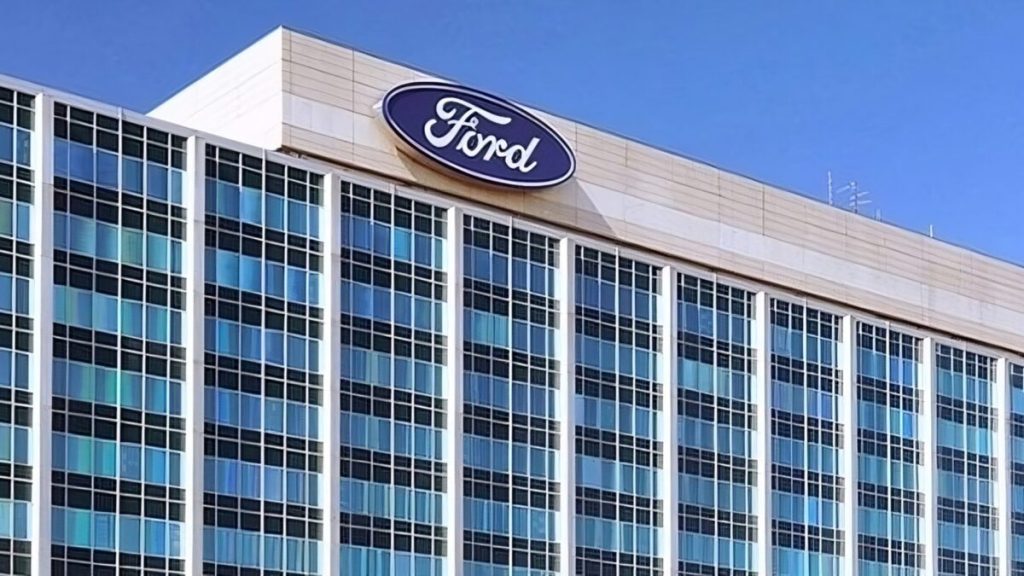
Ford and Xiaomi have emphatically denied 1 February reporting from the Financial Times claiming that the two companies held talks about forming a joint venture to produce electric vehicles (EVs) in the US. Citing four people familiar with the discussions, the newspaper reported that Ford also spoke with BYD and other Chinese automakers about a potential US collaboration.
The talks were said to be preliminary and FT did not share any details regarding their time or location. It is not even clear whether the talks were held after US President Donald Trump resumed office in January 2025, or during the predecessor Biden administration. No information was provided on the models to be launched in the US either, although it can be inferred that Xiaomi might have used the JV as a means of launching its SU7 and YU7 series EVs in an otherwise impenetrable market for Chinese players.
In a post on X shared hours after the report went live, Ford Chief Communications Officer Mark Truby stated “this story is completely false, there is no truth to it.” A Xiaomi representative also issued a denial, stating that the automaker “does not sell its products and services in the United States, and is not negotiating to do so”.
Even if the reporting were to be true, a JV between one of the Detroit three and a Chinese technology giant would almost certainly be met with strong pushback in the US. In the final days of the Biden administration, rules were finalised to effectively block the use of China-connected vehicle software and hardware from 2027 onwards. It should be noted, however, that the head of the team responsible for developing these rules, Elizabeth Cannon, abruptly resigned last week.
The Biden administration was also responsible for implementing 100% tariffs on Chinese-made EVs, temporarily increased to 145% under President Trump. Canada later matched the US in implementing the 100% rate during 2024, but later reduced the duty to 6.1% on 49,000 units annually amid continued trade tensions with its southern neighbour.
In a break from his predecessor—and his prior rhetoric—President Trump has also signalled a willingness for Chinese automakers to do business in the US, provided they set up local production. During a January visit to a Ford assembly in Dearborn, the president said that if Chinese companies “want to come in and build a plant and hire you and hire your friends and your neighbours, that’s great, I love that”.
But even if Trump were happy with the arrangement, congress may not be. In a statement to FT, House China Committee Chair John Moolenaar warned that such a partnership would mean Ford “turning its back on American and allied partners, and it will make our country further dependent on China.”.
The timing of the FT report proves particularly awkward, given that Moolenaar sent a letter to Ford Chief Executive Jim Farley on 28 January warning that China might “weaponise the auto supply chain” if the company expands ties with Chinese firms. Ford shares slipped 0.86% to close Friday at US$13.88, positioning the stock for potentially volatile trading ahead of fourth-quarter earnings scheduled for 10 February.
Despite the formal denial, Ford Chief Executive Jim Farley has a history of candid—often fawning—commentary about China’s automotive industry, and specifically about Xiaomi. Farley shared during a 2024 podcast appearance that he had an SU7 imported into the US for personal use. He remarked: ‘[I have] been driving it for six months now, and I don’t want to give it up.”
Farley also warned in 2024 of the “existential threat” global automakers face from China, which have enough capacity to “put us all out of business”. He has characterised his recent trips to China as “humbling” and “an epiphany”; of Chinese automakers’ technological and cost efficiency, he has described them as “far superior” to what’s currently available in the West.
Whether or not a Ford-Xiaomi ultimately emerges, Ford is now outwardly claiming it is prepared to meet its Chinese counterparts toe-to-toe on EVs. In 2025, the automaker revealed its new EV platform—effectively a skateboard design—and announced the first model will be a mid-size pickup targeting a US$30,000 price point. Later in the year, the company’s original flagship EV, the F150 Lightning, was cancelled.
E-Mobility,Manufacturing,Markets,News,OEMs,Ford Motor Company,Stewart BurnettFord Motor Company,Stewart Burnett#Ford #Xiaomi #reject #reports #partnership #talks1770101560
More Stories
Pony.ai, CATL partner on first L4 electric light truck
UK lays regulations for automated passenger services
Leapmotor reveals China-only B05 Ultra at Beijing show