




The God’s Eye B price hike is the first visible case of AI-driven chip inflation directly affecting ADAS pricing in Chinese automotive. By Stewart Burnett
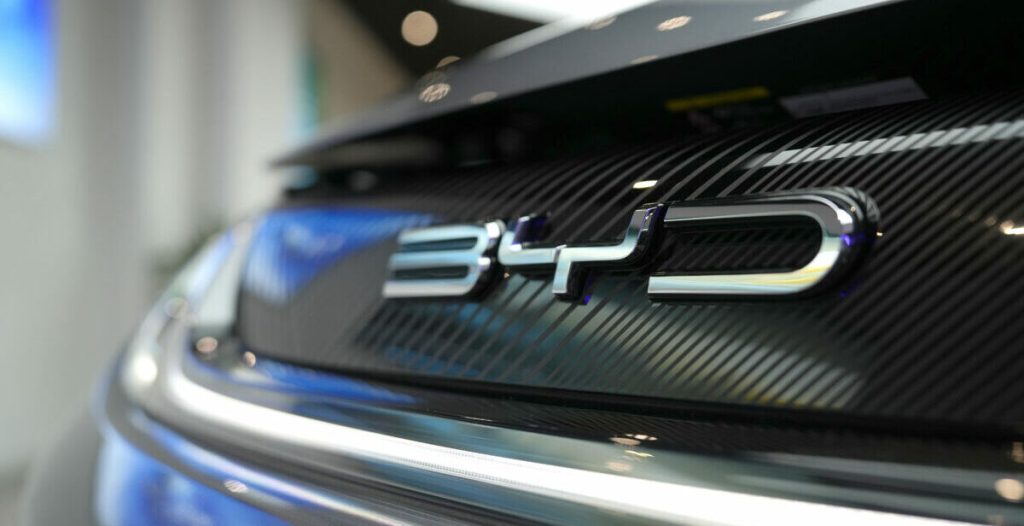
BYD has confirmed it will raise the option price for its God’s Eye B advanced driver assistance system (ADAS) from CN¥9,900 (US$1,450) to CN¥12,000 effective May onwards, attributing the 21% price hike to a surge in global storage hardware costs. The change is not uniform but will be applied to select models across the Dynasty and Ocean lineups as well as the Fang Cheng Bao sub-brand.
Customers that place their deposits before 30 April will not be subject to the price hike. God’s Eye B (also designated DiPilot 300) is BYD’s mid-tier ADAS platform, equipped with one or two LiDARs alongside mm-wave radars and high-definition cameras. BYD markets the system as capable of Navigate-on-Autopilot in both city and highway conditions. It sits between the entry-level God’s Eye C—a camera and radar-only system standard across its more affordable models—and the top-tier God’s Eye A, which is reserved for the Yangwang ultra-premium brand and boasts three ultra-long-range LiDARs.
The pricing move runs counter to the direction BYD had been publicly pursuing until now. In February 2025, the automaker updated 21 models in its lineup with various God’s Eyes tiers as part of a strategy explicitly intended to democratise ADAS capabilities and sever them from their more premium reputation. At the time, BYD made it clear it believed the technology would necessarily become a standard feature for automakers worldwide.
The reversal reflects a collision between that strategy and semiconductor market conditions that BYD chose not to hedge against when its ADAS pricing strategy was first rolled out. AI infrastructure demand, triggered in part by China’s new five-year plan and the widespread adoption of models like DeepSeek, has redirected global supply of DRAM and NAND flash memory toward data centres. Automotive-grade memory contract prices have reportedly risen by 90% in the first quarter of 2026 alone, and it is unlikely this trend will reverse any time soon.
BYD has quickly emerged as one of the leading brands for ADAS technology, and this is reflected in the scale: 2.85 million vehicles are equipped with God’s Eye systems as of March 2026, generating approximately 180 million km of driving data daily. That data volume provides a compounding training advantage over competitors with smaller fleets, but it also increases the onboard storage and processing demands that the hardware cost surge is directly impacting.
The price adjustment arrives as the God’s Eye system faces scrutiny over its safety and reliability in the Chinese market. A growing number of incident reports are spreading on local social media: phantom braking, steering assist failures, and at least one case of a vehicle accelerating without driver input. The particular combination of rising hardware prices and safety concerns will test whether BYD’s data and scale advantages are sufficient to sustain consumer confidence as purchase tax subsidies are wound down.
Autonomous Driving,Markets,News,OEMs,Software-Defined Vehicle,BYD,Stewart BurnettBYD,Stewart Burnett#BYD #hikes #ADAS #price #demand #triggers #DRAM #shortage1777453867



More Stories
Paccar: demand improving despite cost volatility
Hongqi eyes Europe, but can it shed its state-car baggage?
HERE and Baidu Maps sign MoU on global vehicle maps