

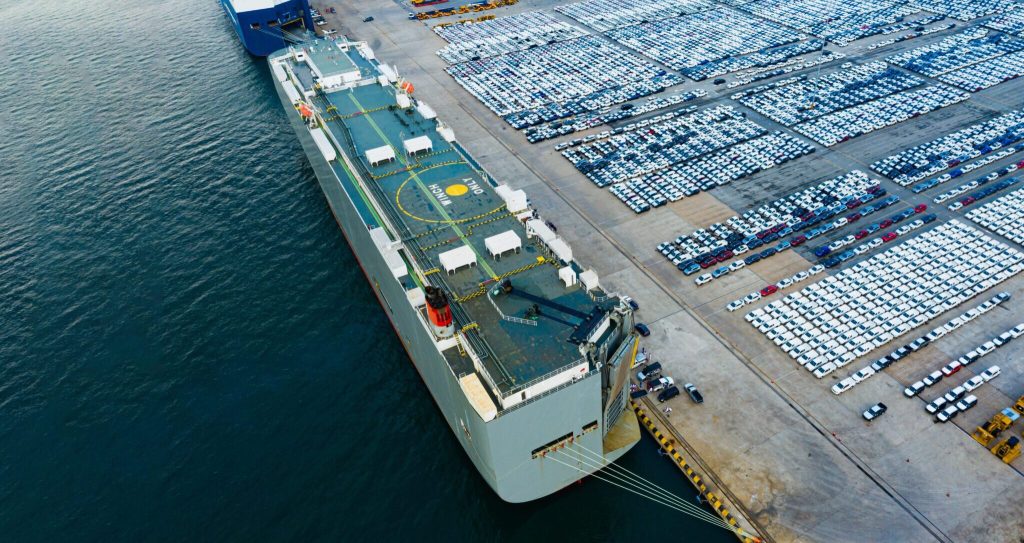
China might be among the countries more exposed to Hormuz-induced energy price shocks, but its automakers are primed to reap the benefits. By Stewart Burnett
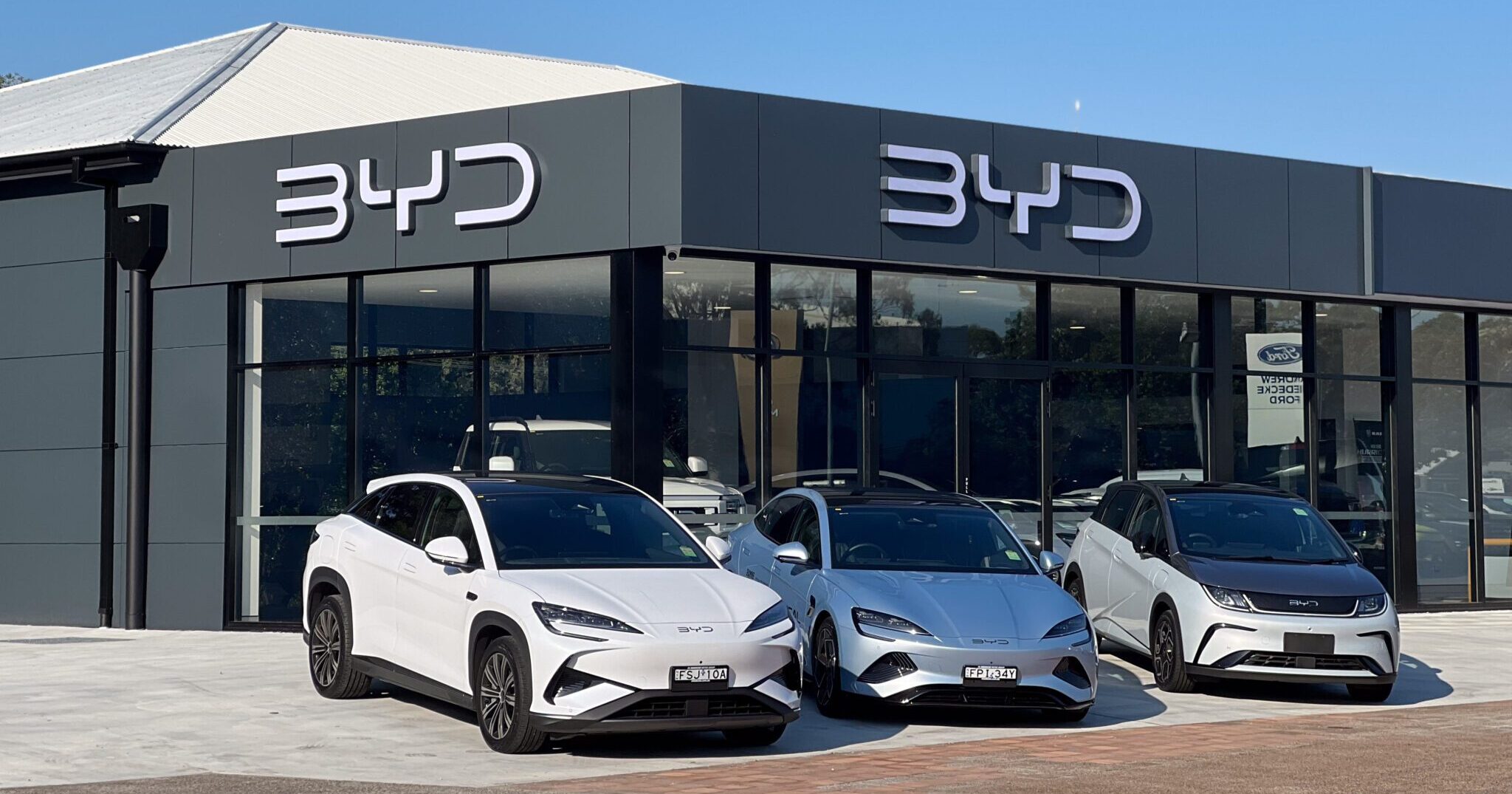
BYD Chairman Wang Chuanfu told analysts at a closed-door briefing that the Strait of Hormuz closure is driving the company’s overseas sales to “another level” [quote according to Reuters], as surging oil prices reshape consumer behaviour in key markets. Wang singled out Australia, New Zealand, and the Philippines as markets where its daily sales volumes are now matching what previously took two weeks to achieve.
The Chinese electric vehicle giant expects a bulk of its sales boost to take place in overseas markets, and analysts were informed during the briefing that its internal overseas sales target has been raised from 1.3 million to 1.5 million units. In 2025, it raised its target from 800,000 units to one million, which it then modestly surpassed. Still, Chinese sales accounted for roughly 80% of its volumes last year.
BYD is very much a company under pressure domestically: the automaker posted a 19% decline in annual net profit in 2025—its first fall since 2021—on revenue growth of just 3%, the slowest in six years. Local sales have been down significantly throughout the first three months of 2026; volumes for Q1 were down by 30.1% overall. A sustained price war in China, on multiple occasions escalated by BYD itself, has compressed margins across the market, and the company attributed the squeeze in part to “price competition” and “excessive marketing”.
Meanwhile, oil prices have risen from around US$60 a barrel at the start of the year to above US$100 in April. BYD is capitalising on the knock-on effects of this: in New Zealand, the week ending 22 March produced the country’s highest electric vehicle (EV) registrations since late 2023. South Korean EV registrations more than doubled year-on-year in March, while BYD’s local distributor in Australia reported a 50% surge in inquiries, with customers accelerating purchase decisions or switching from petrol consideration sets entirely.
Over in Europe, UK EV sales hit a record 86,120 units in March, and German online platform mobile.de reported EV search share tripling to 36% since the conflict began. Used EV sales in the US rose 12% year-on-year in Q1 2026 as gasoline briefly exceeded US$4 per gallon for the first time in four years.
While China is arguably among the countries more vulnerable to price shocks stemming from the Strait of Hormuz blockade, the structural advantage for its automakers is nonetheless significant. China dominates the supply chains for batteries, EVs, solar panels, and related clean-energy infrastructure, and the conflict is accelerating government procurement of precisely those products. Such demand is precisely what it has spent the last five years rapidly preparing for, and so-called green sectors already accounted for more than a third of China’s economic growth in 2025.
It should be of little surprise, then, that CATL’s Hong Kong-listed shares have risen 29.5% since the conflict began. Chinese automakers have by and large arrived into the geopolitical situation on a wave of overseas momentum: Geely’s first-quarter exports grew more than 150% year-on-year; Chery shipped 243,000 vehicles in January and February alone, up 45.6%. Leapmotor, backed by Stellantis, has explicitly said that the oil market shift could help it reach its 150,000-unit overseas target for the year.
Indeed, 2026 was already set to be a milestone year for China’s automakers in global markets before the Iran war began. Macquarie analyst Eugene Hsiao told Nikkei that 2025 was already expected to be “another strong year for China EV exports even prior to the conflict in Iran driving up oil prices”. However, he noted, “the calculus has shifted now that oil prices have spiked up […] Overall, geopolitical tension looks to be a net positive for Chinese EV players, as China’s foreign relations with richer markets like the EU and Canada are improving and opening up potential new sales opportunities.”
This could potentially even lead to a further softening of the tariff barriers that have otherwise slowed Chinese automakers’ efforts to penetrate Western markets. UBS analysts have suggested governments will prioritise energy security over trade protectionism in an oil crisis. There are cracks already emerging on this front: Canada, for example, is now allowing a fixed number of Chinese-made EVs into the country annually at a reduced 6.1% rate, down from 100%. The EU has also began offering price minimum negotiations as an alternative to the per-automaker tariffs it first imposed in 2024.
BYD’s position as both the world’s largest EV maker by volume and one of its most exposed to domestic margin pressure makes the current moment unusually consequential for the company. Overseas sales now represent its primary route to profitable growth, and the Iran conflict has compressed into weeks a demand shift that might otherwise have taken months or even years. Whether it can sustain that momentum over a longer period of time—particularly if the conflict subsides—is less certain.
E-Mobility,Markets,News,OEMs,BYD,Stewart BurnettBYD,Stewart Burnett#BYD #expects #Iran #war #fallout #drive #sales #growth1775729347

More Stories
Pony.ai, CATL partner on first L4 electric light truck
UK lays regulations for automated passenger services
Leapmotor reveals China-only B05 Ultra at Beijing show