


The company that pioneered the PHEV SUV is now entering Japan’s standard HEV market a decade after Toyota made it mainstream. By Stewart Burnett
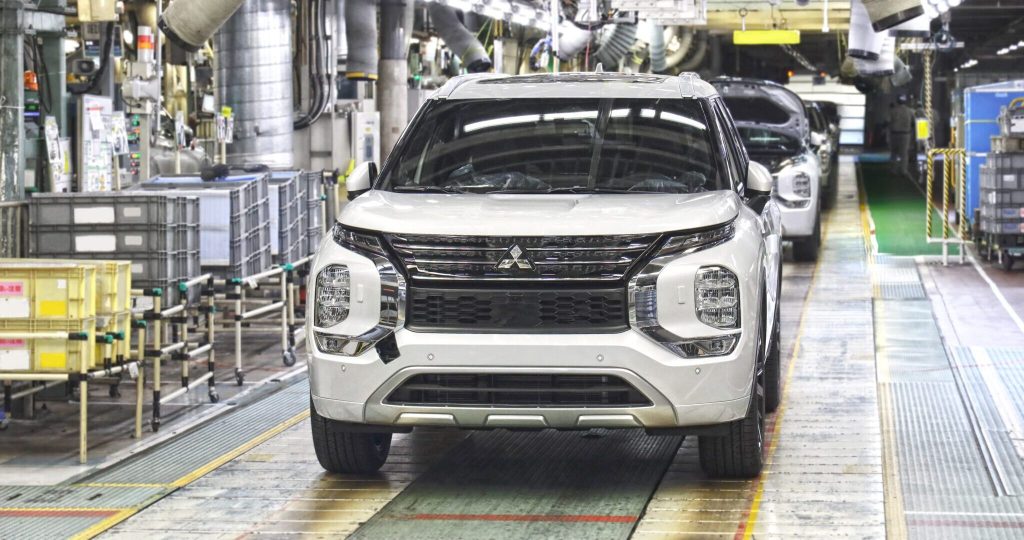
Mitsubishi Motors is planning to make and sell full-size hybrid electric vehicles (HEVs) in Japan as early as 2028, with the Outlander and RVR compact SUVs serving as the basis for its first domestically made non-kei hybrid models. The move is an answer to the continued growth of Japan’s hybrid cart market, which surpassed 1.5 million units in 2025 for roughly 60% of all new car sales excluding the kei segment.
By contrast, plug-in hybrids (PHEVs) and battery-electric vehicles (BEVs) each sold fewer than 50,000 units that year. The decision actually reflects a determined pivot away from Mitsubishi Motors’ long-standing prioritisation on PHEV technology for which it was among the first pioneers. In 2013, the automaker launched the Outlander PHEV, at the time the world’s first and only PHEV SUV. For several years, the model served as the best-selling PHEV globally, showing particular strength in Europe.
More recently, Mitsubishi Motors began producing and selling HEVs in Southeast Asia in 2024, drawing on its experience in PHEVs, and particularly with battery management system software to improve performance. It doubled down in 2026 with the announcement it would invest PHP 7bn in Philippines HEV production. Despite this, the automaker has resisted either making or selling models using this more popular powertrain in its domestic market.
Mitsubishi’s electrification history is defined by a series of early technical achievements followed by a narrow product focus. The i-MiEV, launched for fleet customers in Japan in 2009, is widely regarded as the world’s first mass-produced highway-capable BEV. Mitsubishi discontinued it in 2017 without a direct successor, pivoting resources toward PHEVs rather than continuing to develop purely electric models.
The rationale behind this decision was straightforward: neither the market or the infrastructure was ready for the technology it was selling. To be sure, that concentration paid off commercially, given that the Outlander PHEV sustained the Mitsubishi Motors brand through a difficult decade. Still, it left the automaker without the broader electrified range that rivals including Toyota and Hyundai were building in parallel and have since substantially outpaced it on.
The 2028 hybrid plan is the clearest indication yet that PHEV pricing has become a ceiling rather than a selling point. Mitsubishi has positioned this powertrain type as a sort-of bridge technology on the road toward full electrification, but in the Japanese market that bridge has proven too expensive for the majority of buyers. Thus Japanese consumers have consistently chosen cheaper standard HEVs in volumes that dwarf both PHEV and BEV uptake.
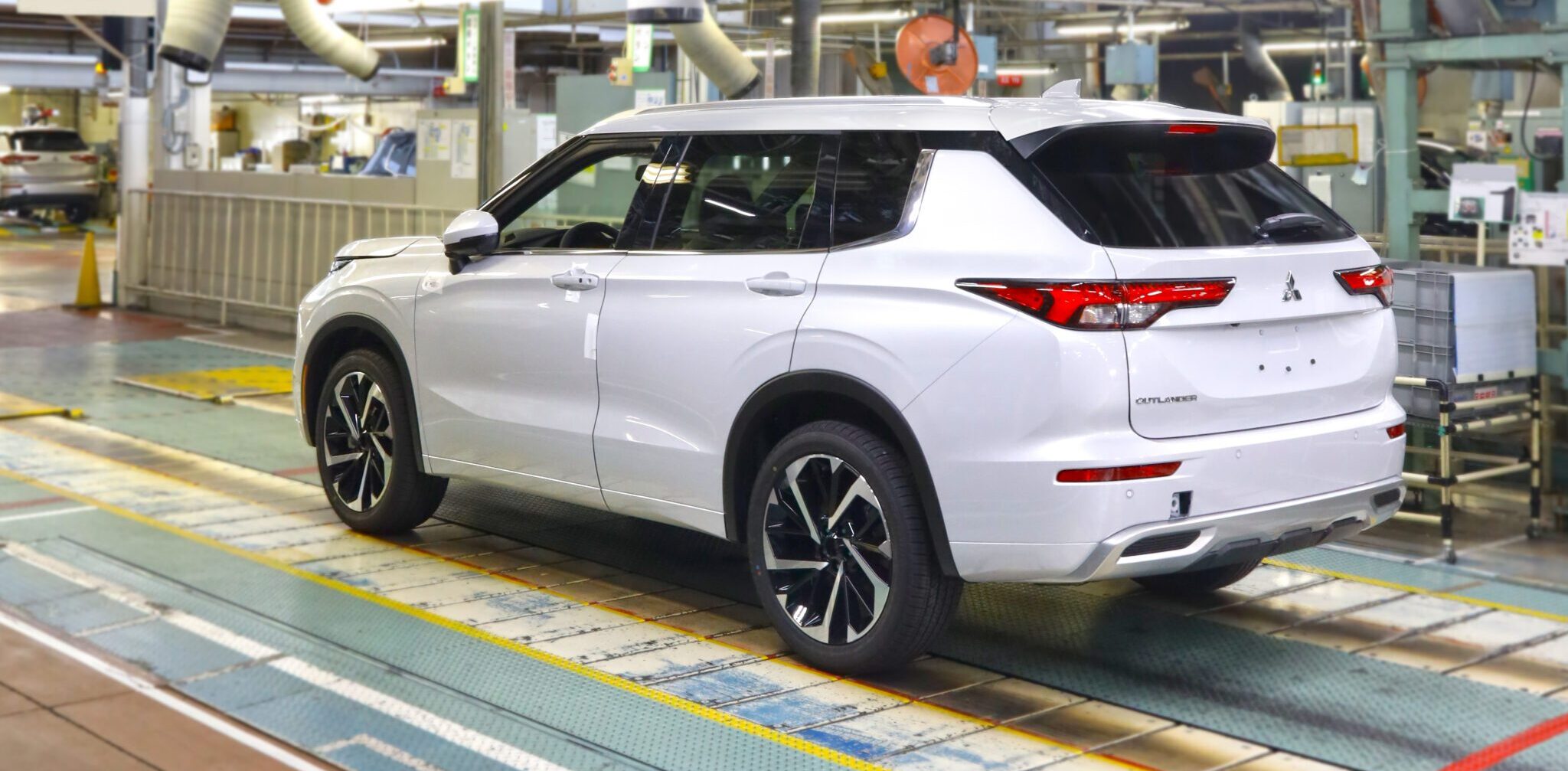
Mitsubishi aims for 50% of global sales to be electrified by 2030. Its Japanese sales reached 122,000 units in fiscal 2025, up 4% year-on-year, but domestic market share remains just above 2%—a figure the automaker has identified as a target for improvement. Adding standard HEVs to the Outlander and RVR lineup is the primary mechanism for closing that gap, with the company hoping that entering a well-established segment late carries less risk than taking no action whatsoever.
Global markets serve to only reinforce Mitsubishi’s case. GlobalData projected at the end of fiscal 2025 that global HEV sales would reach approximately 19 million units in 2030, up 1.6 million units from its prior forecast, as electrification policy reversals in Europe and the US lifted the long-term demand outlook for hybrid powertrains. Compatriot Toyota has confirmed plans to raise its HEV and PHEV production by 30% come 2028 against 2026 numbers, primarily through North American factory investment.
General Motors and Hyundai have also begun joint hybrid development. Even Chinese pure players like Xiaomi are reportedly considering offering hybrid options as they expand into global markets. Mitsubishi’s 2028 timeline places it inside that industry-wide expansion rather than ahead of it, but the direction of travel is now clearly shared.
The domestic HEV push reflects the diminishing reliability of Mitsubishi’s other revenue streams. Operating profit from ASEAN markets—which account for around 30% of its total sales—fell to JP¥19.8bn (US$120m) in fiscal 2024 from JP¥63.6bn in fiscal 2019, as Chinese competition and economic softness weighed on Thailand and Indonesia. Tariff pressure in the US, which had partially compensated for the Southeast Asia decline, has added further uncertainty.
With those pillars under strain, the Japanese market’s relative importance has risen—and a HEV lineup capable of competing for the 1.5 million-and-growing annual buyers served almost exclusively by Toyota and Honda has become a more urgent proposition than Mitsubishi’s product history might have suggested.
E-Mobility,Manufacturing,Markets,News,OEMs,Mitsubishi Motors,Stewart BurnettMitsubishi Motors,Stewart Burnett#Mitsubishi #pivots #HEVS #Japan #flat #PHEV #demand1777545523


More Stories
Stellantis “reset” in progress, but is it convincing?
MG to debut Momenta’s R7 system in apparent Tesla challenge
International Motors launches My International