


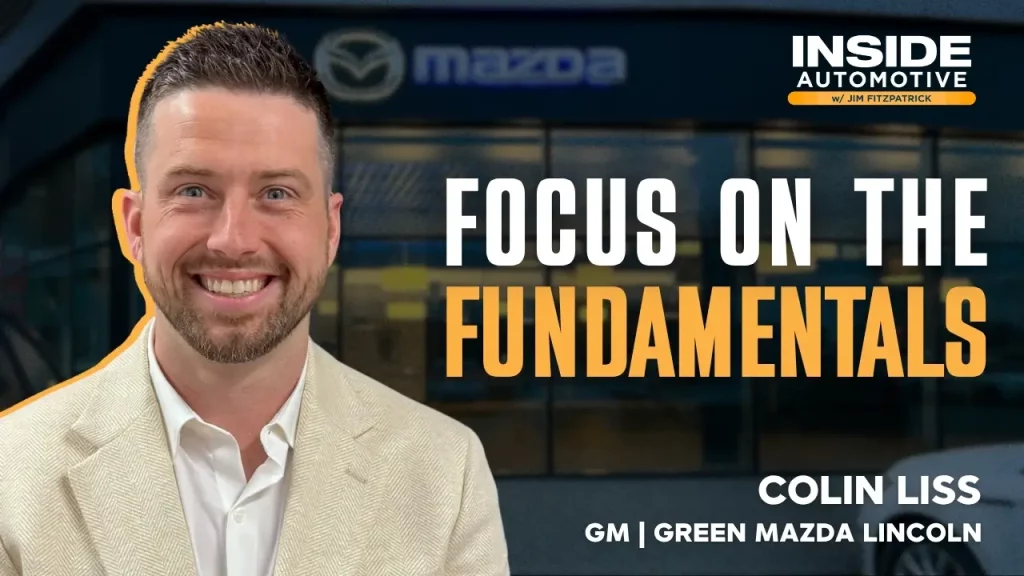
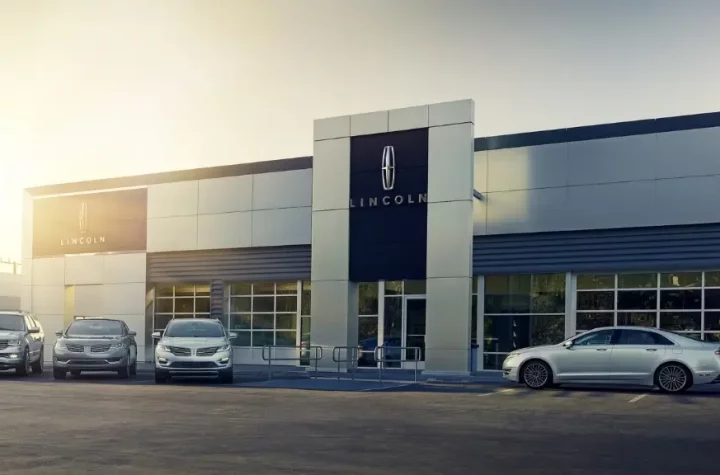
Dealers are operating in a market defined by affordability pressures, shifting customer behavior and ongoing demands for performance. At Green Mazda Lincoln in Springfield, Illinois, General Manager Colin Liss said the store is focused on the fundamentals to maintain stability and drive results on today’s episode of Inside Automotive.
As a recent graduate of the NADA Academy, a yearlong leadership program that requires considerable time away from the dealership and strong ownership support, Liss said the experience reinforced the importance of leadership development and peer collaboration, particularly when navigating high-pressure retail environments.
Affordability drives a return to fundamentals
According to Liss, affordability remains the most immediate pain point in the sales process, with average payments near $800 and many transactions exceeding $50,000. To combat this, Green Mazda Lincoln has shifted toward value-driven selling and tighter alignment between customer needs and vehicle selection.
Sign up for CBT News’ daily newsletter and get the latest industry stories delivered straight to your inbox.
Rather than defaulting to incentives, the store emphasizes product fitment, trim-level discipline and ensuring customers are placed in vehicles that match both budget and usage requirements. Liss believes this approach helps avoid payment shock while improving long-term satisfaction and retention.
Financing structure
The dealership operates in a heavily financed environment, with approximately 85% to 88% of deals involving financing, according to Liss. He attributes this to trade-cycle complexity remaining an ongoing factor, particularly among customers who purchased during the COVID-era pricing surge and are now rolling negative or tight equity positions into new deals.
He adds that rate incentives, including 0% financing for up to 60 or 72 months in some cases, have helped improve perceptions of affordability, but payment sensitivity continues to shape consumer decision-making.
Beyond affordability, Liss said the dealership is prioritizing people and urgency as key operational focus areas. He said modern employees are more informed than those in previous generations due to digital tools and access to AI, which reduces reliance on traditional top-down training and increases the need for clarity and structure.
“For me, people and urgency are the two things that are my personal focuses right now…People want to work now more than ever.” – Colin Liss
To address retention and performance, the dealership focuses on improving employees’ perception of value through better scheduling, improved quality of life, and more flexible staffing models. Liss alludes that leadership has shifted toward “staffing up as needed” to ensure coverage, reduce burnout, and maintain consistency in the customer experience.
He also emphasized that employee engagement directly affects the customer experience, making internal culture a critical performance driver.
Expectations continue to evolve
Additionally, Liss said generational differences are reshaping dealership management strategies, particularly around expectations for time off, flexibility, and work-life balance. He notes that while older models emphasize constant presence and output per employee, today’s environment requires more adaptability in staffing and leadership structure.
Rather than focusing solely on maximizing individual productivity, he said dealerships benefit from broader staffing depth that supports both operational stability and employee satisfaction.
Notably, Green Mazda Lincoln uses social media as a supplemental engagement channel, though Liss said the focus remains on quality over volume. While employees are encouraged to post, he asserts that leadership also needs to uphold their own authenticity and relevance rather than expect constant output. He points to examples where simple, personalized content has been used to re-engage leads and strengthen customer communication, particularly when messaging feels direct and individualized rather than promotional.
Outlook remains steady
Despite ongoing economic uncertainty, Liss said the dealership’s focus remains on controlling what it can internally, which includes process discipline, leadership consistency, and team stability. He said maintaining a calm, structured leadership is essential, as dealership performance often reflects the tone set by management.
Ultimately, Liss added that while external conditions remain fluid, consistent execution is the most reliable driver of results.
Inside Automotive,Featured,customer engagement,auto industry,Retail Automotive,car business,Auto News,dealership training,Green Mazda Lincoln,affordability challenges#Affordability #challenges #push #dealers #rethink #sales #staffing #strategies1777370128
More Stories
Tasca Automotive Group acquires Lincoln dealership in Clearwater from AutoNation
Foreign automakers warn USMCA uncertainty could force U.S. exits, WSJ reports
GM set to lead Q1 earnings as cost pressures, EV pullbacks weigh on Detroit automakers