


Uber spending capital on network-exclusive charging infrastructure could give it a meaningful advantage in the robotaxi arms race. By Stewart Burnett
Uber has announced plans to invest more than US$100m in fast-charging infrastructure intended specifically for autonomous vehicles. Initial sites are expected to be concentrated in the San Francisco Bay Area, Los Angeles and Dallas, all markets where the ride-hailing firm plans to launch public robotaxi services through its various technology partners.
The funds will cover site development, equipment, grid connection and associated capital costs, with additional charging-equipped depots planned as the company’s autonomous operations expand to further cities. They form one half of a two-pronged charging strategy: in parallel, Uber is guaranteeing minimum usage levels to charging network operators. In practice this means it is effectively underwriting the commercial risk of building new stations in exchange for discounted rates for its drivers.
The arrangement is expected to trigger more than US$100m in additional charging infrastructure funding from third-party networks, resulting in over 1,000 new chargers globally. New deals have been struck with EVgo in New York, Los Angeles, San Francisco and Boston in the US. Meanwhile Hubber and Ionity are expected to serve as UK partners, while Electra will deploy in France and Spain.
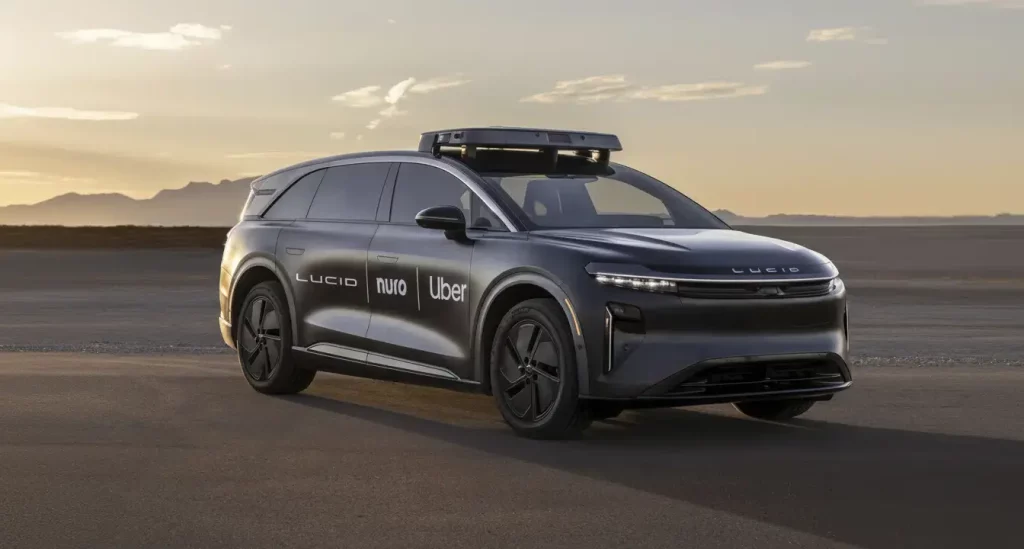
The move is closely tied to Uber’s broader push to secure supply of autonomous vehicles ahead of a planned expansion to up to 15 cities globally by the end of 2026. The company currently manages robotaxi operations for Waymo in Austin and Atlanta—handling charging, cleaning and vehicle inspection through invested third-party firms—and plans to bring Lucid and Nuro’s robotaxis to the Bay Area and Volkswagen’s autonomous ID.Buzz vans to Los Angeles later in 2026.
Having its own charging infrastructure in place gives Uber greater operational control and, it argues, improves vehicle uptime and utilisation across the network. In comments to Bloomberg, an Uber spokesperson declined to specify whether Waymo—which already operates its own robotaxi services via the Waymo One app in some locations—will have access to the infrastructure. Closing off the charging network to unaffiliated robotaxi operators could, as a result, create competitive pressure to use Uber’s platform. Over time, this could become a significant advantage for the firm as the robotaxi market becomes increasingly crowded in various municipalities.
The announcement arrives against a difficult backdrop for Uber, which disappointed investors in Q4 2025 with adjusted earnings of US$0.71 per share against analyst estimates of US$0.79. This was attributed at the time higher taxes across its 70-plus country footprint adding to margin pressure. Uber is now making the case for itself becoming the go-to platform for autonomous vehicle services. It argues that the hybrid model it is adopting—that is, human drivers alongside a growing number of robotaxi operators—enables better utilisation and shorter pickup times.
Autonomous Driving,Markets,News,Software-Defined Vehicle,Stewart BurnettStewart Burnett#Uber #commits #US100m #robotaxi #charging #infrastructure1771444995

More Stories
Pony.ai, CATL partner on first L4 electric light truck
UK lays regulations for automated passenger services
Leapmotor reveals China-only B05 Ultra at Beijing show