





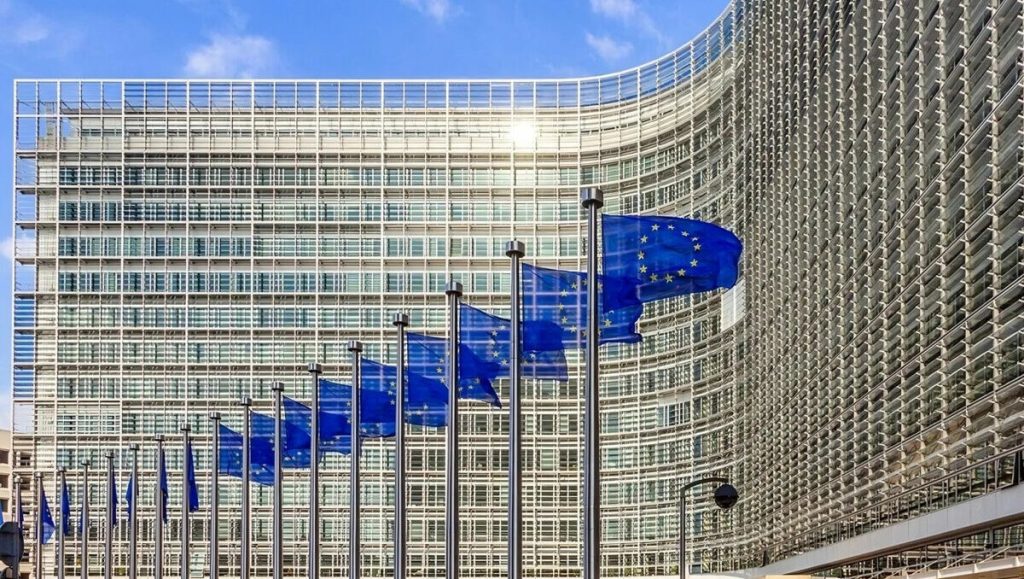
The UK is trying to assemble a coalition against France’s stringent EU procurement push before the rules are set in stone. By Stewart Burnett
The UK is trying to block France’s push for stringent ‘Made in Europe’ content requirements, lobbying Germany, Italy, the Netherlands and Poland to join it in resisting the proposal which would see it excluded from EU public procurement markets. With the European Commission’s legislation due to be published on 25 February, London is pressing allies to support a broader definition of trusted trading partners before the rules are finalised.
The diplomatic effort has, in a matter of weeks, moved to the top of the British government’s priority list. Trade Minister Chris Bryant is travelling to Paris on 17 March to meet with French Foreign Trade Minister Nicolas Forissier, while Trade Secretary Peter Kyle is planning a separate trip to Brussels. Last week Chancellor Rachel Reeves remarked at an event in Brussels that a turn toward protectionism “doesn’t make sense” though she stopped short of opposing the concept outright, saying the UK would welcome inclusion in any such scheme provided it was “as broad a club as possible”.
“I strongly believe that Britain’s future is inextricably bound with that of Europe’s—for economic reasons, but also reasons of security, resilience and defence,” she emphasised. “We want to make Europe as strong as possible, and that means not putting up the drawbridge.”
UK officials have expressed particular concerns over draft provisions that would require electric vehicle makers receiving state support to source at least 70% of their components from inside the EU, as well as mandating minimum European content thresholds for aluminium and plastics used in public contracts. Energy UK, the country’s largest energy trade body, warned that introducing new barriers to UK firms in EU supply chains would be “deeply counterproductive” and risk alienating an ally that had made clear efforts toward closer integration.
France’s position is rooted in a broader strategic argument that Europe can no longer afford to play by open-trade rules while the US and China deploy industrial policy in an aggressive and protectionist manner aggressively. Paris is pushing for European preference across procurement, state aid and tax incentives in sectors it considers strategic—including clean technology, semiconductors and advanced manufacturing—drawing on the logic that the EU’s roughly €2tr (US$2.4tr) annual public procurement market should be used to anchor industrial capacity within the bloc.
Germany has historically resisted such logic, wary of the protectionist knock-on effects on its own export-dependent economy. Berlin, along with Nordic countries and several central European states, has pushed for a looser ‘Made with Europe’ framing rather than strict origin requirements. France has offered some leniency on this recently, agreeing that European preference should apply only to critical strategic sectors rather than across the board. However, this concession appears aimed at avoiding a direct confrontation with the US more than anything else.
The Commission is attempting to thread the needle through a ‘trusted partners’ clause that would allow third countries meeting equivalent manufacturing standards to qualify for preferential treatment. Whether the UK ultimately falls inside or outside that definition remains to be seen, and UK officials say the window to influence the outcome is narrowing fast.
The Industrial Accelerator Act, already delayed several times, is targeted for adoption by 26 February.
E-Mobility,Manufacturing,Markets,News,Stewart BurnettStewart Burnett#lobbies #allies #soften #Europe #rules1771439569



More Stories
Pony.ai, CATL partner on first L4 electric light truck
UK lays regulations for automated passenger services
Leapmotor reveals China-only B05 Ultra at Beijing show