
Zoox takes another step towards commercial deployment, but regulatory hurdles remain ahead of the NHTSA forum. By Stewart Burnett
Amazon-backed autonomous driving firm Zoox has confirmed it will begin testing operations in Dallas and Phoenix, deploying retrofitted Toyota Highlander SUVs with safety drivers to map roads and collect operational data ahead of a commercial launch using purpose-built robotaxis. The expansion takes its US testing footprint to ten cities, with new support coming from a new ‘Fusion Center’ command hub in Scottsdale, handling fleet operations, remote guidance, and rider support.
The firm’s push into the Sun Belt is strategically calculated and follows a precedent set by other robotaxi players. Phoenix offers a grid road layout and extreme heat and dust conditions that stress-test sensor and battery performance; Dallas presents complex highway interchanges, varied weather, and driving patterns distinct from the dense urban environments where Zoox has primarily operated. Both cities are competitive territory—Waymo has run commercial service in Phoenix since 2018 and launched in Austin last year. Tesla has also launched a small test fleet in the latter city, albeit not without issues.
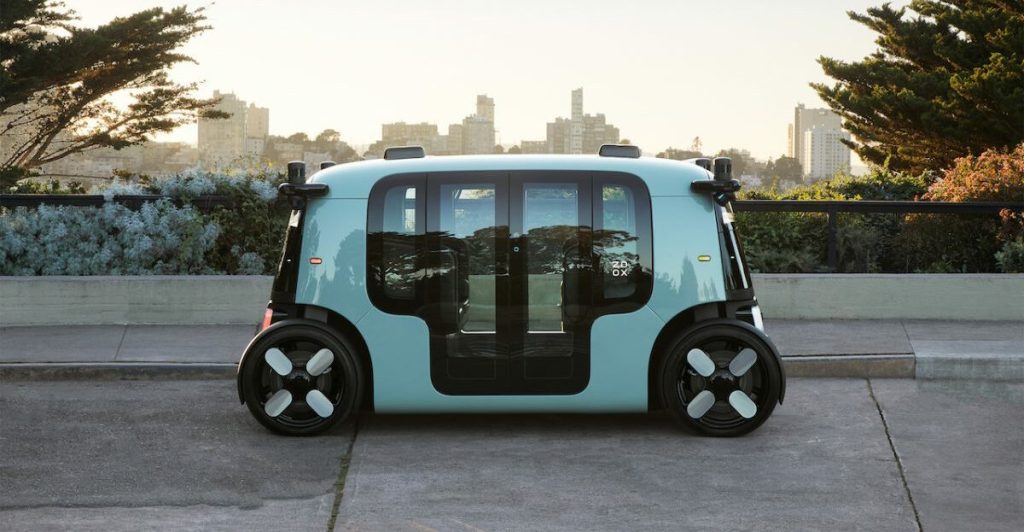
What distinguishes Zoox from its competition is its purpose-built robotaxi. The bidirectional, steering-wheel-free design seats passengers facing each other in a carriage-style cabin, with four independently steerable wheels and sensor pods at each corner providing overlapping 270-degree coverage. That radical architecture has also created its most significant constraint: because the vehicle cannot comply with federal safety standards written for human-driven cars, Zoox operates under a demonstration exemption granted by the National Highway Traffic Safety Administration (NHTSA) in August 2025 and remains capped at 2,500 non-compliant units per year under current federal rules.

Fortunately for Zoox, NHTSA appears set to update its rules soon. The firm is one of three major autonomous driving players—alongside Waymo and Aurora—set to feature at a 10 March forum convened by the agency. Takeaways from the event are expected to help shape the agency’s updated framework. The original guidelines were put in place in 2017 and have remained largely unchanged since.
As it stands, the production cap is the binding constraint on Zoox’s commercial scaling, not the technology. Waymo can expand by purchasing off-the-shelf compliant SUVs; Zoox cannot replicate that model without federal legislative reform or a new exemption pathway. The NHTSA forum on 10 March is therefore directly relevant to Zoox’s commercial timeline in a way it isn’t for its established competitors. No Tesla executives are appearing as featured panellists, but its planned Cybercab model—which like Zoox’ model lacks manual controls—will also be affected.
The Dallas and Phoenix deployments follow limited demonstration launches in Las Vegas and San Francisco, where Zoox has served more than 300,000 riders across more than one million autonomous miles. Rides are available to the general public albeit not on a paid basis. The mapping phase in both new cities will take months before progressing to autonomous testing with a safety driver, and purpose-built robotaxi deployment would require further regulatory clearance.
Autonomous Driving,Markets,News,Software-Defined Vehicle,Stewart BurnettStewart Burnett#Zoox #expands #testing #Dallas #Phoenix #adds #hub1773146873
More Stories
Pony.ai, CATL partner on first L4 electric light truck
UK lays regulations for automated passenger services
Leapmotor reveals China-only B05 Ultra at Beijing show