

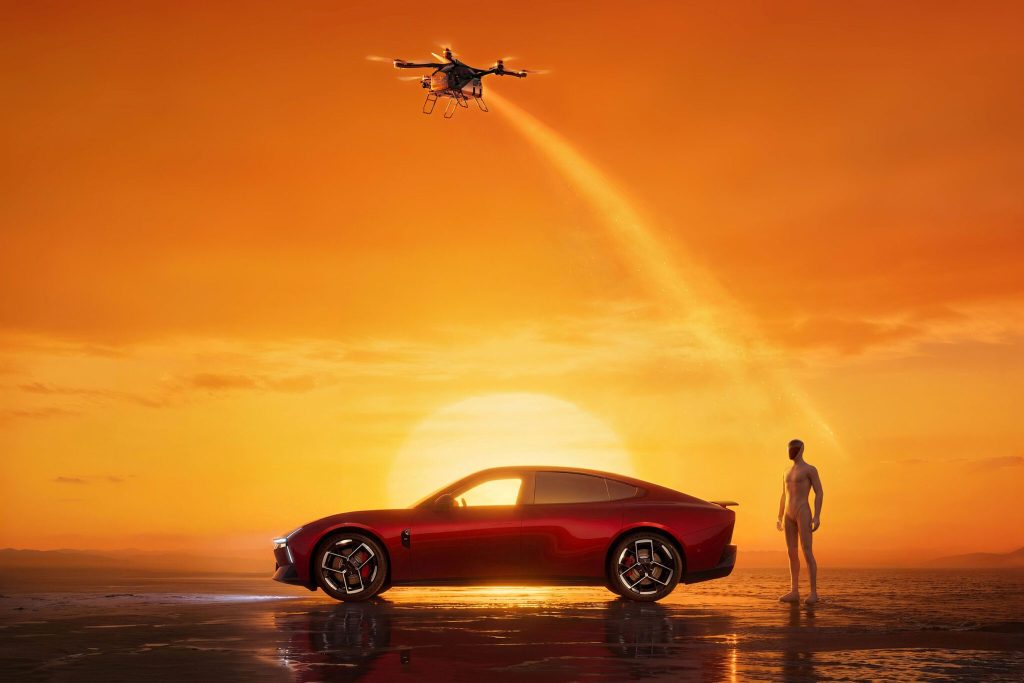
Xpeng will use the Beijing Auto Show to rebrand as a Physical AI group spanning smart vehicles, robotics and aerial mobility
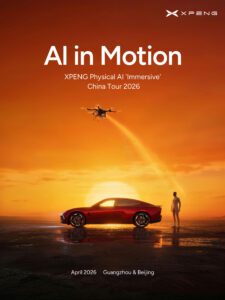 Xpeng will use the Beijing Auto Show, opening 24 April 2026, to outline its shift from smart electric vehicle manufacturer to what it describes as a “Physical AI” group, covering intelligent driving, humanoid robotics and aerial mobility under a single technology stack. The automaker said 2026 marks the year Physical AI moves into mass production across its portfolio.
Central to the stand will be the VLA 2.0 intelligent driving system, which Xpeng said is seeing rising Ultra-version adoption and higher conversion rates across its model range. The recently launched Mona UltraSE variant brings VLA 2.0 features to a lower price point, targeting younger buyers in the Chinese market.
Show visitors will be able to trial VLA 2.0 features including autonomous campus driving, fully automated parking and urban navigation. Alongside the intelligent driving demonstrations, Xpeng will display its latest flagship models, progress on humanoid robotics and updates on its flying car programme.
The automaker now operates in more than 60 countries and delivered 45,000 vehicles outside China in 2025, up 95.6% year-on-year. Xpeng said the Beijing event is intended as a milestone in its international expansion.
The Physical AI framing brings intelligent driving, robotics and aerial platforms under a shared artificial intelligence foundation, positioning Xpeng against Chinese competitors increasingly pitching themselves as AI companies rather than pure automakers.
Source: Xpeng
Autonomous Driving,Markets,News,OEMs,Software-Defined Vehicle#Xpeng #pushes #Physical #pitch #Beijing #Auto #Show1776437572

More Stories
Pony.ai, CATL partner on first L4 electric light truck
UK lays regulations for automated passenger services
Leapmotor reveals China-only B05 Ultra at Beijing show