
Xpeng follows in the footsteps of Tesla by going all-in for AI. By Stewart Burnett
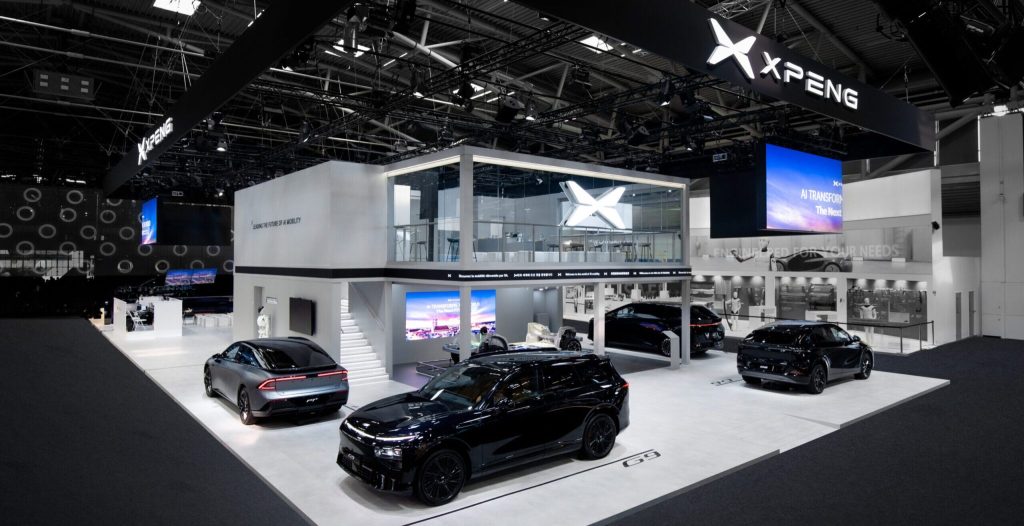
Xpeng has followed in the footsteps of Tesla, announcing on 8 January it wants to be known as a “physical AI” company rather than an automaker, with plans to invest heavily in both robotaxi deployment and the development of humanoid robots. At an event in Guangzhou, Chief Executive He Xiaopeng said that integrated AI capabilities powered by the company’s in-house Turing chip will provide a competitive advantage as compatriot OEMs face intense competitive pressure.
He stated: “Xpeng definitely does not want to become a car company that simply sells hardware cheaply. We want to become a global technology company, a company with strong differentiation.” The strategic shift comes as China’s automotive market—the world’s largest—remains embroiled in years-long price warfare that intensified in 2025 and has severely damaged profitability across the sector. Xpeng itself recorded a CN¥380m (US$54m) net loss during the third quarter; BYD, arguably responsible for the latest bout of price warfare, also recorded a 33% drop in profits.
An AI pivot is part of the classic tech company playbook; that is, repositioning away from low-margin commoditised hardware towards higher-margin software and AI that could unlock recurring revenue streams. For Xpeng, this could be defensive positioning given its recent streak of losses, although it should be noted that these losses are shrinking.
The automaker has also unveiled updated 2026 model year G6 and G9 crossovers, featuring advanced driver assistance systems offering either 1,500 TOPS computing power for the Ultra SE configuration at CN¥12,000 (US$1,715) or 2,250 TOPS for the Ultra system at CN¥20,000. Both variants incorporate Xpeng-developed Turing AI chips and support the company’s second-generation Vision Language Action model integrating visual perception, language understanding and action generation with reasoning capabilities.
Officials have claimed the ADAS is so advanced it allows an experience close to SAE Level 4 autonomy. Xpeng, like Tesla, has favoured a camera-vision-only approach to autonomy—presumably, also like Tesla, to save money—and therefore must lean heavily on its AI capabilities to overcome the substantially more limited sensor data input.
Xpeng now plans to equip its robotaxis with four Turing AI chips providing 3,000 TOPS computing power, with He confirming street “is set to begin very soon”. This comes on the heels of a November announcement that the automaker would partner with Alibaba to launch three robotaxi models during 2026. Humanoid robot mass production is scheduled for the second half of the year as Xpeng expands its workforce and increases its investment into autonomous driving and robotics development.
The similarities in strategy to Tesla go well beyond the camera-vision-only approach. Both are aggressively pursuing humanoid robots; both also plan to mass-produce their respective offerings sometime in 2026. Unlike robotaxis, however, there is no clear use case for humanoid robots outside of warehouse automation—and even then, robots custom-built for specific tasks are likely to fare better in the latter.
Chinese compatriot OEM Li Auto unveiled its own AI repositioning during 2023, with founder Li Xiang disclosing annual investments exceeding CN¥6bn (US$859m) in AI models, computing power and supporting infrastructure.
Updated vehicle models incorporate new software features, including three-dimensional navigation systems claimed to be China’s first nationally-available 3D lane-level mapping; advanced hazard alerts detecting dangers beyond immediate sight lines, and improvements to autonomous driving systems. He previously stated expectations to achieve break-even profitability by the end of 2025, though the company has not yet confirmed whether this target was met.
News,Stewart BurnettStewart Burnett#Xpeng #attempts #differentiation #pivot1768025038
More Stories
Pony.ai, CATL partner on first L4 electric light truck
UK lays regulations for automated passenger services
Leapmotor reveals China-only B05 Ultra at Beijing show