





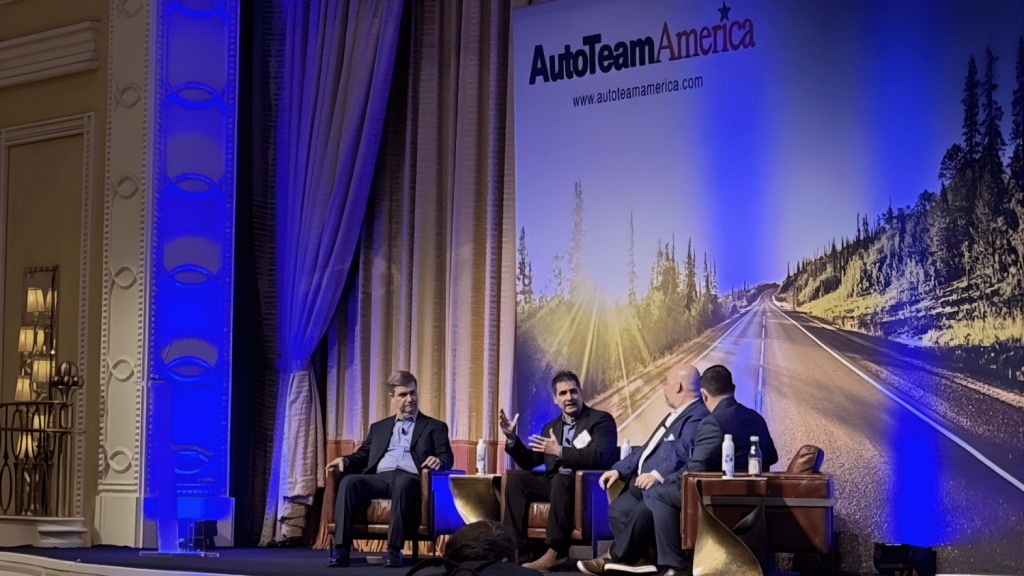
Image Source: Jason Stein (The Presidio Group) – LinkedIn
On the Dash:
- Early 2026 demand may rise with easing rates and higher tax refunds, but profitability is not guaranteed.
- Pushing record volume risks pricing pressure and margin erosion in a mature market.
- Dealer performance in 2026 will favor disciplined sales strategies and stronger used and fixed operations.
The U.S. auto industry is entering 2026 with stronger economic momentum than a year ago, but industry analysts warned dealers that chasing record sales volumes could ultimately weaken profitability.
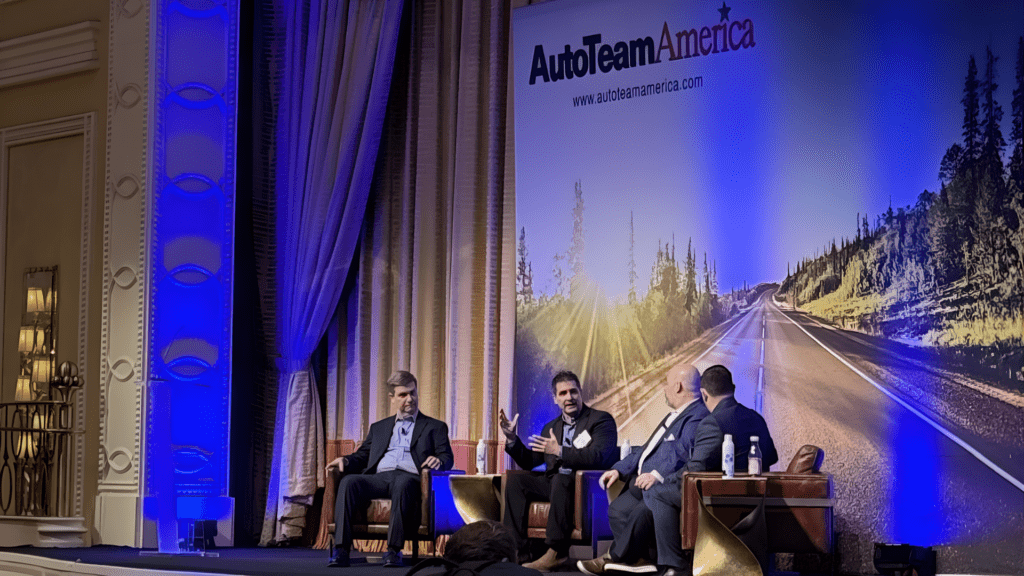
During the Automotive and Consumer Economic Update panel at the AutoTeam America Dealer/CEO/CFO Forum and Buy-Sell Summit, economists and industry analysts from Truist, The Presidio Group, and Cox Automotive outlined why improving macro conditions do not necessarily justify aggressive volume strategies.
Sign up for CBT News’ daily newsletter and get the latest industry stories delivered straight to your inbox.
Mike Skordeles, managing director of U.S. economics at Truist, said the economic backdrop for 2026 appears more constructive following what he described as an uneven 2025. He pointed to projected GDP growth of roughly 2.3%, slightly above last year, along with continued strength in consumer spending. Skordeles noted that consumers have spent above long-term averages in five of the past six quarters, supported by wage growth that has exceeded inflation.
Skordeles also highlighted several near-term demand tailwinds. Average tax refunds are projected to rise by roughly 44%, interest rates are expected to continue easing as the Federal Reserve maintains a looser policy stance, and investment tied to artificial intelligence remains a stabilizing force for the broader economy.
While those factors could lift showroom traffic early in the year, Kevin Tynan, senior director of research at The Presidio Group, cautioned that stable demand combined with expanding production capacity often leads to renewed pressure on pricing. Tynan said the U.S. new-vehicle market remains structurally a roughly 16 million-unit business over the long term, regardless of short-term economic swings.
Tynan noted that industry sales reached about 16.2 million units in 2025 and that modest growth in 2026 is possible. However, he emphasized that U.S. factories have operated below 80% utilization for several years, creating incentives to increase output even when retail demand does not justify it. That dynamic, he said, historically results in heavier incentives and margin compression for both automakers and dealers.
Jonathan Smoke, chief economist at Cox Automotive, added that sales risk in 2026 exists on both the upside and the downside. His outlook is closer to 15.8 million units, shaped by uncertainties around tariffs, labor costs, and shifting powertrain strategies. Smoke emphasized that tighter supply conditions, while limiting volume, tend to protect dealer margins.
Collectively, the panelists said dealers are likely to perform best in 2026 by maintaining month-to-month discipline rather than pursuing record sales. They also noted that even if new-vehicle volume softens, dealers can offset results through used vehicles and fixed operations as off-lease supply recovers and service demand remains supported by an aging U.S. vehicle fleet.
Industry News,Articles,Headlines,NADA,Retail Automotive,car business,Cox Automotive,The Presidio Group,auto industry insights,NADA Show 2026#disciplined #dealers #outperform #softer #market1770400874


More Stories
Weekly roundup: FTC wants dealers to report deceptive pricing, Ford boost U.S. assembly, Carvana expands dealership portfolio
Autonomous future back in focus as Waymo expands, Uber reinvests billions
New car sales drop 7.3% in April, but don’t blame buyers