


In a sprawling new interview with Bloomberg, Waymo’s Tekedra Mawakana dove into company strategy and the regulatory landscape. By Stewart Burnett
Waymo’s metric for success in 2026 is reaching one million paid weekly robotaxi rides in the US by the year’s end, according to Co-Chief Executive Tekedra Mawakana, who described the milestone as an “inflection point” for the Alphabet autonomous driving unit. The company currently provides roughly 400,000 paid rides per week across six cities and plans to expand testing and launch commercial services across 20 cities this year within the US and internationally.
Multiplying its scale by 2.5 will be a real test of the firm’s capabilities. However, 2025 saw it multiply its paid ride volumes even more substantially. “In 2025, we quadrupled the number of trips that we are providing,” Mawakana said during a February 10 interview with Bloomberg. To get there, the company will be leaning on the US$16bn it raised in an investment round earlier this month, which saw it reach a valuation of around US$126bn—larger than most global automakers.
The February 2026 round was led externally by three key players, Sequoia Capital, DST Global and Dragoneer Investment Group, while parent Alphabet contributed the lion’s share of new capital: roughly US$13bn. According to Mawakana, the new capital is a clear vote of confidence in the company’s technology—most specifically, its safety. “Consumers are adopting it, the safety case is being made, and it’s just a really exciting time to join the team.”
The firm advanced to driverless testing in Nashville this week ahead of a planned commercial launch with Lyft later in 2026. The company also expects to begin service in Washington, Detroit, Las Vegas, San Diego and Denver during 2026. However, 2026 will also see the company’s first overseas expansions: first to London, and then later, hopefully, to Tokyo. “When we first thought about Tokyo, we decided to [partner with] Nihon Kotsu and Go,” Mawakana explained. She added that finding “national champions that can help us navigate the regulatory climate and who already have that trust” will prove key to international expansion.
In its native market, however, Waymo faces some of the deepest scrutiny in its journey to date. US regulators launched two separate investigations last month after a series of incidents in school zones, including a robotaxi striking a child at a low speed in Santa Monica. Auto safety investigators are also probing well over two dozen episodes in which Waymo vehicles have driven improperly near stopped school buses in Austin and Atlanta.
Mawakana said Waymo is cooperating with investigators in the Santa Monica incident, highlighting that the vehicle was able to lower its speed to six miles per hour, and that “a person driving a car would not have been able to perform as our superhuman driver performed”. She added: “We’ve partnered with the Austin school district to look at data they have […] Their data, obviously, would be more based on human-driven vehicles [but] we think its important for us to understand, and for them to understand what we’re seeing, because we also have a lot of awareness around school buses.” Two software updates have been deployed since the reports first emerge, but incidents continue to pile up.
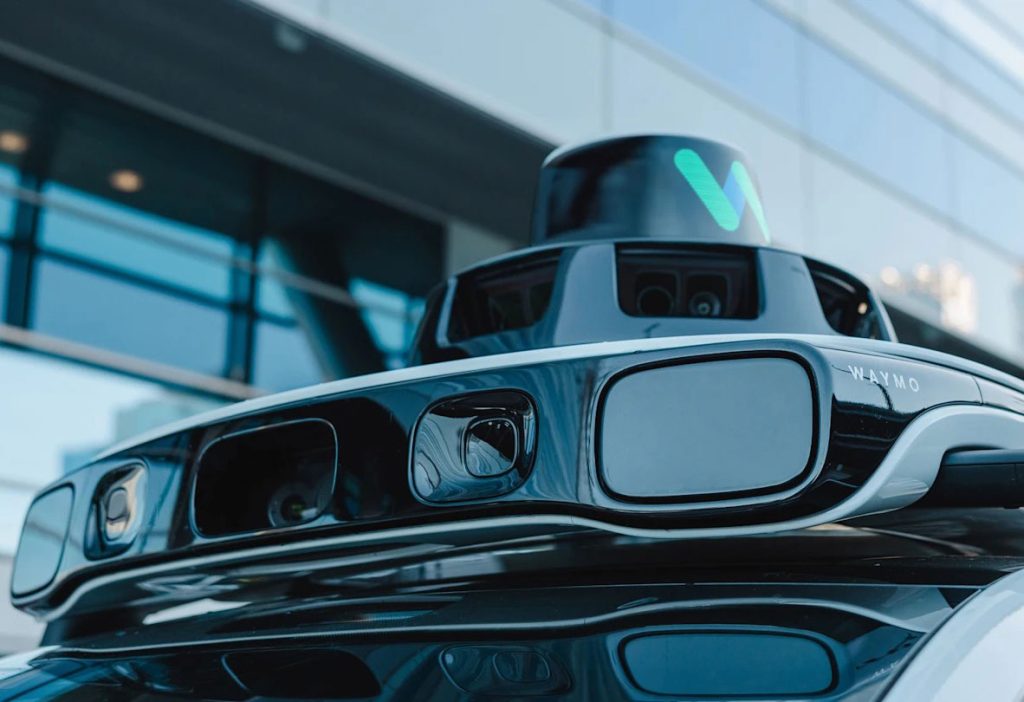
Elsewhere in the interview, Mawakana defended Waymo’s multi-sensor approach against Tesla’s vision-only system, saying: “our approach is what allowed us in October 2020 to remove the human driver from behind the wheel. And it’s what has allowed us to scale to more than 400,000 trips per week.” She did acknowledge the importance of cost when it comes to scaling operations, and notably did not rule out the possibility of trimming its sensor stack in the future. At the same time, she drove home that it cannot be seriously considered until safety had been fully and consistently demonstrated. “How do you know what the investment model for the business is when you haven’t achieved the safety bar?”
While Mawakana emphasised that Waymo remains “laser focused” on its own lane, she acknowledged that federal regulations for autonomous vehicles would go a long way to ensuring consistency and safety. “We’ve been advocating for a safety case-based approach because the technologies [of different companies] are different. The burden should be on different companies to demonstrate why they believe their technology is safe enough. We also think there should be safety requirements.”
“I think the US has an opportunity with this technology to lead globally, and I don’t think you can lead globally if it’s a framework that’s governed by multiple jurisdictions across the US. I think it’s not only a way to slow down the deployment of this technology not only in the US, but also in other markets.”
Autonomous Driving,Markets,News,Software-Defined Vehicle,Stewart BurnettStewart Burnett#Waymos #metric #success #million #weekly #rides1770922584

More Stories
Pony.ai, CATL partner on first L4 electric light truck
UK lays regulations for automated passenger services
Leapmotor reveals China-only B05 Ultra at Beijing show