




Polestar’s survival has long depended on Geely’s willingness to eat losses, and that calculus has not changed. By Stewart Burnett
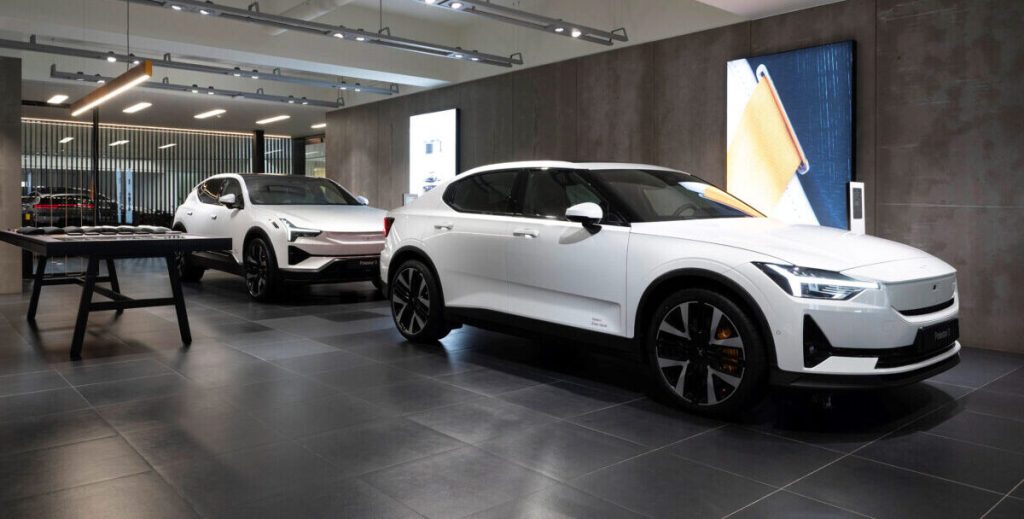
Volvo Cars has agreed to convert approximately US$274m of its outstanding shareholder loan to Polestar into equity, with a further conversion of around US$65m expected in the second quarter of 2026, as the two Geely-owned brands move to consolidate all Polestar 3 production at Volvo’s plant in Charleston, South Carolina. According to a spokesperson quoted by Reuters, Chinese output of the model will be discontinued as part of the arrangement.
The conversions will bring Volvo Cars’ stake in Polestar to approximately 19.9%, up from around 10% before the transaction. A separate debt-to-equity swap of approximately US$300m by parent Geely Sweden Holdings, first announced back in December 2025, has not yet completed. Once it has, Volvo’s holding will be diluted, hence the second tranche being structured to maintain its position. The maturity of Polestar’s remaining shareholder loan—which comes in at around US$660m—has been extended to December 2031.
There are clear advantages to the Polestar 3 production reorganisation. Consolidating the electric SUV’s assembly in Charleston eliminates the costs and complexity of running two production lines for a single model, while also circumventing the insurmountable 100% tariffs on US imports of Chinese-made electric vehicles (EVs). exposure that comes with shipping vehicles into the US from China. The move aligns with a broader pattern of Geely repositioning the products it sells in Western markets away from Chinese manufacturing wherever possible.
Volvo Cars Chief Executive Hakan Samuelsson, who returned to the role on a fixed two-year basis following the departure of Jim Rowan in March 2025, has moved quickly on multiple fronts since resuming his position. Charged with the task of deepening integration across Geely’s sprawling house of brands, Samuelsson has also overseen preparation for series production of the Polestar 7 compact SUV at Volvo’s forthcoming factory in Slovakia. On 30 March, Volvo also announced it would serve as the exclusive European distributor for Lynk & Co, another Geely brand.
Volvo’s anchoring role reflects the particular position both it and Polestar occupy within a group whose portfolio spans budget Chinese commuters to Lotus supercars. The two Swedish brands provide Geely with its most credible foothold in the European and North American premium segments, and their shared platform—the Polestar 3 and Volvo EX90 are both built atop the SPA2 architecture—means consolidating their production also concentrates the group’s most strategically valuable manufacturing assets in a single US facility.
For Polestar, the arrangement extends the financial runway without resolving the underlying question of whether it can reach the scale at which it sustains itself. Like most EV-focused brands that expanded aggressively during a period of stronger demand, it has consumed substantial capital without yet achieving profitable volume. During the first nine months of 2025 it recorded losses of US$1.56bn, nearly double the amount lost during the same period a year prior.
The conversion will help to strengthen Polestar’s balance sheet and pushes the debt maturity profile out to 2031. At the same time, it remains wholly dependent on lifelines from Geely and Polestar, and there is no immediate sign of this changing in the short term.
E-Mobility,Manufacturing,Markets,News,OEMs,Geely,Stewart BurnettGeely,Stewart Burnett#Volvo #converts #US274m #Polestar #debt #production #shift1774949151


More Stories
Pony.ai, CATL partner on first L4 electric light truck
UK lays regulations for automated passenger services
Leapmotor reveals China-only B05 Ultra at Beijing show