

On the Dash:
- Volkswagen has delayed plans for a second U.S. Audi factory due to ongoing tariff costs and uncertain incentives.
- Trump administration tariffs cost Volkswagen about $2.5 billion in the first nine months of 2025.
- The automaker is prioritizing cost controls and stable business conditions before committing to new U.S. capacity.
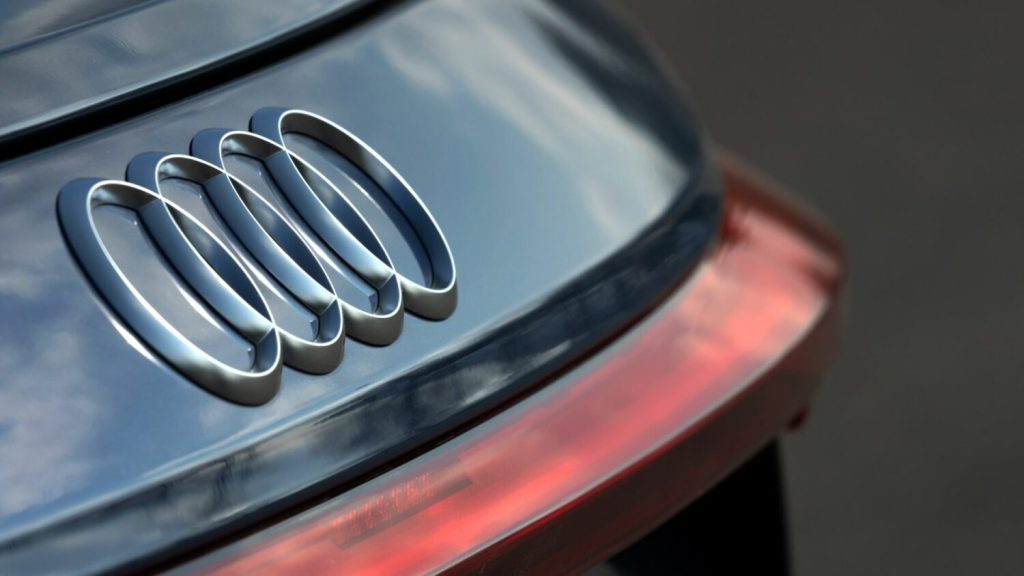
Volkswagen’s plans to build a second Audi factory in the United States have stalled as President Donald Trump’s tariffs continue to weigh heavily on the automaker’s finances and negotiations for local incentives have failed to produce results, CEO Oliver Blume told Germany’s Handelsblatt.
Volkswagen leadership has evaluated expanding Audi manufacturing in the U.S. for years, with discussions dating back to Trump’s first term. Momentum appeared to build last spring, when multiple reports suggested Audi was nearing a final site decision as part of a broader effort to offset U.S. auto tariffs and strengthen its American footprint.
Sign up for CBT News’ daily newsletter and get the latest industry stories delivered straight to your inbox.
That momentum has since faded. Blume said the ongoing tariff burden, combined with rising costs, has made a large-scale U.S. investment increasingly difficult to justify. Instead, Volkswagen is prioritizing short-term cost reductions while pushing for more predictable and sustainable business conditions before committing to additional capacity.
The financial impact has been significant. Trump administration tariffs on European automakers have cost Volkswagen roughly $2.5 billion (€2.1 billion) over the first nine months of 2025 alone. Blume said that the level of expense fundamentally alters the economics of funding a new Audi plant under current conditions.
The pause comes as Volkswagen continues to struggle to gain traction in the U.S. market, where it faces stiff competition from Japanese automakers and has lagged rivals in the high-margin luxury SUV segment. Audi currently produces key models, including the Q5, in Mexico, leaving them exposed to tariffs that do not apply to vehicles built domestically.
Volkswagen already operates a U.S. assembly plant in Chattanooga, Tennessee, and is constructing a $2 billion facility in South Carolina tied to its revived Scout Motors brand. Blume acknowledged that the company owns land in South Carolina that could support future Audi production, and said several states remain interested. Still, he emphasized that incentives and cost advantages are critical for any new investment to move forward.
As Volkswagen works through a scaled-back five-year investment plan, now reduced to approximately $173 billion (€160 billion), the company appears focused on stabilizing profitability before making another major U.S. manufacturing commitment.
Industry News,Articles,Headlines,auto tariffs,trump tariffs,car business,Retail Automotive,Volkswagen,auto industry news#Volkswagen #delays #Audi #plant #plans #tariffs #pressure #cost1769559089
More Stories
Weekly roundup: FTC wants dealers to report deceptive pricing, Ford boost U.S. assembly, Carvana expands dealership portfolio
Autonomous future back in focus as Waymo expands, Uber reinvests billions
New car sales drop 7.3% in April, but don’t blame buyers