

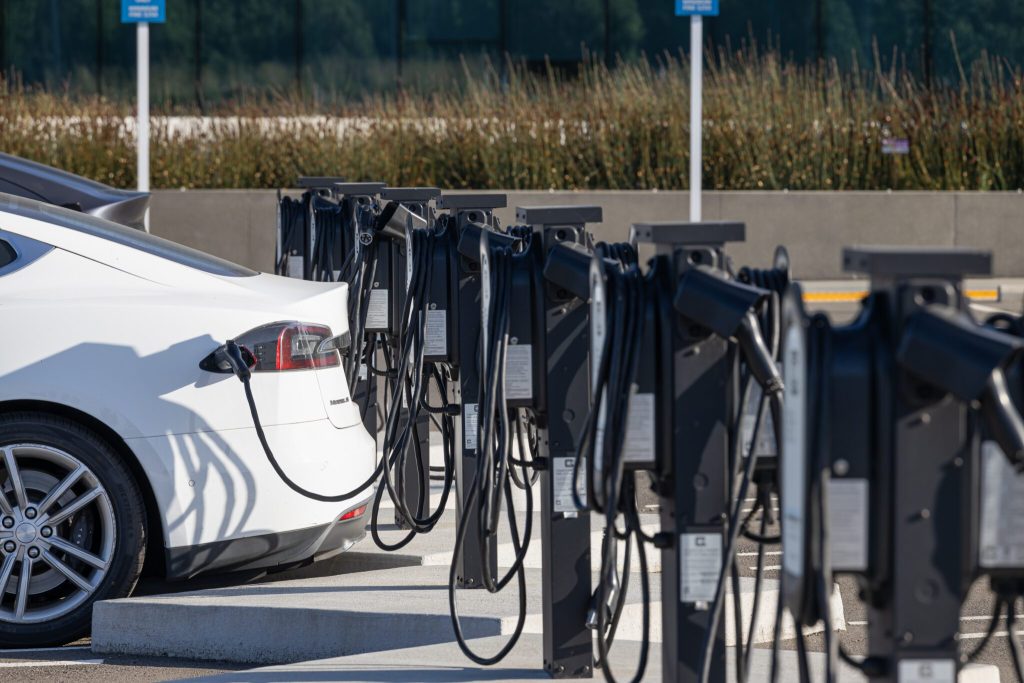
The 55% threshold was already stretching supply chains—jumping to 100% appears designed to freeze charger deployment entirely. By Stewart Burnett
The US Department of Transportation proposed on 10 February to increase domestic content requirements for federally-funded electric vehicle chargers from 55% to 100%, a standard that no commercially-available charger actually meets. Industry groups have unsurprisingly warned that the move would effectively halt charging infrastructure build-out across the country.
Transportation Secretary Sean Duffy claimed that the change would “strengthen domestic manufacturing, generate new American jobs, make US businesses more competitive, and address potential national security concerns”, the latter by protecting against foreign components with unspecified cybersecurity vulnerabilities. The Federal Highway Administration will gather feedback from stakeholders before deciding whether to continue, modify or revoke the existing 55% waiver.
Electric vehicle and charging industry groups have countered that the proposal is entirely unrealistic and would stop the National Electric Vehicle Infrastructure (NEVI) programme in its tracks—and likely by design. “This proposal does not meet industry where it is today and may discourage further investment in the production of US-made EV chargers. Ultimately, this will hinder the job growth that Buy America is intended to create,” said Albert Gore, executive director of the Zero Emission Transportation Association (note: not the former Vice President and climate activist).
At the time of writing, there is not a single EV charging station online that can claim 100% US-sourced materials and components, with most power modules and advanced electronics sourced globally. Not many chargers can even meet the 55% standards that are currently being imposed.
The proposal comes less than three weeks after US District Judge Tana Lin ruled that the Trump administration acted unlawfully when it abruptly froze US$5bn in NEVI funding in January 2025. Lin said the federal government cannot withhold congressionally appropriated funds for reasons not authorised by statute, calling such actions “capricious” and contrary to the Administrative Procedure Act. The new domestic content requirements would allow the administration to restrict funding without technically freezing the programme.
States were just starting to receive their promised NEVI funds when the proposal was announced, and Georgia is still counting on US$134m to build dozens of new charging stalls. “Today’s announcement is yet another bad-faith attempt to kill NEVI and block the buildout of essential infrastructure Congress funded for all Americans,” said Katherine Garcia, Director of the Sierra Club’s Transportation for All programme.
Separately, the US Senate in January discussed reallocating US$879m already approved by Congress for charging network expansion to other infrastructure priorities after the Republican-controlled House of Representatives gave its vote of approval.
The fossil fuel industry spent US$219m influencing the 2024 election, according to campaign finance data compiled by OpenSecrets. Of this sum, 88% of contributions went to Republican candidates including nearly US$23m to Donald Trump’s presidential campaign and the associated superPACs. The industry has spent over US$100m annually lobbying politicians to enact legislation favourable to fossil fuels, including voting against climate policy and slowing the adoption of cleaner energy technologies.
Outside spending from the fossil fuel industry skyrocketed from US$2m to over US$150m across four presidential election cycles following the landmark 2010 Citizens United Supreme Court ruling. Now, donors are getting what they wanted—even if it costs the US any competitive advantage it may have had against Chinese counterparts in the clean energy industry.
E-Mobility,Manufacturing,Markets,News,Stewart BurnettStewart Burnett#Trump #block #NEVI #funds #parts #proposal1770892023
More Stories
Pony.ai, CATL partner on first L4 electric light truck
UK lays regulations for automated passenger services
Leapmotor reveals China-only B05 Ultra at Beijing show