



The Trump administration rejected the request for temporary relief, despite it being
The Trump administration has rejected Ford’s request for relief from aluminium tariffs, declining to act in response to the fires that destroyed output at a key domestic supplier, Novelis, that forced automakers to import at 50% duties. The White House informed companies it had already provided relief from other national security tariffs in 2025; a spokesperson stated to the Wall Street Journal that Ford and others had not raised the aluminium issue “in a particularly pronounced way”.
Novelis’ Oswego plant suffered two fires during autumn 2025 and is not expected to return to full service until at least June. It serves around a dozen automakers including the Detroit Three, Hyundai, Toyota and Volkswagen. However, the disruption has fallen hardest on Ford, whose F-150 truck relies on aluminium for its body construction.
Ford noted during its February 2026 earnings call that it had already absorbed US$2bn in costs from the supply disruption. As it stands, the automaker is expected to spend a further US$1bn on imported aluminium in 2026. It reported a roughly 50% fall in quarterly profit to US$1bn in the same period.
Thus far Novelis has been leaning on its global footprint to support US automakers, substituting output at Oswego with aluminium from its plants in South Korea and Europe. Unfortunately that material enters the US subject to the 50% tariff, and this cost is passed directly to consumers. Ford’s petition asked for duty relief to remain in place only until the Oswego facility can resume normal operations, a time-limited request tied explicitly to the recovery of domestic supply.
Whether the Trump administration’s aluminium tariffs are fit to serve their stated purpose is debatable. The 50% duty was introduced on the pretext of national security to incentivise domestic production; Ford is paying it not because it is choosing to source internationally but because the primary domestic source is unavailable. In this sense the short to medium-term impact of the tariffs is clearly less than desirable for actual US manufacturers.
A broader restructuring of metals tariffs announced at the end of March will also see 25% duties applied to the full value of derivative products substantially made of aluminium, a change that is expected to increase costs further for many automotive applications.
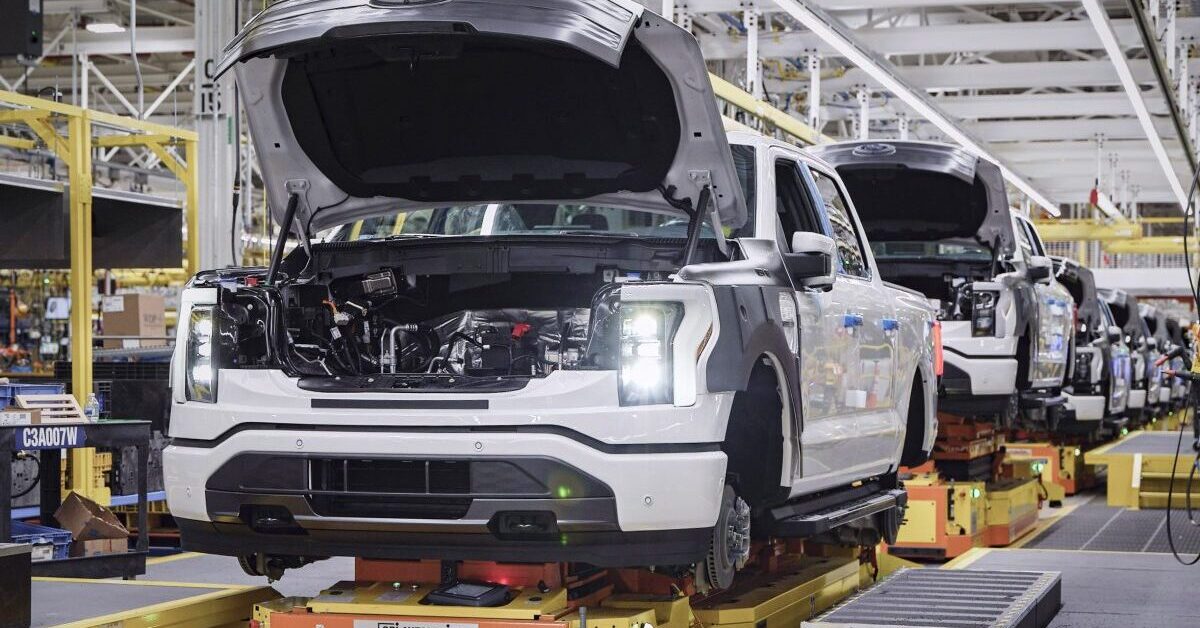
Ford has already taken structural decisions in response to the aluminium shortage. Production of the F-150 Lightning electric pickup was wound down ahead of schedule, and lines adjusted to increase output of the internal combustion engine and hybrid F-150 variants that remain Ford’s highest-margin products. The automaker plans to produce 50,000 to 60,000 additional F-Series units in 2026 to recover volume lost during the disruption.
E-Mobility,Manufacturing,Markets,News,OEMs,Ford Motor Company,Stewart BurnettFord Motor Company,Stewart Burnett#Trump #admin #rejects #Ford #bid #aluminum #tariff #relief1775641409
More Stories
Pony.ai, CATL partner on first L4 electric light truck
UK lays regulations for automated passenger services
Leapmotor reveals China-only B05 Ultra at Beijing show