



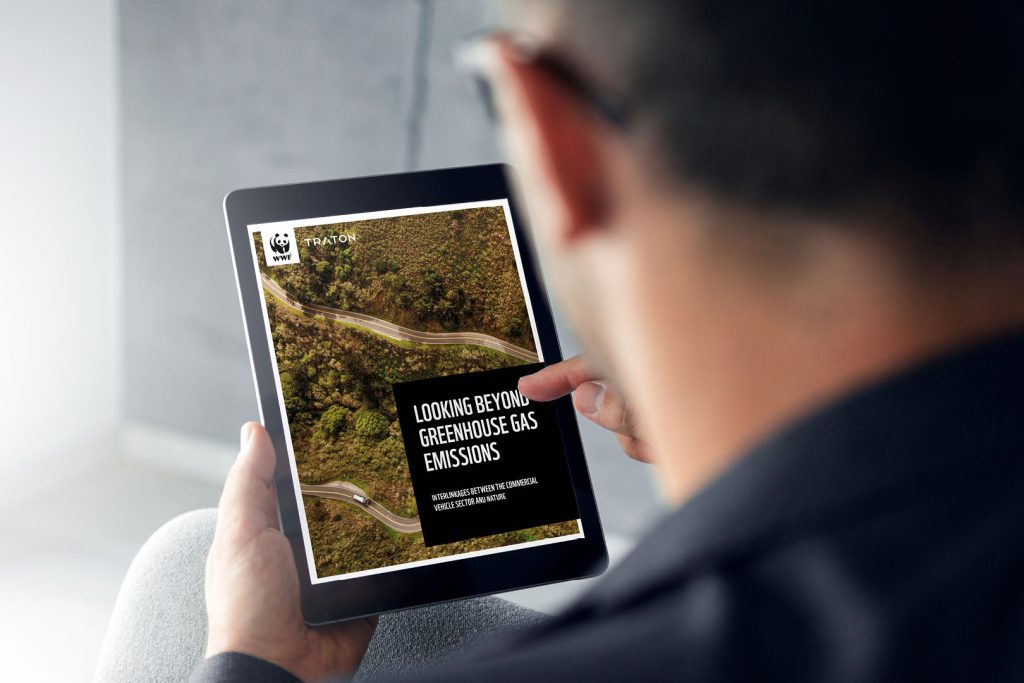
Traton Group and WWF Sweden have released a study examining how the commercial vehicle sector depends on and impacts nature
 Traton Group and WWF Sweden have released a study examining how the commercial vehicle sector depends on and impacts nature, with a focus on risks linked to the transition to electric vehicles. The two organisations have also announced a three-year partnership aimed at addressing biodiversity-related risks across resource use, water, and circularity.
The WWF-authored study notes that while the shift to cleaner technologies reduces greenhouse gas emissions, it may introduce new environmental challenges around resource extraction, land use change, and pollution related to battery production. Growing demand for battery metals such as lithium, nickel, and rare earth elements is shared across industries including renewable energy, increasing pressure on ecosystems.
In a statement, Mats Landén, Senior Manager of Corporate Partnerships at WWF Sweden, said: “Nature loss poses real risks to business. Addressing nature challenges safeguards business from long-term risk, strengthens supply chains and opens new market opportunities. This study provides a first step in enabling companies in the commercial vehicles sector to understand why and how action is needed.”
Andreas Follér, Chief Sustainability Officer at Traton Group, added: “Through this collaboration, we have deepened our understanding of how our sector interacts with nature. The transition to electric vehicles can be made more sustainable and needs leadership and cooperation from sector players.”
Source: Traton
Commercial Vehicle,E-Mobility,News,Traton GroupTraton Group#Traton #WWF #Sweden #publish #study #nature #impacts1771326907

More Stories
Pony.ai, CATL partner on first L4 electric light truck
UK lays regulations for automated passenger services
Leapmotor reveals China-only B05 Ultra at Beijing show