


Four years on from its handshake with Ford, SK records a US$2.6bn asset impairment on the JV’s dissolution. By Stewart Burnett
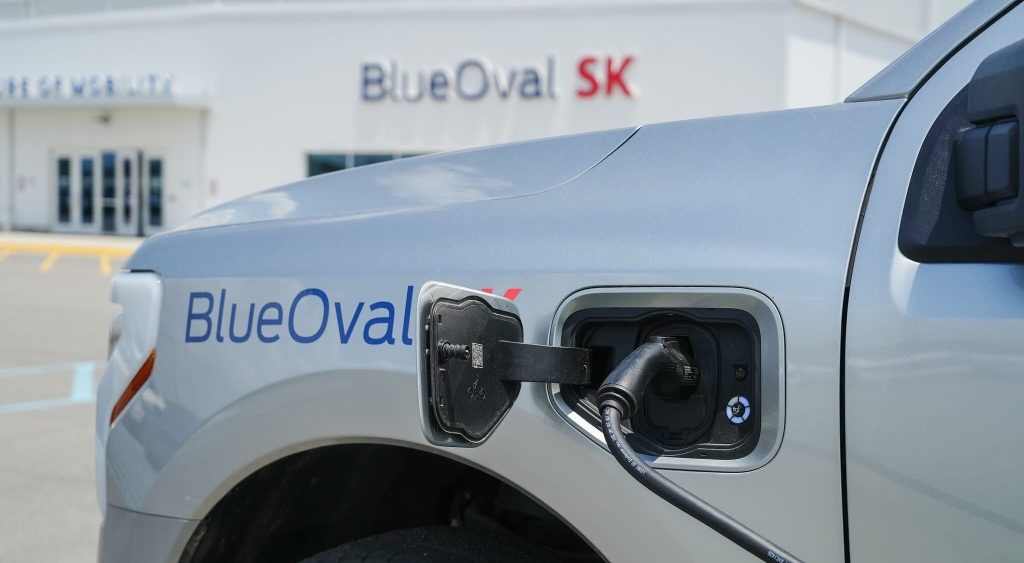
South Korean battery manufacturer SK Innovation has reported a KRW 3.7tr (US$2.6bn) asset impairment following the termination of its BlueOval battery joint venture with Ford. The companies announced back in December they would dissolve the partnership just four years after unveiling an US$11bn initiative to construct three battery factories and an assembly plant for electric pickup trucks across Tennessee and Kentucky.
The separation has been relatively amicable, and both companies will continue to work together albeit as separate entities. Under the agreement, Ford will assume full ownership of the two BlueOval facilities in Kentucky, while SK battery unit SK-On retains the Tennessee site. The latter is scheduled to commence production of both energy storage system (ESS) cells and batteries for Ford’s extended-range electric vehicles in 2028.
Ford’s takeover of the Kentucky operations eliminates approximately KRW 5.4tr in debt from SK’s balance sheet, improving the company’s financial structure despite the substantial one-time writedown. Regardless, SK’s shares slid 4.5% following the announcement before settling at a 3% decline.
The dissolution reflects a fundamental strategic misalignment between the two partners as slowing electric vehicle (EV) demand—largely a result of Trump administration policy—forces automakers to reassess their decarbonisation timelines and associated capital commitments. While this retreat, also observable with fellow Detroit automakers General Motors and Stellantis, will impact the North American EV supply chain, there are material benefits for the automakers themselves in taking such steps.
Ford, for its part, will gain operational flexibility to retool Kentucky facilities for different battery chemistries or energy storage applications. SK On, on the other hand, will gain greater flexibility to diversify its customer base beyond Ford’s fluctuating production volumes. In 2025, the company secured at least one major new customer in the ESS market, as well as a supply deal with Nissan; now it will be able to take on more customers without navigating the bureaucracy of a JV.
Amid the EV retreat, Ford has confirmed it plans to invest US$2bn repurposing the Kentucky plants for utility-scale battery ESS. To this end it will hire 2,100 workers, with initial hiring beginning in early 2026 for a planned 2027 production start. The automaker will retain some of its electrification plans, albeit at a smaller scale and targeting affordability. A US$30,000 mid-size pickup based on its new dedicated EV platform is planned for 2027.
SK Innovation reported a fourth-quarter operating profit of KRW 294.8bn, missing analyst estimates of 370bn won, whilst SK On’s operating loss widened to KRW 441.4bn from 124.8bn a year earlier despite increased shipments to European markets. The battery unit indicated that it expects battery demand to continuously improve during 2026.
E-Mobility,Manufacturing,Markets,News,Ford Motor Company,Stewart BurnettFord Motor Company,Stewart Burnett#Innovation #reports #US2.6bn #loss #Ford #breakup1769607079
More Stories
Pony.ai, CATL partner on first L4 electric light truck
UK lays regulations for automated passenger services
Leapmotor reveals China-only B05 Ultra at Beijing show