
Volkswagen’s patronage of Rivian for software won’t last forever, and 2026 will see it betting heavily on the success of the R2. By Stewart Burnett
Rivian reported consolidated gross profit of US$144m for full year 2025, a US$1.3bn improvement from 2024’s US$1.2bn loss, as software and services revenue tripled to US$1.55bn despite automotive revenue falling 15%. The US electric vehicle (EV) maker delivered just 42,247 vehicles in 2025—a notable drop from the 51,579 units it sold in 2024—but it is betting the farm on the launch of the more affordable R2 mid-size SUV triggering a sales revival in 2026.
Last year’s collapse in deliveries was attributed in large part to Trump administration policy, most significantly the elimination of the US$7,500 federal EV tax credit. Fourth-quarter consolidated gross profit reached US$120m on US$1.29bn revenue, beating Wall Street estimates that the company would more or less break even. Automotive gross profit posted a US$59m loss in the quarter compared with US$110m profit the prior year, driven primarily by a US$270m decrease in regulatory credit sales.
Software and services gross profit, on the other hand, surged to US$179m from US$60m in the Q4 2024. The software revenue growth stems almost entirely from Rivian’s technology joint venture with Volkswagen, which is supplying the German automaker with electrical and software defined vehicle architecture. Rivian received US$1bn in convertible notes in 2024 and another US$1bn payment in July 2025 under the milestone-based arrangement worth up to US$5.8bn through 2027.
During the earnings call, Chief Financial Officer Claire McDonough reassured investors by emphasising the steady income Rivian will continue to receive from Volkswagen. The company expects an additional US$2bn to pour in during 2026, with US$1bn subject to successful winter testing completion and the remaining US$1bn as non-recourse debt expected in October. In other words, Rivian will have worn through most of its software life raft by the time 2027 rolls in, even in the best-case scenario.
Little surprise, then, that the automaker is doing everything in its power to revive its tumbling vehicle sales. It is projecting 2026 deliveries to come in between 62,000 and 67,000, representing up to 59% growth from the weakened levels seen in 2025. This prediction rests on the assumption that the much-hyped R2 SUV—starting around US$45,000—will be enthusiastically received by mass market consumers repelled by surging car prices, particularly for EVs. The only Rivian model available at present, the R1, typically starts around US$71,000.
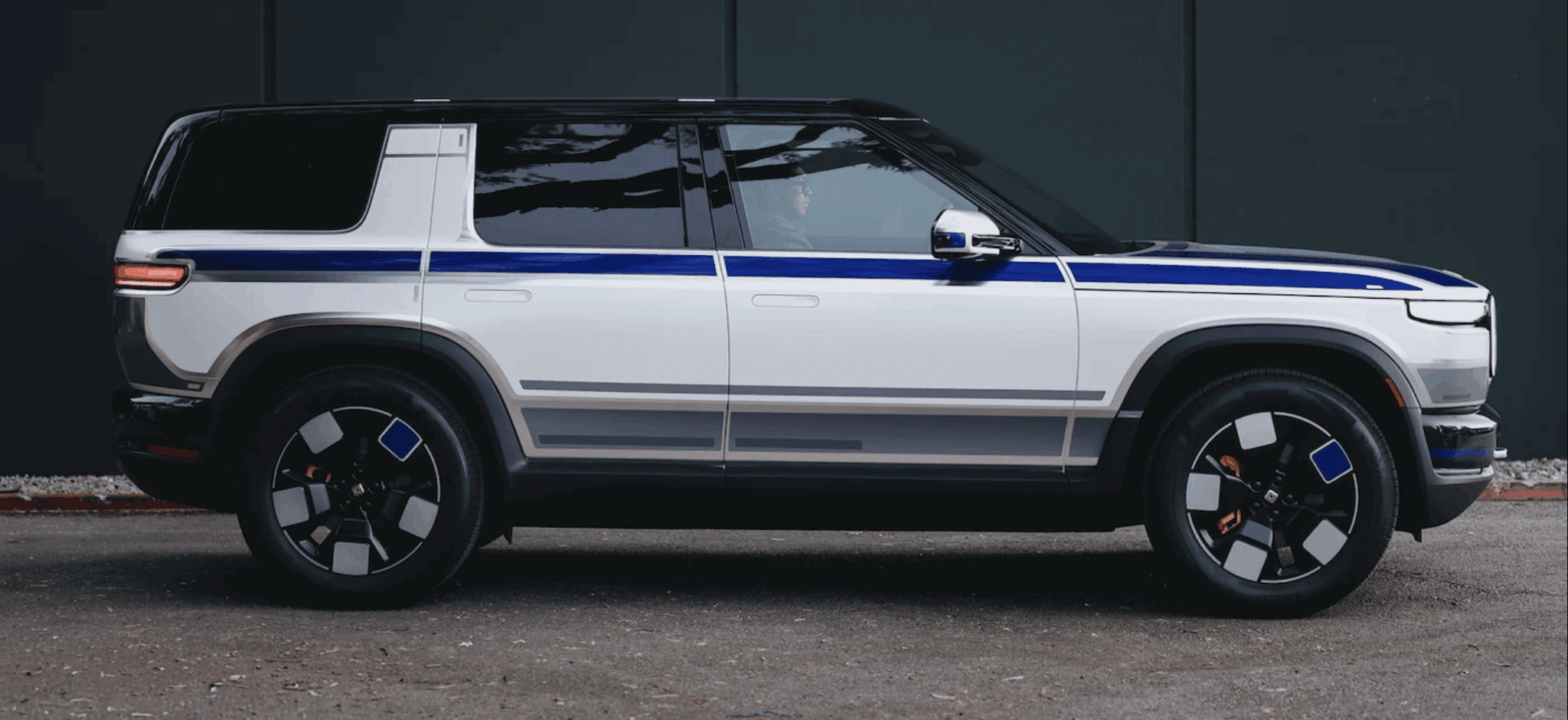
Rivian completed first manufacturing validation builds using production tools and processes at its Normal, Illinois plant in mid-January 2026, and plans to reveal additional product details on 12 March. Chief Executive RJ Scaringe said volumes for the R1T pickup, R1S SUV and electric delivery vans will remain largely flat from 2025 levels, implying that Rivian expects a minimum of 22,000 R2 deliveries this year.
The company reported cost of goods sold per unit of US$92,000 in the fourth quarter, improving US$4,000 from the third quarter and US$7,000 from the fourth quarter of 2024. This comes in spite of concerns that President Donald Trump’s tariff regime would negatively impact parts procurement costs—an issue the automaker had flagged previously. It is unclear how much lower these costs would have been without the impact of tariffs.
Rivian has warned that capital expenditures are expected to soar in 2026, nearly doubling to between US$1.95bn and US$2.05bn in preparation for series production of the R2 and expansion of its in-house autonomous driving capabilities. The automaker unveiled its RAP1 Autonomy Processor in December 2025, alongside a third-generation autonomy platform designed to enable ‘eyes-off’ and personal SAE Level 4 capabilities at an undetermined point in the future.
Rivian ended December with US$3.58bn in cash and cash equivalents compared with US$4.44bn at the end of September, with Scaringe telling Reuters that the automaker will be “opportunistic with regards to raising additional capital” as it eats through its capital reserves. This time a year ago it told the outlet that other automakers were “knocking on [its] door” for partnerships, although nothing has yet emerged from these discussions.
“In 2025 we focused on execution as we laid the foundation for dramatically scaling our business,” he remarked separately in a press release. “It’s incredibly exciting to see the early strong reviews of the R2 pre-production builds, and we can’t wait to get them to our customers next quarter.”
E-Mobility,Manufacturing,Markets,News,OEMs,Software-Defined Vehicle,Stewart BurnettStewart Burnett#Rivian #swings #profit #sales #backslide1770954931
More Stories
Pony.ai, CATL partner on first L4 electric light truck
UK lays regulations for automated passenger services
Leapmotor reveals China-only B05 Ultra at Beijing show