
Rivian has discontinued its most affordable R1 trim, while leaked prices suggest the R2 may not arrive at the automaker’s vaunted US$48,000 target. By Stewart Burnett
Rivian has confirmed it is discontinuing the Dual Standard versions of the R1T and R1S, its current most affordable configurations, in the hours leading up to the R2’s official unveiling at SXSW on 12 March. The announcement came via a customer email on 10 March, which offered final lease incentives of US$3,000 off the 2026 edition R1 Dual Standard.
Customers will have until 19 March to secure lease approval and 31 March to take delivery under a final incentive offer. The departure of the Dual Standard meaningfully changes the Rivian model portfolio, specifically repositioning the R1 as the premium option in contrast to the more mass market-oriented R2. The new base trims become the Dual Motor versions, with the R1T starting at US$79,990 and the R1S at US$83,990, up from US$72,990 and US$76,990 respectively. The move narrows the R1 lineup and signals that Rivian intends the R2 to serve as the brand’s accessible entry point going forward.
Leaked specifications, published prematurely by Ars Technica before quickly being pulled, indicated that the Performance trim will be the first to debut at a price point of US$57,990. A Premium variant at US$53,990 is expected later in 2026 and a Standard AWD version at US$48,490 planned for launch in late 2027. The colour options, dimensions, and key figures also surfaced via enthusiast forums, which, if true, will leave relatively little for Rivian to formally reveal at SXSW beyond confirmation.
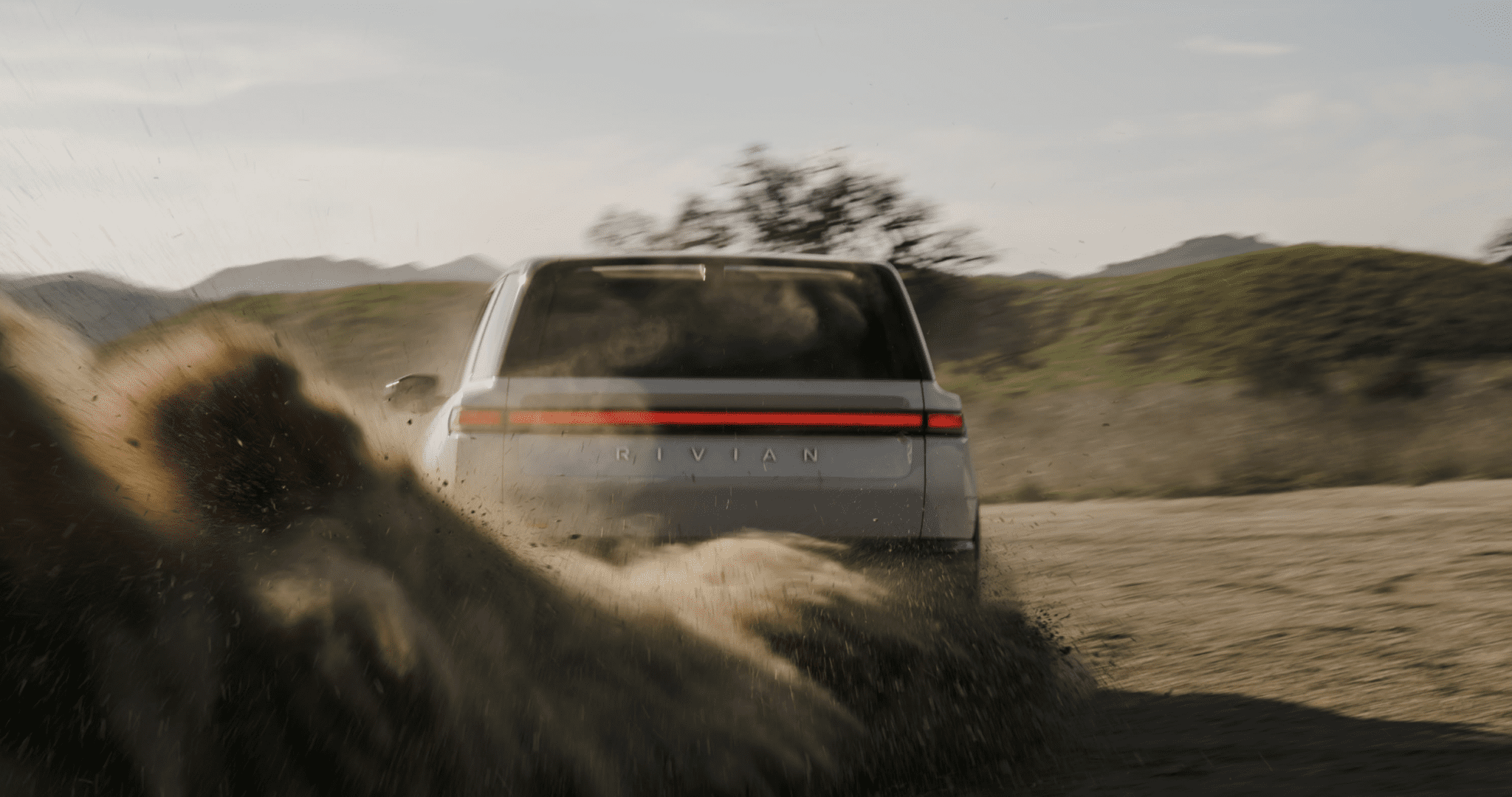
The entry-level R2 Standard, which hovers close to the US$48,000 price point that Chief Executive RJ Scaringe has previously argued to be critical for mainstream electric vehicle adoption, will not be the first impression drivers receive of the R2 model series. Rivian notably removed a previously-indicated figure of US$45,000 from its website ahead of the launch and has not provided a firm commitment to that price—only allusion to it in interviews and at media events.
Retiring the Dual Standard R1 is arguably a logical step to avoid potential product overlap with the R2. At the same time, Scaringe built the entire commercial rationale for the R2 around a specific and significantly lower price point, framing that figure not just as a starting price but as the point at which electric vehicles become viable for mainstream buyers.
By the automaker’s own criteria, what it is planning to launch this year is not the mass market hit it has indicated is absolutely essential for achieving sustainable growth. As it stands, the US$45,000 version of the R2 remains an aspiration without any binding guarantee attached to it. The US$57,990 price places the Performance trim in direct competition with Tesla’s Model Y Performance (US$53,490), Cadillac’s Lyriq (U$58,590) and Hyundai’s Ioniq 5 N (US$66,100). It marginally outperforms these offerings with a 330-mile range; by contrast Tesla offers 285 miles and Cadillac 314.
Rivian does enter the R2 launch in a stronger position than it has occupied for most of its history. The company posted its first full year of gross profit in 2025, and has US$6.1bn in cash on hand bolstered by the Volkswagen joint venture. But it is working against the clock: revenue from the joint venture is expected to wind down in 2027.
E-Mobility,Markets,News,OEMs,Stewart BurnettStewart Burnett#Rivian #cuts #cheapest #option #ahead #launch #event1773335797
More Stories
Pony.ai, CATL partner on first L4 electric light truck
UK lays regulations for automated passenger services
Leapmotor reveals China-only B05 Ultra at Beijing show