

Rivian starts 2026 strong, but it needs to average roughly 18,000 deliveries per quarter for the rest of 2026 to hit its own guidance. By Stewart Burnett
Rivian delivered 10,365 units in the first quarter of 2026, exceeding an analyst consensus of 9,678 and marking a 20% increase year-over-year, as the electric vehicle startup reiterated its full-year guidance of 62,000-67,000 deliveries. The latest data comes just days before the start of R2 customer handovers, which it expects will carry the bulk of its 2026 volume growth.
Production for the quarter, on the other hand, came in at 10,236 vehicles, down 30% year-on-year. This reflected a planned decline to accommodate the retooling of Rivian’s Normal, Illinois plant for R2 assembly. The delivery surplus over production of around 130 units indicates the automaker is trying to whittle through its modest prior-period inventory rather than accumulating it, arguably a more comfortable position than the one Tesla currently appears to find itself in.
The R2, priced from US$57,990 for the Performance Launch Edition, began deliveries to Rivian employees in April with external customer handovers, prioritising existing R1 owners, scheduled for the following month. A lower-priced Premium trim at US$53,990 is planned to follow later in 2026, as well as a Standard Long Range variant at US$48,490 a base model targeting approximately US$45,000 during 2027.
The sequentially-lower pricing is deliberate: Rivian needs margin from its higher-end trims to fund the production ramp as it works to lower production costs. The automaker’s most loyal customers are, effectively, being tapped to subsidise its ambitions competing with Tesla’s Model Y in the mass market.
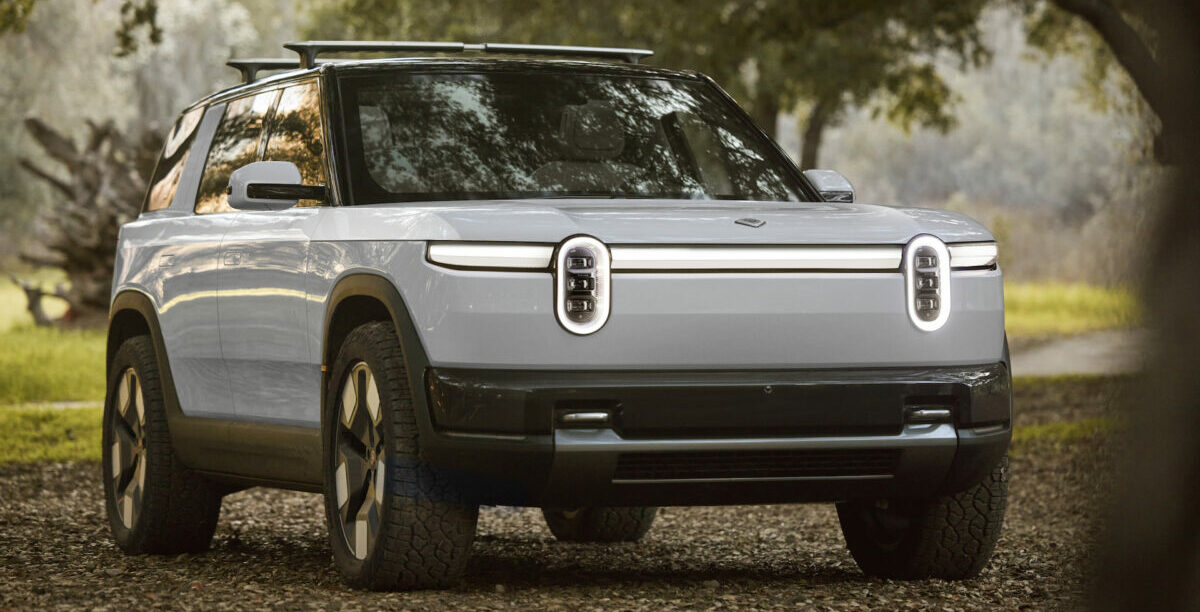
Reaching the midpoint of its full-year guidance will require Rivian to average roughly 18,000 deliveries per quarter for the remaining three quarters, which is a major step-up from Q1. The R2 is expected to carry this weight, and the model has been projected by the company to contribute between 20,000 and 25,000 units to the full-year total.
Supporting that ramp-up is a reservation backlog reported at more than 200,000 units in the wake of the model’s reveal at the SXSW festival in March 2026. However, it is highly likely that a meaningful share of those reservations are held by buyers waiting for the lower-cost variants that do not arrive until 2027.
A recent partnership with Uber to deploy R2-based robotaxis adds a commercial demand floor beneath the consumer backlog. Under the agreement, Uber will invest up to US$1.25bn in Rivian through 2031, with an initial commitment to deploy 10,000 of the vehicles from 2028 and an option to scale to 50,000 units from 2030.
The broader demand environment may also be shifting, however modestly, in Rivian’s favour since the Iran conflict pushed US gasoline prices sharply higher in late February. Multiple analysts and industry insiders have flagged potential uplift for electric vehicle consideration as pump prices costs remain elevated, though any material effect on consumer habits will likely take several months to emerge.
Rivian will release full first-quarter financial results, including revenue, margins, and cash burn, on 30 April.
E-Mobility,Markets,News,OEMs,Software-Defined Vehicle,Stewart BurnettStewart Burnett#Rivian #beats #delivery #estimates #rollout #begins1775189178
More Stories
Pony.ai, CATL partner on first L4 electric light truck
UK lays regulations for automated passenger services
Leapmotor reveals China-only B05 Ultra at Beijing show