

Musk’s appetite for vertical integration expands to cover semiconductors, but execution will be singularly costly and time-consuming. By Stewart Burnett
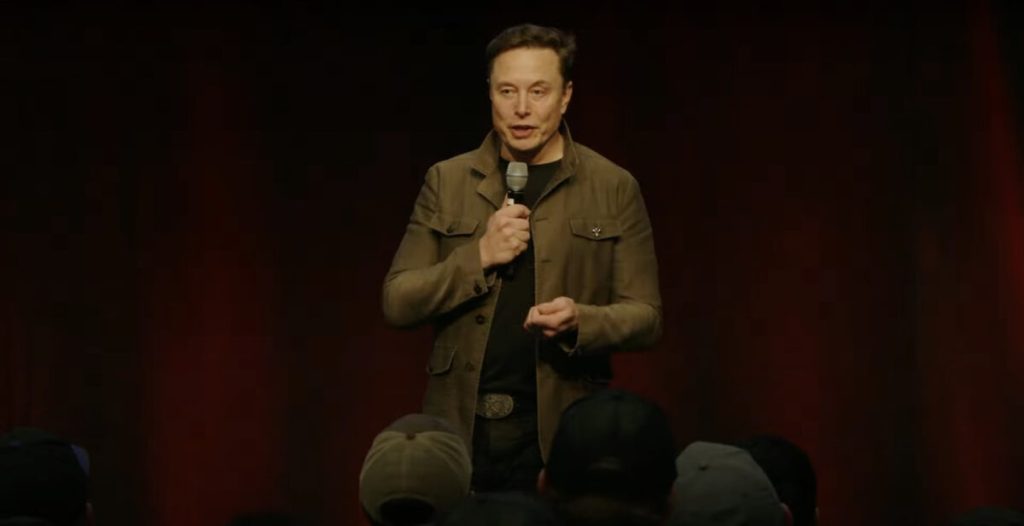
Tesla Chief Executive Elon Musk urged that the company needs to construct what he termed a “TeraFab”—that is, a large-scale semiconductor manufacturing facility producing logic chips, memory and packaging domestically—to address anticipated supply constraints within three to four years. Musk stated during the automaker’s 28 January earnings call that existing suppliers including TSMC, Samsung Electronics and Micron Technology cannot provide chips at levels Tesla requires.
“That’s going to be very important to ensure we’re protected against geopolitical risks,” Musk warned. “I think people maybe are underweighing some of the geopolitical risks that are going to be a major factor in a few years.” The geopolitical risks Musk was primarily referring to were the fragility of the global semiconductor supply chain—UBS warned last week that AI data centre demand alone could upend automotive supplies—and the potential for a US-China decoupling to cripple high-tech manufacturing.
Tesla’s proposed facility would target an initial capacity of 100,000 wafer starts monthly, eventually scaling to reach one million, placing it at around 70% of TSMC’s current 1.42 million monthly wafer production capacity. Musk indicated the TeraFab would encompass comprehensive semiconductor manufacturing, including logic processors for AI applications, memory chips and packaging, effectively positioning Tesla as an unproven competitor to established players like Samsung Electronics, SK Hynix and Micro.
The vertical integration strategy mirrors Musk’s approach across his business empire, where bringing key components in-house has enabled faster development cycles independent of external supply chains. Musk also likes to interconnect his business empire, announcing a fresh US$2bn investment by Tesla into xAI, responsible for Grok, despite investors voting against such a measure last year.
Chief Financial Officer Vaibhav Taneja indicated Tesla holds more than US$44bn in cash and investments which can be used to fund capex investments like the construction of a chip plant. He also indicated that the automaker may pursue additional financing “through more debt or other means” due to the project’s capital-intense nature. According to Taneja, Tesla has already held conversations with banks regarding potential loans, emphasising: “any time you have a consistent stream of cash flow, you can go and get money from the banks”.
The semiconductor facility is just one component of Tesla’s record US$20bn capex planned for 2026, although specific allocation between the fab and other infrastructure projects including Optimus robot production and solar cell manufacturing remains undisclosed. To be sure, building a cutting-edge semiconductor plant requires tens of billions of dollars in fixed costs, as well as years for construction and operational ramp-up. Success will depend on its ability to access complex manufacturing equipment, with Netherlands-based ASML Holding a likely key supplier.
Establishing a strong semiconductor production presence in the US will not be easy, if for no other reason than the availability of skilled workers. The Semiconductor Industry Association has projected that the US will face a shortfall of around 67,000 skilled workers by 2030, including more than 26,000 skilled technicians. A shortage of skilled local workers has already caused TSMC to push back the opening of its Arizona wafer fab from 2024 to either 2027 or 2028.
If located in Texas—where Tesla relocated its headquarters to in 2021—the facility could leverage existing workforce development initiatives including Temple College and Texas State Technical College programmes funded through the Texas Semiconductor Innovation Fund. Musk stated Tesla would provide “a bigger announcement” that would provide more specifics about the TeraFab at an undetermined point in the future. At the time of writing, the plant’s location and timeline to launch remain entirely undefined.
E-Mobility,Manufacturing,Markets,News,OEMs,Software-Defined Vehicle,Stewart Burnett,TeslaStewart Burnett,Tesla#Musk #Tesla #build #inhouse #TeraFab #chip #plant1769776386

More Stories
Pony.ai, CATL partner on first L4 electric light truck
UK lays regulations for automated passenger services
Leapmotor reveals China-only B05 Ultra at Beijing show